
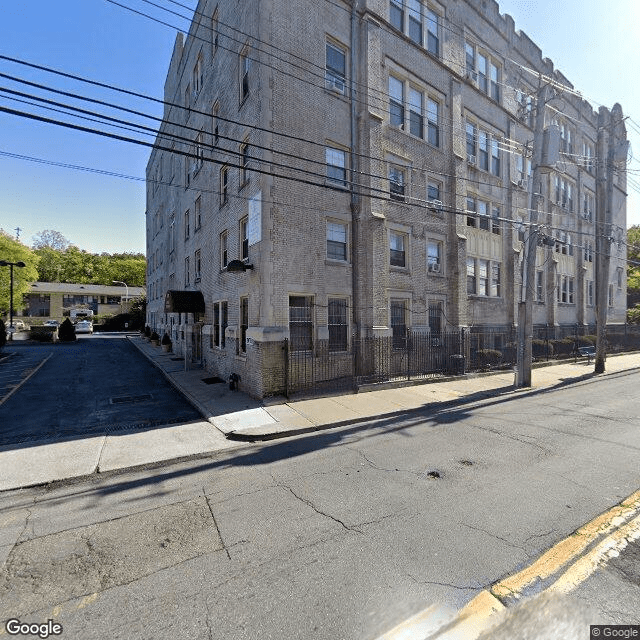
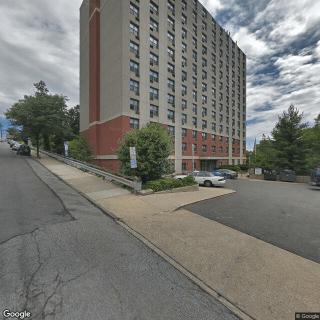
450 Walnut Street, Yonkers, NY 10701
To contact a resident: (914) 966-7492
For more information about senior living options: (866) 208-4318
Trinity Senior Apartments Costs & Pricing
Trinity Senior Apartments offers competitive pricing relative to the broader market in Westchester County and the state of New York. With monthly costs of $855 for a studio and $915 for a one-bedroom, Trinity provides an attractive alternative considering that similar accommodations in Westchester average significantly higher at $5,326 for studios and $5,559 for one-bedrooms. Even when compared to state averages, which are $4,532 for studios and $4,307 for one-bedrooms, Trinity's rates remain notably lower. This makes Trinity Senior Apartments not only a sensible choice but also an appealing option for those seeking quality senior living without the financial burden commonly associated with the region.
| Floor plans | Trinity Senior Apartments | Westchester County | New York |
|---|---|---|---|
| Studio | $855 | $5,326 | $4,532 |
| 1 Bedroom | $915 | $5,559 | $4,307 |
Senior living communities with a similar price nearby
-
from +$120 / mo
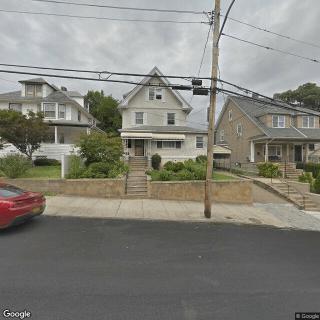
Grant-Blue Family Type Home for Adults
$975 / month5.1 miles away -
from -$137 / mo
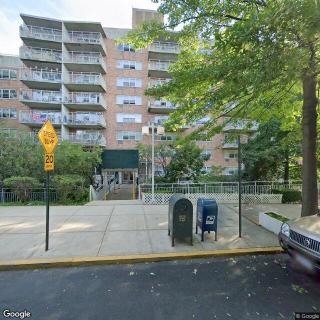
Fort Schuyler House Inc
$718 to $1,085 / month8.7 miles away -
About the same

Airmont Gardens
$856 to $1,025 / month17.2 miles away -
from +$73 / mo
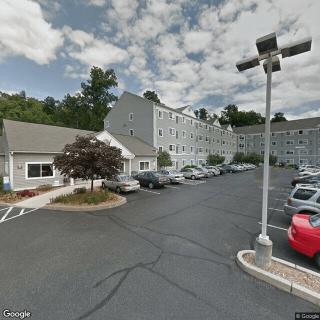
Summer Hill Apartments - NO LONGER EXISTS
$928 to $1,115 / month18.8 miles away -
from +$120 / mo
Heritage Estates
$975 to $1,400 / month23.0 miles away
Overall Review of Trinity Senior Apartments
Pros
 They love this place.
- They have lived there for nearly ten years and feel positive overall.
- They note that the positives outweigh the negatives.
- They give it an A+ rating.
Cons
 Some neighbors were not so good.
- There were not-so-good experiences.
Review
Trinity Senior Apartments in Yonkers is best suited for independent seniors who want a stable, low-drama living environment where neighborly ties matter and years of residence translate into a dependable sense of belonging. The community earns strong marks from residents who stay long enough to see the pattern, one resident lived there nearly ten years, demonstrating real continuity and a predictable, comfortable routine. The general mood is unmistakably positive: for adults who prize a simple, practical lifestyle and a calm, neighbor-forward atmosphere, this setting often feels like a reliable home base rather than a transit stop between moves. This is not a splashy, resort-style senior experience; it is a straightforward, comfortable place where everyday life tends to click into place for those who want to minimize upheaval.
Those needing ongoing personal care, memory support, or a highly active, all-encompassing programming schedule should consider alternatives. The reviews point to a community rooted in independence, with varied neighbor dynamics rather than a facility designed around high-touch assisted living. For seniors who require regular assistance on-site or who expect robust, structured programming to fill every day, Trinity may fall short. Families seeking a care-forward environment or a setting with comprehensive on-site services would be better served by options explicitly built for higher levels of care.
The principal advantages are a genuine sense of community and broad resident satisfaction. Several residents express clear affection for the place, reinforced by a very high rating profile (five five-star reviews and one four-star). The combination of long-tenured residents and the declaration that the “good outweighs the not-so-good” signals a stable, supportive atmosphere where neighbors look out for one another. In practical terms, that stable social fabric reduces common relocation risks and creates a welcoming, predictable daily rhythm, critical factors for peace of mind when aging in place. The warmth conveyed in the feedback matters as much as any amenity list.
The main caveat centers on variability in how neighbors experience daily life. The bittersweet note, some neighbors are very good, others not so much, points to an uneven social dynamic rather than a uniformly harmonious environment. That reality means prospective residents should be prepared for a range of personalities and interactions in shared spaces, which can color everyday moments, especially during peak hours or in common areas. There isn’t explicit criticism of management or maintenance in the quoted feedback, but the social variance is a meaningful factor to weigh for anyone who values consistently smooth day-to-day interactions.
Despite the caveat, the positives offset the negatives for the target profile. The ten-year resident narrative, paired with repeated affirmations of love for the place and an overall strong rating, signals a well-run, stable operation with a warm, neighbor-centric culture. For families prioritizing continuity, a predictable routine, and a sense of belonging, Trinity offers a compelling match. Longevity among residents reduces the likelihood of disruptive transitions, and the lived experience of many occupants suggests that choosing Trinity can yield steady, long-term satisfaction, so long as the social fit aligns with personal tolerance for neighbor diversity.
Recommendation: frame the decision around independence and social fit. If staying in a straightforward, independent living setting with a warm, low-drama environment is the priority, Trinity Senior Apartments stands out as a solid candidate. If the senior requires regular assistance, memory care, or an intensely active, highly structured program, alternatives with higher levels of care and more extensive on-site services should be explored. Prospective residents should schedule tours, engage with current tenants about daytime and evening routines, and specifically probe how common-area interactions unfold in practice. The community delivers steady satisfaction and a genuine sense of belonging, but a candid assessment of neighbor dynamics will determine whether Trinity is the right home or if a different path would better align with care needs and social preferences.
 Active Adult Communities (55+)
 Bath tubs
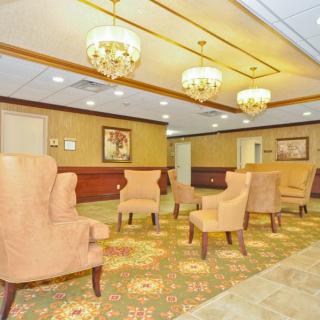
 Indoor common areas
 LaGuardia (11 miles away)


 Comprehensive Exploration of Living Wills and Other Advance Directives
 A Detailed Exploration of Living Wills and Advance Directives
 Comprehensive Guide to Medicare Coverage for Hospice Care