
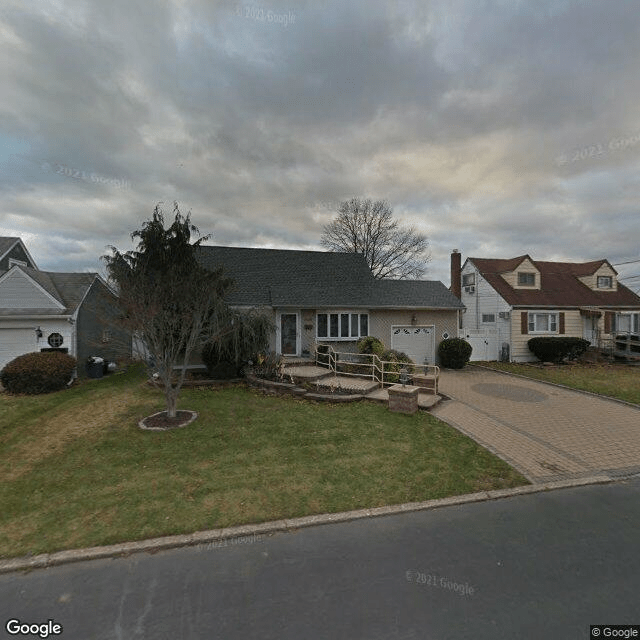
1012 N Erie Ave, Lindenhurst, NY 11757
To contact a resident: (917) 526-6685
For more information about senior living options: (866) 208-4318
Long Island Shared Family Residence Costs & Pricing
The Long Island Shared Family Residence offers competitive pricing in comparison to broader regional costs, providing accessible options for families seeking supportive living arrangements. The monthly fees are structured with a semi-private room costing $1,800, which is significantly lower than the average rate of $3,706 in Suffolk County and $4,389 statewide in New York. Similarly, the private room option at $2,200 also represents a more economical choice when juxtaposed with the county's average of $4,234 and the state average of $5,159. This pricing strategy not only makes Long Island Shared Family Residence an attractive alternative but also emphasizes its commitment to affordability while maintaining quality care within the community.
| Floor plans | Long Island Shared Family Residence | Suffolk County | New York |
|---|---|---|---|
| Semi-Private | $1,800 | $3,706 | $4,389 |
| Private | $2,200 | $4,234 | $5,159 |
Senior living communities with a similar price nearby
-
from +$300 / mo

Amber Court of Westbury
$2,100 to $5,700 / month10.6 miles away -
from +$200 / mo

Sanford Home
$2,000 / month23.6 miles away -
from +$300 / mo

Bayview Rest Home
$2,100 to $4,200 / month3.2 miles away -
from -$200 / mo
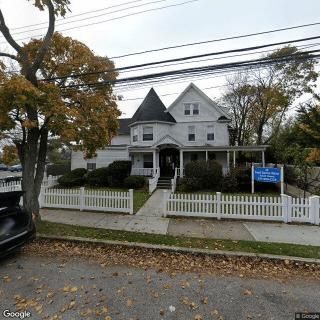
Pearl Garden Manor
$1,600 to $3,200 / month9.0 miles away -
About the same

Affable Home Care
$1,770 to $2,770 / month23.4 miles away
Overall Review of Long Island Shared Family Residence
Pros
 The owner has a very clean, updated home.
- She is very nice and caring.
- She is looking to expand to a property that is the right fit.
Cons
 She was not as experienced as the other homes.
Review
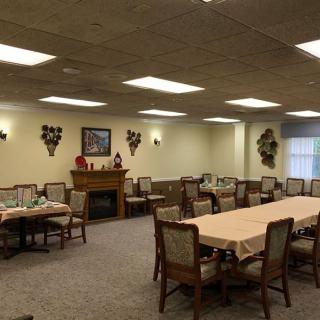
Long Island Shared Family Residence in Lindenhurst is best suited for seniors who want a truly home-like living arrangement with highly personal attention from a small, owner-operated operation. The property comes across as clean and updated, a detail that translates into a comfortable, low-stress living space where routines can be tailored to individual preferences. The absence of other residents at the initial visit suggests a calm, one-on-one atmosphere rather than a bustling community, a feature that appeals to families seeking intimacy and flexibility over formal programming. For those who prefer conversations with the caregiver directly responsible for daily life and a setting that feels more like living with family than moving into an institution, this residence presents a compelling option. It’s especially attractive for residents who do not yet require intensive clinical care but value steady, compassionate oversight.
The strongest positives are grounded in the environment and the caregiver dynamic. A clean, updated home reduces practical barriers to safe daily living, while a caring owner can foster reliable, responsive interaction that many families prize. The small scale often enables more individualized attention, quicker adjustments to meal timing, wake/sleep routines, and activities, and a sense of partnership with a live-in operator rather than distant staff. The owner’s expressed openness to expanding capacity signals a thoughtful plan for growth without sacrificing the intimate, homey feel established now. For families wary of impersonal, large-scale settings, these factors can be decisive when evaluating whether care will feel personal, manageable, and low-stress long term.
Yet there are meaningful drawbacks to weigh. The perception that the owner may be less experienced than peers in larger, more established homes can translate into fewer formalized protocols, less robust clinical oversight, and potential variability in around-the-clock supervision. The current small operation means limited staffing redundancy; if the caregiver is unavailable, coverage may be lean, which raises questions about consistency and emergency responsiveness. The stated expansion plan is encouraging but also introduces uncertainty: implementation timelines, recruiting, and integration of new staff could temporarily disrupt routines or shift care dynamics. In short, this option delivers warmth and flexibility, but at the potential cost of depth in medical, rehabilitative, or memory-support services.
Despite these concerns, the positives can offset the drawbacks when care goals align. A clean, well-maintained space supports safety, while a caring owner who is readily accessible can compensate for fewer formal systems with steady, personalized support. A small resident census often translates into deeper relationships with caregivers and a genuine opportunity to tailor activities to individual interests, enhancing quality of life. Expansion could bring more services and consistency without sacrificing the home ambiance, provided growth is paced and managed with resident needs front and center. The critical factor will be whether added staff and procedures preserve the same warmth and simplicity that currently define daily life there.
This option is not for everyone. Families caring for residents who require frequent nursing interventions, complex medication management, wound care, or ongoing memory-support programming may be better off in a larger assisted living facility with established clinical teams. For those who expect a highly structured activity calendar, regular group outings, or dedicated rehabilitation services, this setting may feel sparse. Any family seeking strong external oversight, transparent licensing details, and clearly documented care plans should scrutinize whether the home-model can scale to meet evolving needs. In essence, this residence excels at companionship, flexibility, and a genuinely homelike atmosphere, while its suitability diminishes as clinical acuity rises.
Practical next steps should focus on due diligence and real-world testing. Schedule a thorough tour and press for specifics: what services are included, how medications are managed, who is on site around the clock, and the actual staffing ratios during nights and weekends. Confirm licensing status, safety and emergency protocols, and how the expansion will be phased so routines remain stable. Request references or direct conversations with current families to gauge consistency of care, and consider a short trial stay or day visit to observe day-to-day care delivery. If the aim is to preserve autonomy within a family-like setting and needs remain moderate, Long Island Shared Family Residence can be a strong match. If higher levels of clinical support are non-negotiable, pursuing alternatives with more defined infrastructure is prudent.
 Board and Care Home
 Cats allowed
 Dogs allowed
 Activities off-site
 Bath tubs
 Devotional services off-site
 Indoor common areas
 Outdoor common areas
 Private
 Long Island - MacArthur (16 miles away)
 Meals provided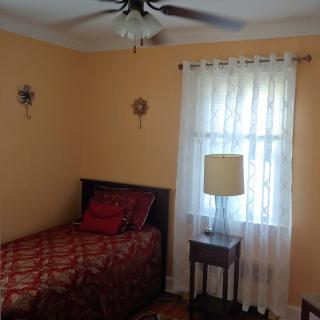





 Exploring Palliative Care in the Home: A Comprehensive Overview
 Comprehensive Insights into Palliative Home Care: What It Is and What to Expect
 Skilled Nursing Facilities vs. Nursing Homes: Making Sense of the Differences