

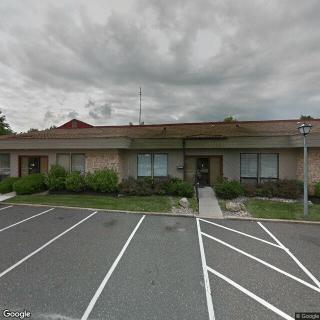
4201 Church Road, Mount Laurel, NJ 08054
To contact a resident: (856) 439-1300
For more information about senior living options: (866) 208-4318
Overall Review of Always There in Home Health Care LLC
Pros
 Always There was the solution for their long-term care needs.
- Ayesha provided seven wonderful years of care for their mother.
- They appreciated that Always There handled the insurance on their side without any issues.
- Ayesha made their mother's life as enjoyable as it could be during those years.
- The caregiver became like a member of the family, and the parents loved her.
- Always There offers a 24-hour phone service, so there was never a missed call or voicemail.
- Mariela is noted for caring about providing quality care for the elderly.
Cons
 The aides spoke little English and were hard to understand.
- They didn’t seem to know the basics of caring for someone who is elderly or bed bound.
- The aides spent most of the time on their cell phones rather than caring for the patient.
- They showed no initiative and only helped when specifically asked, raising concerns about reliability.
- The care left the loved one at risk, including not being taken to the bathroom and signs of distress like falling or choking.
- The company demonstrated serious communication problems, with long delays, unanswered calls, and mismanaged messages.
- They threatened to sue when a client declined another aide and canceled services.
- The aides’ language skills were terrible, often speaking Spanish with limited English, making communication difficult.
Review
Always There in Home Health Care LLC in Mount Laurel is best suited for families seeking in-home care that is deeply local, personally connected, and easy to coordinate with long-term care benefits. The core strength lies in a family-owned, local operation that treats care as a relationship, not a transaction. Families report quick placement, flexible caregiver matching, and hands-on involvement from a company that can coordinate insurance benefits without dragging feet. This is the kind of provider where a caregiver may become a true part of the family routine, backed by a responsive office that keeps lines open and issues visible rather than buried. For households prioritizing continuity, personal warmth, and an at-home care model, this option stands out.
Those who should consider alternatives are the ones with high needs for uniformly excellent English-speaking staff across shifts, especially for complex memory care or aphasia cases. Some reviews describe aides who spoke limited English, showed inconsistent training, and lacked proactive initiative, with instances of caregivers spending time on cell phones rather than delivering care. Safety lapses and neglect are cited, including missed bathroom support, doors left unlocked, and insufficient supervision during meals or mobility. Onboarding and communication can also be uneven, with delays or miscommunications about start dates and services. For families requiring rigorously standardized staff across all shifts, or seamless, 24/7 consistency in a large number of areas, alternatives may be the safer route.
The most compelling positives offset the drawbacks in meaningful ways. The family-owned ethos translates into a willingness to accommodate preferences and to place a live-in caregiver who can stay with a family for years, offering stability many seniors crave. A 24-hour phone line reduces anxiety by ensuring that someone is reachable at all times, which matters when concerns arise or emergencies occur. The agency’s capacity to handle long-term care benefits on its end reduces administrative friction, preserving senior independence at home. When a caregiver clicks with the elder, outcomes can include better mood, higher activity levels, and a sense of continuity, benefits that can significantly ease decision-making burdens for anxious families.
Yet the negative threads should not be discounted. Language gaps and uneven training can limit effectiveness for residents with dementia or communication disorders, making outcomes dependent on the individual caregiver rather than a consistent standard. There are credible reports of care lapses, from basic daily tasks to safety oversights, that threaten trust and raise red flags for risk management. Communication gaps and onboarding delays create periods of uncertainty, sometimes stretching over weeks, and there are accounts of staffing gaps in certain locales. These elements do not nullify the model, but they demand vigilant oversight, contingency planning, and clear escalation channels.
Decision-making hinges on practical, actionable criteria. Prospective clients should secure a concrete care plan with named caregiver assignments, confirm language capabilities, and establish a clear escalation path for concerns. Request current references and, ideally, a pre-commitment meeting with the live-in caregiver candidate. Verify back-up staffing options to cover illness or vacation, and insist on a dedicated care manager who coordinates medical appointments and follow-ups. Require a written onboarding timeline and a documented communication protocol, including regular progress updates. Weigh the value of 24/7 availability against the likelihood of staffing variability, and confirm the provider’s ability to meet memory-care needs with staff-wide training, not just the lead caregivers.
In summary, Always There in Home Health Care LLC represents a compelling option for families who value a hands-on, locally rooted approach and the reassurance that a live-in caregiver can deliver constant, at-home support. It is strongest where personal relationships and proactive coordination with doctors drive daily life for an elder who remains living at home. The provider’s strengths, responsive accessibility, family involvement, and ease of insurance navigation, can translate into meaningful quality-of-life gains. The watchouts, language variability, uneven staff training, and potential scheduling gaps, should be weighed with a clear, written plan and rigorous oversight. For families seeking near-uniform, English-speaking dementia-focused staffing and absolute consistency across shifts, exploring alternatives with stronger standardized training and broader coverage may be prudent, but with the understanding that a solid, relationship-driven option remains on the table.
 Philadelphia International (16 miles away)





 6 Crucial Ways an Elder Law Attorney Assists Families
 Navigating the Tax Landscape of Caregiving: Credits, Deductions, and Beyond
 Highly Beneficial Low-Impact Exercises for Senior Living Residents