
1750 Elm Street Suite 620, Manchester, NH 03101
For more information about senior living options: (866) 208-4318
Overall Review of Maxim Health Care Services
Pros
 Maxim is very reliable and displays the highest professionalism.
- Maxim is very flexible with shifts and hours and consistently has a job in place after completing an assignment.
- Maxim offers good benefits and the best pay rate compared to other agencies.
- Maxim has incredible staff, offers several open contract positions, and provides the best pay rates of any recruiting company.
- Maxim is a top-notch recruiting agency.
- Maxim is highly recommended for healthcare professionals looking to make a career change.
Cons
 They allege Maxim protects abusive LPNs and discharges their accusers, and that Maxim should be investigated.
- They say a recruiter ignored them after new positions were offered, and that professionalism does not exist at the company.
- They call the operation a train wreck, describing the company as all over the place with misclassified employees and payroll tax burdens on workers.
- They state that NH DOL and NHES should audit the company, claiming the company is 100% in control of the direction of the employee.
Review
This community is best suited for senior-living operations that rely on a steady stream of flexible, ready-to-deploy caregivers and are prepared to manage the realities of contract staffing. Maxim Health Care Services can be a practical answer when coverage gaps threaten resident care and there is value placed on having a large pool of clinicians who can be dispatched quickly to fill shifts. For facilities that require flawless communication, strict compliance discipline, and consistently proactive follow-through, however, alternatives should be considered. The right fit hinges on whether staffing speed and scale or flawless process control is the higher priority.
The strongest practical upside is in staffing agility. Several reviews emphasize reliable placement and genuine flexibility with shifts, with staff often moving smoothly from one assignment to the next. The agency’s platform appears to offer multiple open contract positions, creating opportunities to cover diverse needs without long lead times. For a community facing fluctuating demand, Maxim can be a lifeline, reducing vacancy days, enabling last-minute coverage, and keeping care continuity intact. In addition, the combination of competitive pay and benefits for the clinicians translates into a stronger recruitment funnel, aiding retention during peak periods or staffing bottlenecks.
Yet significant caveats temper those strengths. The most consequential concerns center on communication and accountability. Reports of recruiters leaving clients and caregivers without follow-through, or failing to respond to reasonable requests (such as providing CPR credentials on schedule), point to a pattern of inconsistency in client-facing communication. This disconnect can translate into missed shifts, misaligned expectations, and friction at the moment of need, exactly what senior-care operations cannot afford. When reliability hinges on timely updates and proactive outreach, such gaps become material risks that erode confidence in the partnership.
Even more troubling are the issues raised about payroll integrity and compliance discipline. Warnings of miscodings, tax handling allegations, and calls for formal audits by state agencies suggest potential unmanaged liabilities. A staffing partner who appears to struggle with payroll accuracy and regulatory adherence can create downstream headaches for facilities: wrong pay, misclassification risk, and exposure to compliance scrutiny. For operations focused on safeguarding residents and maintaining regulatory standing, these risks demand close scrutiny and verification before committing to a long-term engagement.
The key question becomes whether the positives can truly outweigh the negatives. If a facility can secure an account manager with clear service-level commitments, rigorous performance metrics, and a disciplined escalation path, Maxim’s strengths, rapid coverage, broad access to clinicians, and competitive compensation, can materially reduce schedule volatility and support stable care delivery. However, without demonstrable consistent communication and proven payroll/compliance discipline, the advantages risk being nullified by operational disruption and regulatory exposure. The decision should hinge on the facility’s tolerance for risk and its capacity to enforce tight contract controls.
Alternatives should be actively considered for any operation prioritizing predictability and ironclad compliance. Other agencies with documented histories of stable client communication, transparent invoicing, and solid regulatory track records deserve evaluation. Direct-hire strategies or an internal pool, even if more resource-intensive upfront, can deliver the highest degree of control over scheduling, quality oversight, and resident safety. When exploring options, request named account managers, demand concrete SLA commitments, and seek references from comparable care settings that experienced similar staffing demands.
Bottom line: Maxim can be a practical tool for securing flexible staffing and maintaining coverage during volatile periods, but it is not a guaranteed antidote to reliability or compliance concerns. A candid assessment should foreground whether the facility can tolerate occasional communication gaps and potential payroll/compliance questions, and whether those risks are offset by strong coverage and attractive clinician compensation. If the answer is yes, proceed with a detailed, performance-driven engagement framework; if not, pursue vetted alternatives that prioritize steady communication, strict compliance discipline, and unparalleled reliability.
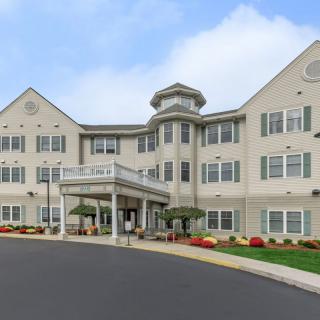
 21 resident community capacity
 Assisted Living
 Beauty salon
 Cable or satellite TV
 Dining room
 Fully furnished
 Garden
 Housekeeping services
 Kitchenette
 Move-in coordination
 Outdoor space
 Restaurant-style dining
 Small library
 Telephone
 Wi-Fi/high-speed internet available
 Manchester (5 miles away)
 24-hour call system
 Activities of daily living assistance
 Assistance with bathing
 Assistance with dressing
 Assistance with transfers
 Diabetes diet
 Medication management
 Mental wellness program
 Special dietary restrictions






 8 Key Indicators That Suggest It May Be Time to Transition from Assisted Living to Skilled Nursing Care
 Vibrant Senior Living: A Comprehensive Guide for Active Older Adults
 When to Transition from Assisted Living to Memory Care: Key Indicators, Steps, and Finding the Right Community