
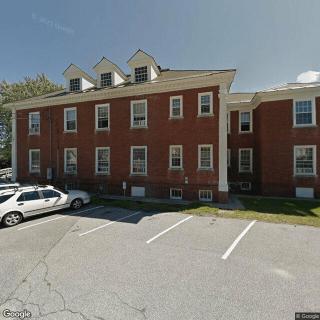
125 Pleasant Street, Concord, NH 03301
For more information about senior living options: (866) 208-4318
Overall Review of Pond Place West
Pros
 The public is welcomed.
- They attend meetings and appreciate AARP's Tax Service, enjoying meals there.
- The building has beautiful character.
- They share stories in the library, enjoying the communal atmosphere.
Cons
 The review implies the schedule is disrupted during pandemics, signaling unreliability.
- The account suggests the storytelling is shared mostly with themselves and a subset of residents, implying exclusivity.
Review
Pond Place West in Concord, NH is best suited for independent seniors who want a small, character-rich setting with easy access to social life and practical on-site services. It appeals to those who value cultural and civic engagement, library spaces, resident-led gatherings, and regular community events, and who appreciate conveniences like on-site support for tasks such as tax preparation. The community sits at a promising 4-star level from a small set of reviews, signaling solid potential but also inviting questions about how care actually unfolds day to day. It is not a fit for residents who require substantial ongoing medical oversight, memory care, or tight supervision, and families should consider alternatives if health needs are likely to outpace what the on-site model can reliably provide.
The pros center on a welcoming, home-like atmosphere that fosters belonging. The building itself is described as having real character, which translates into a sense of pride and comfort rather than a clinical, impersonal vibe. A lively library and regular storytelling gatherings create meaningful social touchpoints for residents and visiting guests, helping to counteract isolation and create continuity in daily life. The presence of on-site services such as AARP Tax Service, used by residents for years, offers practical, dependable support during tax season, reducing stress and administrative burden. Attendees noting positive experiences with meals hints at a reasonably pleasant dining environment, reinforcing everyday satisfaction beyond mere lodging. Taken together, these elements form a lifestyle oriented toward social connection and practical convenience.
The main limitation emerges from the sparse, ambiguous information about caregiving arrangements. Review authors acknowledge not knowing much about what daily life looks like for residents, nor about staffing, care levels, or how health changes would be managed on site. With only three reviews forming the basis of rating, there is a real lack of transparency about who ensures help when needed, how quickly staff respond, and what medical or assisted-living supports are actually available. In practice, Pond Place West presents a charming, low-key atmosphere, but uncertainty remains about whether it can reliably accommodate someone who requires regular assistance, propels care planning, or anticipates memory-care support. This gap matters for families weighing long-term suitability.
Still, the favorable social and logistical fabric offset some of those concerns for a target resident. For someone who can maintain independence with occasional help, the community’s intimate size can translate into attentive, personalized service without the impersonality that sometimes comes with larger campuses. The social calendar, library events, storytelling, and public engagement, provides a predictable rhythm that supports mental stimulation and belonging. On-site access to a trusted financial service further reduces weekly friction, helping seniors stay organized without chasing resources elsewhere. The architectural charm and the sense of historical continuity may also bolster emotional well-being, counterbalancing the absence of a formal, heavily structured care track.
Those weighing Pond Place West against alternatives should consider several guardrails. For residents anticipated to require more intensive medical oversight, memory care, or around-the-clock supervision, larger assisted living communities or continuing-care campuses with transparent tiered care levels will likely deliver clearer planning and higher staffing reliability. If a family prioritizes explicit pricing clarity, guaranteed care progression, and built-in medical support, exploring other options with documented care matrices may be prudent. Pond Place West may still win as a short- or mid-term home for someone transitioning from independent living who wants social immersion and convenient on-site services, but the landscape changes once health trajectories become uncertain or complex.
In the end, the decision hinges on trajectory and priorities. Pond Place West offers a charming, socially active environment that can substantially enhance daily life for independent seniors or those needing light, readily available support. If the expectation is steady, well-communicated care oversight and advanced medical or memory-care capabilities, alternatives deserve serious consideration. Prospective residents should schedule visits, inspect living spaces, and ask pointed questions about staffing, care options, and what is included in monthly costs. Conversations with current residents about daily routines and responsiveness can illuminate whether the on-paper strengths translate into reliable, day-to-day reassurance. With careful diligence, Pond Place West can anchor the next chapter for the right resident, or point families toward a setting whose care framework aligns more closely with evolving needs.
 6 resident community capacity
 Assisted Living
 Cable or satellite TV
 Dining room
 Fully furnished
 Garden
 Housekeeping services
 Move-in coordination
 Outdoor space
 Telephone
 Wi-Fi/high-speed internet available
 Manchester (19 miles away)
 24-hour supervision
 Activities of daily living assistance
 Assistance with bathing
 Assistance with dressing
 Assistance with transfers
 Diabetes diet
 Meal preparation and service
 Medication management
 Special dietary restrictions
 Transportation arrangement (medical)
 Transportation to doctors appointments



 Understanding the Distinctions: Assisted Living and Memory Care Explained
 Guiding Elderly Parents Who Refuse Assisted Living: 6 Practical Steps
 Your Comprehensive Guide to Luxury Assisted Living: Elevated Facilities, Amenities, and Costs