
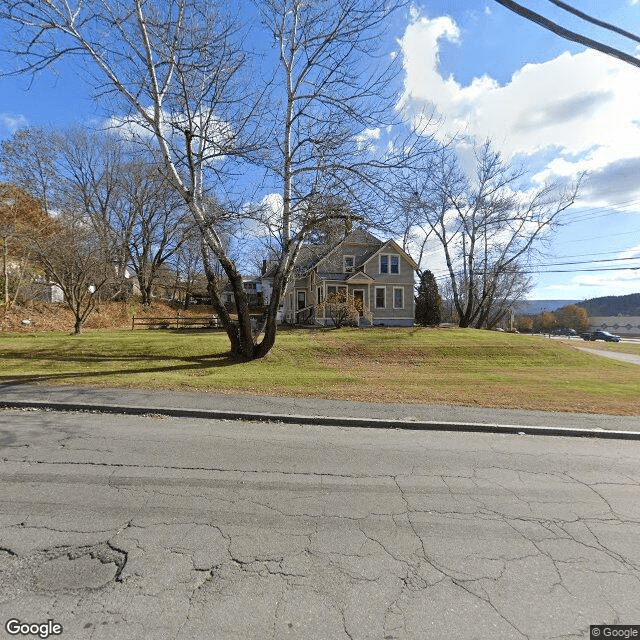
5 Winter St, Claremont, NH 03743
To contact a resident: (603) 543-3628
For more information about senior living options: (866) 208-4318
Overall Review of Silver Maples
Pros
 The staff and residents are very nice.
- The facility is very clean.
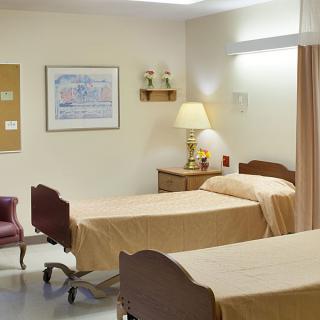
- The rooms are private and well kept.
- The environment has a comfortable atmosphere.
- The staff are very active and offer a variety of activities for the residents.
- Residents enjoy the variety of food offered.
- Silver Maples is a nice community.
Cons
 They had to go up and down stairs outside to enter the home.
- The level of care at Silver Maples was not sufficient to protect her.
- Silver Maples did not seem to grasp the reality that they were stuck in an unusual situation.
- The staff had to make special accommodations for her to protect their reputation and her wellbeing.
- The mother was prone to falling.
- The steps were not sufficient to prevent her from falling many times.
- The ambulance crew came many times and transported her to the ER.
- Silver Maples did not adapt to the unusual set of circumstances, and the mother suffered as a result.
Review
Silver Maples in Claremont is best suited for active, lower-acuity seniors who prize a warm, comfortable setting, private rooms, and a lively activities calendar, along with consistently clean premises and attentive staff. It is well-matched for residents who want sociable daily life, reliable housekeeping, and straightforward assisted living support without needing intensive medical oversight. The community shines when independence remains the core, and daily routines revolve around engagement, companionship, and accessible dining. Families with loved ones who fit this profile will likely appreciate the overall atmosphere and the sense that residents truly matter to the staff.
Those weighing alternatives should note that Silver Maples may not be the right fit for higher-acuity needs. If a resident requires frequent, high-level medical supervision, rapid escalation to skilled nursing, or specialized safety measures, especially to prevent falls, other options merit serious consideration. In particular, communities with stronger on-site nursing resources or dedicated memory-care and higher-acuity wings will be more capable of sustaining health and safety when health declines or emergencies arise. For families facing the possibility of rapid change in care needs, exploring alternatives now can prevent a difficult transition later.
The strongest positives are practical and consistent: a comfortable, welcoming atmosphere; private, well-kept rooms; a consistently clean environment; and staff who stay active with residents through a varied slate of activities. Food variety is highlighted as a meaningful perk, contributing to daily satisfaction. The owner’s presence and attitude also come through as a stabilizing factor in normal times, giving families and residents a sense of personal accountability and warmth. These elements collectively create a livable, pleasant home base for everyday life and social engagement.
However, the main drawbacks are consequential for anyone facing medical fragility or rising care needs. Review patterns point to a level of care that does not automatically elevate to meet escalating medical demands, and the facility appears to struggle with unusual or urgent situations when they arise. Falls are a recurrent concern in the narratives, with ambulance and ER visits cited. When a resident’s health enters a higher-stakes territory, the current structure may require outside escalation or accommodation that goes beyond standard assisted living. In short, the environment excels for steady days but falters under abrupt health shifts.
These tensions between strong daily life and limited higher-level capability must be weighed in practical terms. The pros, comfort, cleanliness, engaging programming, and good meals, do offset some everyday quality-of-life aspects, creating a supportive home where residents can enjoy routines and social connection. Yet they do not fully offset the risk associated with insufficient fall prevention and the challenges of delivering escalated care during emergencies. Accessibility, notably the entry arrangement described as involving exterior stairs, compounds the concern for mobility-impaired residents and visitors, diminishing convenience and safety for those with walking limitations.
For families conducting a visit, concrete due diligence is essential. Ask pointed questions about nursing oversight, how often clinical staff monitor health changes, and what protocols exist for rapid escalation of care. Inquire about fall-prevention measures, monitoring technology, and staff-to-resident ratios during peak activity times. Review recent incident histories and any adaptations the community has implemented in response to past emergencies. Finally, take a close look at the entry path, mobility options within the building, and how staff support residents during transitions between common areas and private rooms. These specifics will reveal whether Silver Maples can reliably sustain a resident’s evolving needs.
The bottom-line recommendation is practical: Silver Maples serves as a solid fit for those who want a pleasant, engaged assisted-living environment and are unlikely to require rapid, high-acuity medical intervention. It is less suitable for individuals with substantial medical needs, repetitive falls, or a high likelihood of needing swift escalation to skilled nursing. Families challenged by potential health declines should prioritize communities with stronger readiness for higher levels of care. In the right matchup, Silver Maples offers a comfortable home with dependable daily life support; in a different matchup, a different facility will better secure long-term safety and health stability.
 Board and Care Home


 Navigating the Tax Landscape of Caregiving: Credits, Deductions, and Beyond
 Highly Beneficial Low-Impact Exercises for Senior Living Residents
 Is In-Home Healthcare Tax Deductible? Your Comprehensive Guide