
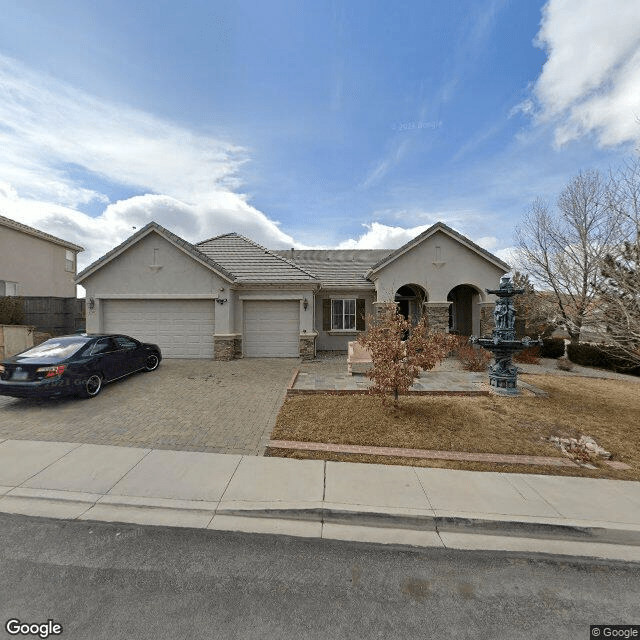
8295 Opal Station Drive, Reno, NV 89506
For more information about senior living options: (866) 208-4318
Overall Review of Cessabella Residential Suite 1
Pros
 Hospice bathed Mom and took care of 90% of her needs.
- The care seemed ok, with hospice handling most of it.
Cons
 Eva was not there for the appointment, and the staff knew nothing about it.
- They were given a tour anyway and Eva never called back.
- Cessa Bella refuses to refund any money and demands $3,000 for an 11-day stay.
- Cindy, the owner, states “industry standard to keep the money,” and is accused of robbing their dead mom.
- The reviewer cannot recommend this place at all, noting the care seemed acceptable only because hospice did most of it.
Review
Cessabella Residential Suite 1 in Reno, NV is best suited for seniors who want a small, home‑like setting and can rely on external caregivers to handle most daily needs. The facility appears to work best for residents who are largely independent or who enter with hospice or other private caregiving already in place to fill care gaps. Families should expect uneven communication and administrative quirks, and should not rely on a consistently polished front-desk experience. In short, this community serves a niche where hands-on care is largely supported externally, not by a seamless in-house management system.
Those with higher expectations for consistent communication and transparent billing should consider alternatives. Prospective residents who demand prompt tour confirmations, reliable scheduling, and clear, upfront refund policies may find this option particularly challenging. For families that require a strong, responsive point of contact and a clear contract with predictable charges, a larger, better-staffed community or a facility with demonstrated, routine administrative processes may prove more dependable. The current pattern suggests a mismatch between care delivery and administrative reliability, which is a decisive factor for many planning long-term decisions.
The perceived strengths here hinge on the basic care that can be supported when hospice or external aides are engaged, along with the intimate, home-like setting that a smaller residence can provide. When external caregivers cover most tasks, the limited in-house staff may still deliver acceptable care levels, especially for residents who do not need intensive daily assistance. However, the upside is not a robust, self-contained care team; the care quality is vulnerable to staffing gaps and the administrative friction that accompanies scheduling and billing. In practice, the positive potential is offset by two enduring drawbacks: inconsistent communication and a billing stance that some families view as rigid or unfriendly.
From a decision-making standpoint, purchasers should push for a explicit, written plan before move-in: a clearly defined care schedule, the exact services included, who the primary contacts are, and a transparent price structure with no ambiguous penalties. It is essential to verify how much of the care will be provided in-house versus by external hospice or home health aides, and to obtain direct access to the care team that would be supervising the resident. Prospective residents should request a detailed refund policy, discuss nuances around nonrefundable deposits, and seek written assurances about how any changes in care needs will affect costs. A pre-move trial or short-term stay can reveal how well the team handles routine updates and scheduling.
Monitoring during occupancy should focus on response times to inquiries, consistency of staffing and communication, and financial clarity. If the front desk or management is slow to respond to questions or unable to confirm appointments, that pattern is likely to persist. Confirm who handles billing disputes and how refunds are adjudicated, then compare this with alternatives that offer a more straightforward, customer-friendly policy. Also assess the alignment between hospice involvement and the on-site team; smooth collaboration with external caregivers can stabilize care quality, but only if administrative channels remain open and predictable.
In the end, the recommendation is practical and restrained: Cessabella Residential Suite 1 may fit a narrow segment, families comfortable with external caregiving, a small, home-like environment, and a tolerance for administrative variability. For most families seeking reliable, transparent operations and consistently tight communication, stronger options exist in the Reno area. If choosing this community, proceed with a detailed, paper-backed plan, insist on clear contact points, and demand a transparent cost structure. Otherwise, it is prudent to compare several other assisted living options that offer steadier communications, clearer policies, and a more robust in-house care framework.
 8 resident community capacity
 Assisted Living
 Board and Care Home
 Cable or satellite TV
 Dining room
 Fully furnished
 Garden
 Housekeeping services
 Move-in coordination
 Outdoor space
 Telephone
 Wi-Fi/high-speed internet available
 Reno Tahoe International (8 miles away)
 24-hour supervision
 Activities of daily living assistance
 Assistance with bathing
 Assistance with dressing
 Assistance with transfers
 Diabetes diet
 Meal preparation and service
 Medication management
 Special dietary restrictions
 Transportation arrangement (medical)
 Transportation to doctors appointments

 An Extensive Exploration of the VA Aid and Attendance Benefit
 Senior Transition Services: Understanding Their Role, Cost, and Importance
 Exploring the Path to Senior Living: A Comprehensive Look at Independent Living and Assisted Living