
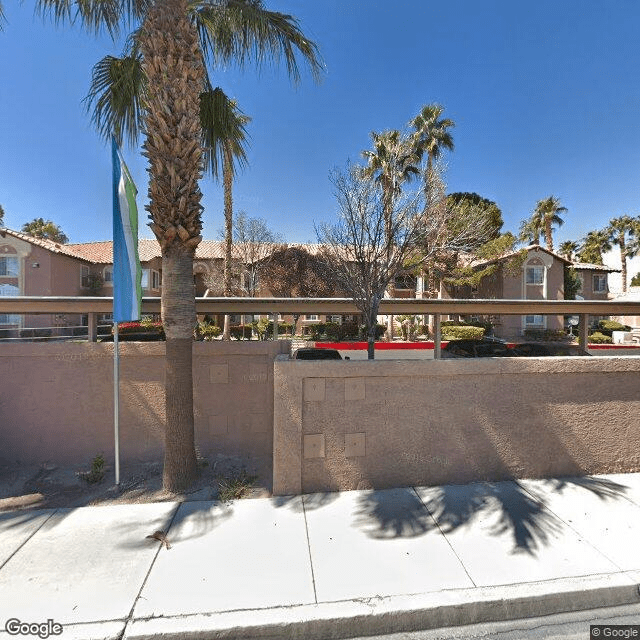
1600 S Valley View Rd, Las Vegas, NV 89102
To contact a resident: (702) 259-6687
For more information about senior living options: (866) 208-4318
Destinations at Valley View Costs & Pricing
Destinations at Valley View offers a compelling value for residents, with monthly costs significantly lower than both the county and state averages. For instance, a one-bedroom unit is available for $630, while the median rates in Clark County and across Nevada stand at $3,346 and $3,619 respectively. Similarly, two-bedroom options are priced at $784, contrasting sharply with the county's average of $3,433 and the state's average of $3,949. This substantial difference highlights Destinations at Valley View as an attractive choice for those seeking affordable living in a competitive market.
| Floor plans | Destinations at Valley View | Clark County | Nevada |
|---|---|---|---|
| 1 Bedroom | $630 | $3,346 | $3,619 |
| 2 Bedrooms | $784 | $3,433 | $3,949 |
Senior living communities with a similar price nearby
-
from -$31 / mo

Country Club at Valley View
$599 to $799 / month0.2 miles away -
from -$31 / mo
Country Club at the Meadows
$599 to $799 / month1.6 miles away -
from -$120 / mo
Lake Tonopah Apartments
$510 to $520 / month3.1 miles away -
About the same
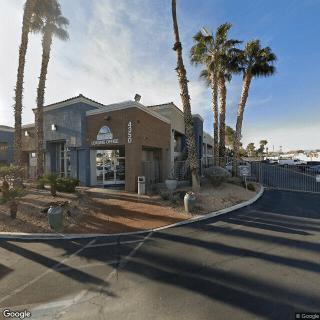
Boulder Palms
$645 to $3,825 / month6.5 miles away -
About the same

Destinations at Sandhill
$640 to $782 / month5.9 miles away
Overall Review of Destinations at Valley View
Pros
 Destinations' staff were very helpful from across the country in helping their mother find a place to live.
- The arrangement has worked out fine for them.
Cons
 The location was not impressive.
- It had no elevators.
- It may be a concern for people who have trouble going up and down stairs.
- The food was not good.
- The location generally felt shabby.
- It wasn't in the greatest neighborhood.
Review
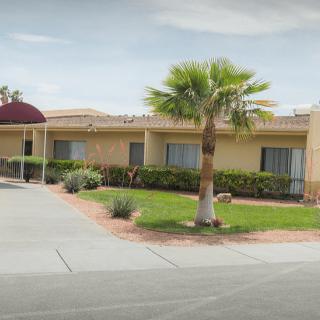
Destinations at Valley View in Las Vegas is best suited for active seniors who want a straightforward, down-to-earth living option with solid relocation help from staff. It works well for families that are moving a loved one across country and need reassurance that the transition will be coordinated, as one or two reviewers noted staff were especially helpful from afar and seemed to make the move smoother. The community appears most compatible with residents who can navigate stairs and are not seeking a glossy, modern interior or elevator-accessible living from day one. In short, it favors couples or individuals who maintain mobility and place a premium on practical support during a relocation rather than on polish and upscale amenities.
Those who should consider alternatives are people with mobility limitations that require reliable elevator access or a seamless, single-story footprint. If stairs are a meaningful barrier or if a resident would benefit from a more contemporary, well-maintained environment, other communities are likely to deliver a more reassuring experience. Prospective residents who prioritize a pristine neighborhood ambiance, consistently excellent dining, or a feeling of being in a more upscale setting should look elsewhere. The overall impression from several reviews is that the physical setting and neighborhood quality don’t measure up to what some families expect for long-term care, even if the staff is responsive.
The strongest positives center on staff willingness and the practical help offered during a relocation. Reviewers who described the experience as “fine” highlighted that the team was accommodating across distance and helped a family be closer to a loved one without creating friction in the move. That kind of support can be decisive for families starting far away and seeking reassurance that their relative will be cared for and able to settle in without friction. These relational strengths, however, do not automatically compensate for the physical and environmental drawbacks noted by others, nor do they erase the impact of a building that feels aging or a neighborhood that seems less desirable.
The main drawbacks are tangible and worth weighing heavily in a decision. There is no elevator at this location, which makes stairs a real consideration for anyone with mobility changes or future mobility needs. The building’s overall impression comes across as shabby to some visitors, and the surrounding neighborhood isn’t described as ideal. Dining was a specific point of tension in some accounts, with expectations set high by staff rhetoric but food that did not meet those expectations in practice. Taken together, these factors can translate into ongoing adaptation challenges for a resident who values consistency in daily routines, safety, and ambiance.
For families evaluating this community, a practical due diligence plan should include a direct assessment of the ground-floor options and elevator accessibility, even if the current configuration seems acceptable. Ask for a tour that emphasizes mobility routes, potential accommodations for stair-age residents, and any plans for modernization. Sample the dining offerings during a meal, and separately gauge the facility’s general upkeep and cleanliness in common areas. Speak with current residents or family members when possible to gauge consistency between staff attitudes and day-to-day experiences. Finally, clarify cost implications and long-range plans, whether the kitchen and dining quality is expected to improve, and whether the neighborhood’s safety and services align with long-term comfort.
Bottom line: Destinations at Valley View is not a one-size-fits-all solution. It serves well those who prize responsive staff, relocation assistance, and proximity to family, provided mobility remains strong and the resident is comfortable with a modest, older-leaning setting. For anyone dependent on elevators, or for families seeking a more polished environment and consistently strong dining, alternatives are likely preferable. A careful, site-specific visit focused on accessibility, upkeep, and meal quality will illuminate whether this community can deliver dependable daily stability or if another option better matches long-term care goals.
 Active Adult Communities (55+)
 Cats allowed
 Dogs allowed
 McCarran International (5 miles away)



 Understanding Hospice Care at Home: Comprehensive Services, Key Benefits, and Eligibility
 Understanding the Full Cost of 24/7 In-Home Care: A Detailed Overview
 Exploring the World of Home Health Nurses: Qualifications, Roles, and Hiring Tips