
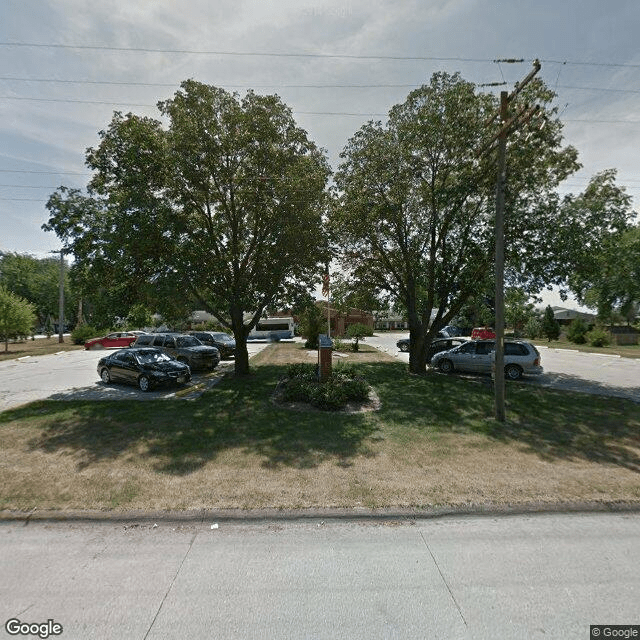
815 Logan St, Scribner, NE 68057
To contact a resident: (402) 664-2527
For more information about senior living options: (866) 208-4318
Good Samaritan Society-Scribner Costs & Pricing
At Good Samaritan Society-Scribner, the monthly cost for a studio room is set at $4,195, which aligns with the average pricing in Dodge County. However, when looking at the broader state of Nebraska, the typical cost for similar accommodations is considerably lower at $3,728. This indicates that while Good Samaritan Society-Scribner offers competitive pricing within its county, it sits above the statewide average. Prospective residents should consider not only these costs but also the unique services and amenities provided by this facility that may contribute to its value proposition.
| Floor plans | Good Samaritan Society-Scribner | Dodge County | Nebraska |
|---|---|---|---|
| Studio | $4,195 | $4,195 | $3,728 |
Assisted Living communities with a similar price nearby
-
from -$805 / mo
Arbor Care Centers - Tekamah
$3,390 / month24.3 miles away
Overall Review of Good Samaritan Society-Scribner
Pros
 The staff are very good with the residents, no matter how demanding or difficult.
- They work very hard to please the residents and go out of their way to do things for them, even on their personal time and expense.
- Nancy in laundry is especially appreciated.
- The facility is faith-based and loved by visitors.
- The Good Samaritan has always drawn people there.
Review
This community is best suited for seniors and families who prize a warm, faith-centered living environment coupled with unusually attentive, resident-focused care. The standout attribute is the staff’s commitment to meeting demanding or difficult needs with patience and persistence. The review repeatedly notes that caregivers work hard to please residents, often going beyond standard duties and even extending efforts into personal time to ensure comfort and satisfaction. That level of dedication creates a daily reality where residents feel valued and protected, which is especially meaningful for families seeking a home where staff-resident relationships are prioritized over merely meeting basic tasks.
Those who should consider alternatives are families seeking secular programming, heavy clinical specialization, or a broader range of amenities that come with larger, more urban settings. This Scribner community appears rooted in a smaller, faith-based model where the spiritual tone and intimate staff-resident dynamics shape the experience. If memory-care structured programs, high-acuity medical services, or diverse recreational options are top priorities, it’s wise to compare with facilities whose primary emphasis is on these elements rather than on a faith-forward culture and individualized caregiving.
The primary pros, exceptional staff attentiveness, a willingness to go the extra mile, and a clearly faith-aligned atmosphere, offset the absence of more expansive offerings you might find elsewhere. The praise for staff like Nancy in laundry signals a culture where everyday support tasks are handled with surprising care and personal regard. In practice, this translates to fewer moments of friction for families worried about persistent needs, as residents experience consistent, thoughtful assistance that reinforces dignity and comfort. In a setting where staff engagement directly affects daily quality of life, these advantages are meaningful and practical.
Equally important is the faith-based context, which cultivates a sense of community, shared values, and structured routine that many families find stabilizing. For residents who value spiritual nourishment, regular encouragement, and a moral framework that governs interactions, the environment can feel like a true home. When care is delivered with this underlying ethos, it often reinforces a respectful, calmer day-to-day atmosphere. Those who are neutral or opposed to religious programming, however, should assess whether this orientation might feel restrictive or misaligned with personal or family beliefs before choosing.
Not every potential concern is visible in a single positive review, and the absence of expressed drawbacks does not guarantee a flawless fit for every situation. Readers should consider whether a smaller, faith-based community can sustain the specific medical supports needed as health status evolves, and whether costs align with budget expectations in light of the intimate staff-to-resident ratio. The one-vendor perspective here limits the breadth of experiences, so prospective families should supplement this view with on-site interviews, conversations with administrators, and testimonials from current residents or families who face similar care trajectories.
In conclusion, the strongest case for Good Samaritan Society-Scribner is made for families seeking a warm, values-driven home where caregiving is personal and deeply attentional. For seniors who treasure ongoing staff connection, compassionate problem-solving, and a community that proudly reflects its faith tradition, this facility offers a practical, reassuring option. If secular preferences, advanced medical acuity, or a wealth of modern amenities take precedence, or if budget constraints are stringent, it is prudent to explore other communities with different emphases. A guided visit to observe daily interactions, ask about care levels, and verify availability will convert a promising impression into a confident placement decision.
 Assisted Living
 Independent Living
 Activities on-site
 Devotional services off-site
 Indoor common areas
 Ambulatory care
 Diabetic care
 Meals provided

 Assisted Living and Memory Care: Understanding Their Core Differences
 Beyond the Bingo Hall: 50+ Enriching Activities for Seniors in Assisted Living
 Understanding the Distinctions: Assisted Living and Memory Care Explained