

100 W 12th Street, Washington, MO 63090
To contact a resident: (636) 390-0050
For more information about senior living options: (866) 208-4318

Bristol Manor of Washington Costs & Pricing
Bristol Manor of Washington offers competitive pricing for its residents, particularly when compared to both Franklin County and the broader state of Missouri. For a studio apartment, residents pay $2,200 per month, significantly less than the county average of $3,519 and the state average of $3,418. Similarly, the one-bedroom option at Bristol Manor is priced at $3,200, providing a more economical choice compared to Franklin County's average of $3,633 and Missouri's average of $3,349. These cost advantages make Bristol Manor an attractive option for those seeking quality living arrangements without exceeding their budget in a region where prices can be considerably higher.
| Floor plans | Bristol Manor of Washington | Franklin County | Missouri |
|---|---|---|---|
| Studio | $2,200 | $3,519 | $3,418 |
| 1 Bedroom | $3,200 | $3,633 | $3,349 |
Assisted Living communities with a similar price nearby
-
from +$350 / mo
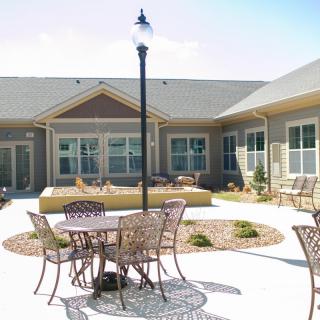
The Boulevard Senior Living of Wentzville
$2,550 to $4,230 / month19.2 miles away -
from +$270 / mo

Victorian Place of Union
$2,470 to $3,265 / month7.2 miles away -
from +$91 / mo

Lutheran Senior Services At Breeze Park
$2,291 to $3,930 / month22.9 miles away -
from +$170 / mo

Garden Villas of O'Fallon
$2,370 to $4,440 / month21.7 miles away -
from +$300 / mo
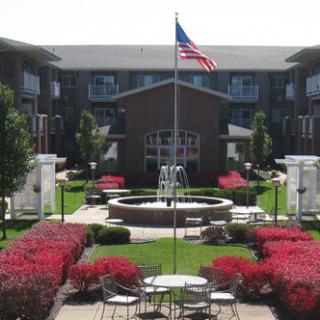
The Fountains of West County
$2,500 to $5,295 / month23.8 miles away
Overall Review of Bristol Manor of Washington
Pros
 The facility is a great place.
- The residents enjoy the community and companionship.
- They enjoy the meals and activities.
- The Bristol is a great place to live.
- The staff are friendly and helpful.
- The activities are fun.
- The kitchen ensures meals are healthy.
- The staff are helpful and caring.
- The community is very clean and well maintained.
Cons
 Terrible response time and communication from the district supervisor.
- The contract is worded so vaguely they will attempt to sue any and all employees.
- They need more care at the time.
Review
Bristol Manor of Washington is best suited for seniors who want a warm, neighborly assisted-living environment in Washington, Missouri, with dependable daily support and a steady rhythm of social activities. It works well for families prioritizing friendly staff, a clean, comfortable setting, and meals that feel nourishing and reliable. Those who are looking for a practical, value-conscious option, where daily life is organized around companionship and routine rather than high-acuity medical services, will find this community a solid fit. However, families anticipating or requiring immediate, ongoing skilled nursing or highly specialized care should consider alternatives or plan for a transition to a higher level of care down the line.
The strongest positives center on the day-to-day experience: a caring, approachable staff that residents and families consistently praise, a clean and well-maintained environment, and a menu that emphasizes healthy, satisfying meals. Activities are described as varied and engaging, providing meaningful opportunities for social interaction and purpose. The sense of community is reinforced by multiple family members living on-site or nearby, which reinforces comfort and continuity for residents. In practical terms, these factors translate into reliable quality-of-life gains, regular, pleasant interactions, predictable routines, and nourishment that supports energy and mood.
Yet there are real caveats to weigh. Administrative communication can be inconsistent, with at least one reviewer noting slow responses from district-level leadership and concerns about how disputes are handled. The contract itself has been described as vague, raising questions about protections, responsibilities, and how staff accountability is enforced. A recurring thread in the care narratives is that some residents may need more hands-on care than the community consistently provides, which explains why families sometimes pursue higher levels of care elsewhere as needs evolve. These administrative and care-connectivity gaps are not minor; they influence trust and decision timing, especially for families planning long-term arrangements.
Do the pros offset the cons? For many families, the answer is yes, but with conditions. The practical value offered by a friendly staff, safety-conscious operations, and robust meal and activity programs can outweigh administrative friction for residents who require moderate assistance rather than intensive medical oversight. The environment’s warmth and predictability, coupled with accessible social programming, often deliver meaningful daily satisfaction that justifies the cost. Still, the governance concerns, especially around contract clarity and responsiveness, mean prospective residents should verify how concerns are escalated and resolved before committing, and should seek concrete assurances on what happens if care needs escalate.
Families evaluating Bristol Manor should enter with targeted questions. What specific care levels are supported on-site now, and what is the clear pathway if needs increase toward higher acuity? What are staff-to-resident ratios across shifts, and how consistent is staffing during peak times? How are complaints or contract ambiguities handled, and who are the primary points of contact for timely responses? Request opportunities to speak with current residents and their families to gauge consistency of care and communication. Ask for a sample contract that clearly outlines liability, resident rights, and dispute resolution, and demand a transparent presentation of safety features, meal flexibility, and daily activity cadence during the tour.
Overall, Bristol Manor Washington stands out as a strong option for families who prize companionship, safety, value, and a lively social calendar. It is particularly well-suited for residents who need steady, moderate assistance rather than ongoing, high-level medical care. The noted caveats, administrative responsiveness and contract clarity, are tangible, but they do not erase the everyday quality of life that many families experience here. With thorough due diligence, a candid tour, and precise expectations set, Bristol Manor can offer a dependable, comforting home where seniors stay engaged, well-fed, and supported by a caring staff.
 12 resident community capacity
 Assisted Living
 Board and Care Home
 Day Program
 Independent Living
 Cats allowed
 Dogs allowed
 Air-conditioning
 Cable or satellite TV
 Devotional services off-site
 Dining room
 Fully furnished
 Garden
 Ground floor units
 Housekeeping services
 Indoor common areas
 Move-in coordination
 Outdoor common areas
 Respite or short term stays offered
 Telephone
 Wi-Fi/high-speed internet available
 24-hour supervision
 Ambulatory care
 Assistance with bathing
 Assistance with dressing
 Assistance with transfers
 Diabetes diet
 Diabetic care
 Incontinence care
 Meal preparation and service
 Medication management
 Special dietary restrictions
 Transportation arrangement (medical)
 Transportation to doctors appointments
 BBQs or picnics
 Birthday parties
 Stretching classes



 Assisted Living and Memory Care: Understanding Their Core Differences
 Beyond the Bingo Hall: 50+ Enriching Activities for Seniors in Assisted Living
 Understanding the Distinctions: Assisted Living and Memory Care Explained