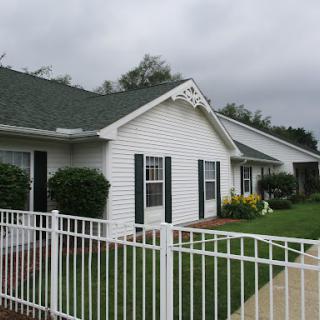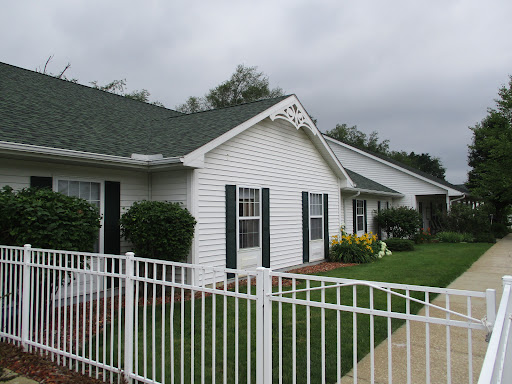
1311 Southwestern Drive, Tecumseh, MI 49286
For more information about senior living options: (866) 208-4318
Overall Review of Tecumseh Place
Pros
 Tecumseh Place has competently cared for residents' grandmothers for 21 months.
- Geoff Byron and Carol Belanger are kind, patient, and unhurried as they listen to concerns.
- Geoff Byron and Carol Belanger have the best interests of patients at heart, combining competence with compassion.
- Nicole Wingenfeld is an amazing, kind, caring, and compassionate person, and her staff reflects her.
- Executive Director Nicole is warm and welcoming and cares about staff and residents.
- Tecumseh Place maintains a favorable 5:1 patient-to-employee ratio.
- The living quarters are very nice, the staff is great, and the dining area is nice with good food.
Cons
 The reviewer describes the experience as horrible and says they are terrified to go to any facility again.
- The reviewer urges families to remove their loved ones from the facility.
- The reviewer states they would give zero stars if possible.
- The reviewer notes that the facility advertised memory care but removes residents at a certain point.
- The reviewer acknowledges the staff are decent but says the operation appears disorganized.
- The reviewer reports that appointments were interrupted seven or eight times.
- The reviewer claims the facility needs to be shut down.
- The reviewer mentions frequent little emergencies that spring up at the facility.
Review
Tecumseh Place is best suited for families seeking a small, intimate assisted-living setting where residents receive hands-on attention from a stable, engaged team. The community’s footprint and culture favor personal connections: a gracious lobby, living spaces that feel home-like, and leadership that is accessible and responsive. The recent expansion into memory care adds another layer of suitability for families with loved ones who are progressing in dementia but still want a familiar, locally managed environment. For residents who thrive on gentle advocacy, predictable routines, and staff who know their preferences, this is a place that can feel like a dependable second home.
That said, not every family will find Tecumseh Place the right fit. Budget is a meaningful consideration, as reviews flag that the cost is not inexpensive and negotiations around price can be rocky. A few families have encountered disorganization in scheduling and communication, including interruptions during appointments and a sense that emergent issues “pop up” too frequently. Those who require a high degree of structured memory-care programming or who want a turnkey, fixed-fee pricing model may want to compare alternatives more aggressively before committing.
The strongest advantages are in the people and the daily lived experience. Executive leadership, notably Nicole as the executive director, is repeatedly described as warm, welcoming, and genuinely invested in staff and residents. A five-to-one staff-to-resident ratio stands out as a meaningful differentiator, translating into more attentive care, faster responses, and better monitoring of daily needs. Families consistently praise the kindness, patience, and competence of caregivers, and several note that the team works closely with hospice partners to ensure a coordinated, compassionate approach to end-of-life care when needed. The result is a sense of security that the care hierarchy is in good hands.
Facility quality and programming reinforce those strengths. The community is described as having modern, well-maintained spaces, with nice rooms and a dining area that residents find comfortable and appealing. Activity programs are diverse enough to engage many residents, including group bingo, visits from musicians, and live organ/piano music that foster social interaction. The new memory care unit is highlighted as especially attractive for residents with dementia, with a restaurant-like dining area and thoughtful food choices. For families seeking a warm, livable environment where residents can still enjoy meaningful engagement, these attributes measurably offset some operational fragility.
However, the memory-care component deserves careful scrutiny. Some residents and families perceive a gap between advertised memory-care capabilities and actual execution, especially around progression through stages. The concern is that, at a point, residents may be moved out of the unit or otherwise limited by the program’s structure, which can be disruptive if continuity is a priority. For families whose loved ones are at a critical or evolving stage of memory loss, this risk, paired with reports of occasional organizational hiccups, means alternatives with more seamless memory-care continuum should be explored in parallel.
In the end, Tecumseh Place delivers practical value through a high-touch, people-first model housed in a well-kept, welcoming setting. It excels for families prioritizing relational care, individualized attention, and a home-like atmosphere where leadership is visible and accountable. The cons, price sensitivity, sporadic disorganization, and questions about memory-care continuity, do not erase the strengths, but they do tilt the decision toward cautious comparison. Those who detect alignment with a warm, intimate environment, where staff can know and anticipate needs, will likely feel confident in moving forward. Conversely, budget-conscious families or those needing a highly predictable, fully integrated memory-care continuum may want to chart additional options before finalizing.
 20 resident community capacity
 Assisted Living
 Board and Care Home
 Memory Care
 Respite Care
 Beauty salon
 Cable or satellite TV
 Dining room
 Fully furnished
 Garden
 Housekeeping services
 Kitchenette
 Move-in coordination
 Outdoor space
 Telephone
 Wi-Fi/high-speed internet available
 24-hour call system
 Activities of daily living assistance
 Assistance with bathing
 Assistance with dressing
 Assistance with transfers
 Diabetes diet
 Hospice waiver
 Meal preparation and service
 Medication management
 Mental wellness program
 Special dietary restrictions
 Transportation arrangement (medical)
 Transportation to doctors appointments



 5 Early Indicators of Dementia and What You Can Do
 8 Important Indicators That Memory Care May Be Necessary
 Delving into the Inner World of Dementia: Insights into Thoughts and Awareness