
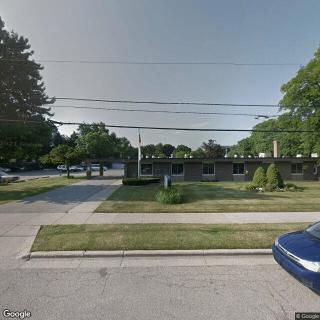
919 Forty-Fourth Street, Jenison, MI 49428
For more information about senior living options: (866) 208-4318
Overall Review of Harbor House Pier Place
Pros
 Harbor House is an outstanding place.
- The environment at Harbor House is fantastic, positive, and spiritually uplifting.
- The staff at Harbor House are caring, loving, and among the most amazing caregivers.
- The care provided at Harbor House is a blessing for those who need it most.
- Harbor House provides good service.
Cons
 Harbor House would not place its American flag at half-mast despite a presidential order for five days around 9/11, which speaks volumes about its responsiveness.
- A Harbor House employee named Lisa hung up on a caller multiple times and was very rude when asked to speak with the manager or owner.
- The process to reach Harbor House information required four calls just to get to a voicemail, which was described as ridiculous.
Review
Harbor House Pier Place in Jenison, MI is best suited for families seeking a small, intimate assisted-living environment with a clear emphasis on special-needs care and genuine, hands-on compassion. The campus feels like a neighborhood among itself, structured as three compact houses with roughly a dozen residents each plus a common-building hub. This arrangement supports a highly personalized routine, close nurse or caregiver oversight, and a community where caregivers appear deeply engaged in the welfare of every resident. For families prioritizing warmth, spiritual tone, and a sense of being truly cared for by dedicated staff, Harbor House delivers a compelling fit.
Those considering alternatives should beware if polished front-desk communications and consistently responsive administrative processes are non-negotiable. A few reviews raise concerns about how information is conveyed and how quickly inquiries are handled, including a notably negative interaction with a staff member who hung up during a call. Additionally, a decision on observances and sensitivities around public acts, such as the half-mast flag issue, can signal a mismatch for families that expect a facility to align smoothly with broader civic expectations. If a resident’s family places heavy weight on flawless front-end communication, transparent policy execution, and proactively accessible leadership, it may be prudent to explore other options.
The strongest positives center on the caregiving core. Multiple reviews characterize the staff as exceptionally caring and dedicated, with patients on hospice or those needing intensive assistance receiving standout, compassionate attention. Descriptions such as “an outstanding place,” “fantastic environment,” and “spiritually uplifting” point to a culture that rewards kindness, patience, and consistent, humane treatment. In a setting designed to accommodate those who cannot fully care for themselves, the caregivers’ responsiveness and overall demeanor become decisive advantages, often translating into safer days and more meaningful ordinary moments for residents.
Yet, the same strength, an intensely caring, small-community atmosphere, also highlights the trade-offs. The intimate scale, while enabling close relationships, may come with less organizational polish at the outset. Instances of perceived rudeness in initial communications and a perception that administrative sensitivity to national observances could be improved cannot be ignored. They do not erase the clear care quality at the bedside, but they do raise legitimate questions for families who require an unblemished, consistently smooth administrative experience as part of choosing a long-term home. The offset here is substantial: the day-to-day life of residents is deeply tended, and the care culture often compensates for occasional front-office missteps.
From a logistical perspective, the campus design matters. A small, clustered facility can foster strong routines, steady caregiver assignments, and a family-like rhythm that often reduces resident confusion and anxiety. Residents benefit from predictable schedules, easier one-on-one interactions, and a sense of belonging within a tight-knit community. On the downside, families should verify how well the operation scales with medical complexities, how activity programming is kept engaging without large-scale resources, and how access to specialists or external services is coordinated. These are sensible checks in a setting that prides itself on personal attention and may rely more on intimate team coordination than on expansive on-site amenities.
In the end, Harbor House Pier Place presents a compelling case for families who value heartfelt caregiving in a small, spiritually oriented setting and who are comfortable navigating occasional communication glitches. The core advantage, caring, capable hands delivering attentive, humane treatment to residents who need assistance or end-of-life support, often outweighs the drawbacks for the right fit. Prospective residents and families should prioritize a frank conversation about front-desk responsiveness, staff training on communication and sensitivity, and the facility’s approach to policy decisions that touch on civic or ceremonial matters. If those discussions align with expectations, Harbor House stands out as a trustworthy, deeply compassionate option for entrusted care.
 12 resident community capacity
 Assisted Living
 Cable or satellite TV
 Dining room
 Fully furnished
 Garden
 Housekeeping services
 Move-in coordination
 Outdoor space
 Telephone
 Wi-Fi/high-speed internet available
 Kent County International (14 miles away)
 24-hour supervision
 Activities of daily living assistance
 Assistance with bathing
 Assistance with dressing
 Assistance with transfers
 Diabetes diet
 Meal preparation and service
 Medication management
 Special dietary restrictions
 Transportation arrangement (medical)
 Transportation to doctors appointments





 Comprehensive Residential Support and Assisted Living Solutions for Individuals with Disabilities
 Comprehensive Supportive Living Arrangements for Adults with Disabilities
 Funding and Affording Assisted Living: A Thorough Overview