Pine Rest Pine Grove Cottage is an assisted living community in Grand Rapids, MI.
Information last verified:
7051 Madison Avenue SE, Grand Rapids, MI 49548
For more information about senior living options: (866) 208-4318
2.4 from 100 reviews
5 stars
27
4 stars
6
3 stars
6
2 stars
5
1 stars
56
Overall Review of Pine Rest Pine Grove Cottage
differentiator6 reviews mention this
Medication management stands out
Residents frequently mention medication support and follow-through on medication changes.
Several reviews describe medication management as a meaningful part of care, including help getting restarted and medication adjustments when something wasn’t working. Some reviewers say providers listened to their experience and then changed medications or explained why changes were made. A few also note diagnosis and assessment results tied to medication planning. Not every review is positive, but medication support is a recurring point in resident experiences.
caveat6 reviews mention this
Food quality is uneven
Multiple residents call out problems with the food.
Food comes up often as a weak spot, with several reviews saying meals were poor, bland, or not edible. Some residents specifically want more than one choice or describe trouble with meals and meal-related logistics. Others report the food was only “alright” for hospital use. Even when care is described positively, complaints about meals recur.
caveat3 reviews mention this
Billing and insurance issues
Billing surprises and insurance confusion are a recurring complaint.
A number of reviews describe feeling misled about what insurance would cover and then receiving bills or unexpected copays. Some reviewers say patient assistance didn’t resolve the cost they were left with, or that treatment was billed in ways that didn’t match their expectations. There are also comments about being charged for things that weren’t done. Overall, these reviews focus more on financial stress than on clinical outcomes.
common8 reviews mention this
Staff kindness is a mixed theme
Many reviewers describe staff as caring, but experiences vary by unit and person.
Some residents and families praise staff for being friendly, attentive, and empathetic, including specific mentions of nurses, psychiatrists, group leaders, and front-desk support. Other reviews complain about staff being rude, dismissive, or overstepping boundaries, and some describe feeling ignored during stressful moments. A common thread is that staff quality is not uniform across every experience. That variation shows up alongside both positive and negative accounts of communication and responsiveness.
caveat6 reviews mention this
Safety concerns appear in reviews
Several reviews raise serious concerns about safety and treatment practices.
Some residents describe being physically harmed by other patients or describe staff not protecting them, including complaints about assaults and bruising. Others say they experienced emotional harm, felt traumatized, or described not being treated with care during moments of crisis. A few reviewers also reference rights-related problems, documentation omissions, or forced treatment decisions. While there are positive experiences in the reviews, safety and how crises were handled are recurring negatives.
How we summarize
Counts show how many written reviews mention each theme; a review can touch several themes, and only frequently mentioned themes are displayed.
Features
Housing
12 resident community capacity
Types of Care
Assisted Living
Amenities
Cable or satellite TV
Dining room
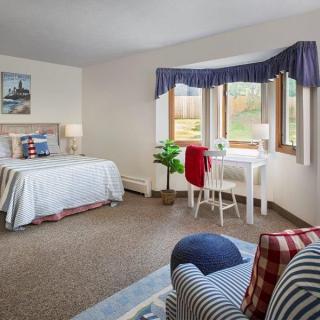
Fully furnished
Garden
Housekeeping services
Move-in coordination
Outdoor space
Telephone
Wi-Fi/high-speed internet available
Transportation
Kent County International (7 miles away)
Care Services
24-hour supervision
Activities of daily living assistance
Assistance with bathing
Assistance with dressing
Assistance with transfers
Coordination with health care providers
Diabetes diet
Meal preparation and service
Medication management
Special dietary restrictions
Transportation arrangement (medical)
Transportation to doctors appointments
Dining
Diabetes diet
Special dietary restrictions
Activities
Community-sponsored activities
Scheduled daily activities
Nearby Places of Interest
Hospitals
Pine Rest: Van Andel Center (0.2 miles)
Pine Rest: Mulder Therapy Center (0.2 miles)
Trinity Health Medical Center (3.5 miles)
Metro Health Hospital (3.5 miles)
Spectrum Health Lab (3.9 miles)
Pharmacies
Walgreens (0.6 miles)
Family Fare (1.8 miles)
Meijer Pharmacy (1.9 miles)
Rite Aid (2 miles)
Walgreens (2 miles)
CVS Pharmacy (2.3 miles)
Meijer Drive Up Pharmacy (2.4 miles)
Transportation
Enterprise Rent-A-Car (0.9 miles)
Places of Worship
Providence Christian Reformed Church (1 miles)
Cornerstone Church (2.3 miles)
St Mark Lutheran Church (3 miles)
Cornerstone Methodist (4.3 miles)
Christ Church-Pca (6.2 miles)
Madison Square Christian Reformed Church (7 miles)
Restaurants
Arby's (1.1 miles)
McDonald's (1.2 miles)
76th Street Truck Stop Diner (1.2 miles)
FireRock Grille (1.4 miles)
Chick-Fil-A (1.6 miles)
Peppino's Sports Grille & Pizzeria (1.7 miles)
McDonald's (1.9 miles)
Physicians
Battiste Family Medicine PLC (1.5 miles)
Mikids Pediatrics (1.5 miles)
Psychiatric Associates Of West Michigan (1.9 miles)
SVS Vision Optical Centers (2 miles)
Wolverine Dermatology (3.1 miles)
Metro Health Cancer Center (3.3 miles)
Gastroenterology Associates of Western Michigan (3.5 miles)
Choosing between assisted living and nursing homes involves evaluating emotional and financial factors, with assisted living offering independence and support for daily activities at a lower cost, while nursing homes provide intensive medical care for individuals with significant health needs. The decision is influenced by personal preferences, health status, cognitive function, and varying Medicaid coverage across states.
Assisted living in 2025 offers a crucial balance of independence and support for seniors, with costs varying from $2,500 to over $7,000 per month based on factors such as location and care level. Understanding pricing complexities, including regional differences and potential hidden fees, is essential for families to plan financially while ensuring quality care for their loved ones.
The guide outlines the complexities of Medicaid coverage for assisted living, highlighting significant state-to-state variations, limited coverage often restricted to personal care services, and the existence of specialized waivers for certain needs like memory care. It advises families to consult local Medicaid offices for options while emphasizing the importance of understanding state-specific regulations and facility policies.
Get PricingAsk A QuestionSchedule A TourContact Senior Advisor
By clicking submit, you agree to our Partner's Terms of Use. You
also consent to receive calls and texts, which may be autodialed, from our Partner. Your consent is not a condition to
using our Partner's service. Please visit our Partner's Privacy Policy for information about their privacy practices.

 12 resident community capacity
 Assisted Living
 Cable or satellite TV
 Dining room
 Fully furnished
 Garden
 Housekeeping services
 Move-in coordination
 Outdoor space
 Telephone
 Wi-Fi/high-speed internet available
 Kent County International (7 miles away)
 24-hour supervision
 Activities of daily living assistance
 Assistance with bathing
 Assistance with dressing
 Assistance with transfers
 Diabetes diet
 Meal preparation and service
 Medication management
 Special dietary restrictions
 Transportation arrangement (medical)
 Transportation to doctors appointments
 Intimate 12-resident community with 24/7 supervision and ADL support.


 Choosing the Right Senior Care: A Detailed Exploration of Assisted Living and Nursing Homes
 Understanding the True Cost of Assisted Living in 2025: A Comprehensive Guide
 Understanding Medicaid Coverage for Assisted Living: A Comprehensive Guide