
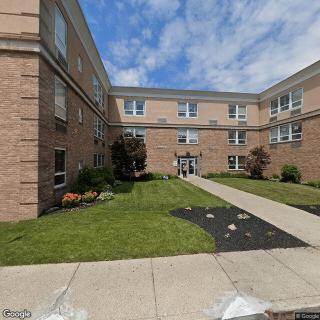
2447 Thomas Street, Flint, MI 48504
For more information about senior living options: (866) 208-4318

Overall Review of Gingerbread Manor 2
Pros
 The child blossoms and learns so much during the year.
- The staff go above and beyond to care for and nurture every child.
- The monthly themes, engaging activities, and field trips make learning joyful.
- The classroom environment is fun and ever-changing for the kiddos.
- The teachers are top notch and genuinely love working with kids.
- The program supports growth in language, math, imaginative play, and critical thinking.
- The small class sizes allow for individualized attention to meet each child’s needs.
- The program helps children develop kindness, empathy, and leadership.
- The drop-off and pick-up process is easy and convenient for families.
- The school prepares children for kindergarten and beyond, helping them become confident learners.
Review
This community is best suited for families with preschool-age children (roughly 3 to 5 years old) who want a warm, intimate learning environment where small class sizes translate into real, day-to-day attention. The reviews show a program built around caring relationships, with teachers who treat each child as an individual and cultivate a sense of belonging from day one. It is ideal for parents who value kindergarten readiness delivered through play, hands-on activities, and social-emotional development, rather than a one-size-fits-all, high-volume curriculum. The consistency of staffing, the emphasis on kindness and empathy, and a family-like atmosphere make this option a standout for families prioritizing a nurturing start to formal schooling.
The strongest pros center on the lived experience of families: see-through, small-class dynamics; highly engaged teachers; and a culture that makes attendance feel like a trusted extension of home. Parents repeatedly highlight Mrs. Cooper and her team for their expertise and devotion, which yields tangible gains in language, problem-solving, and social skills. The program’s design supports children who thrive on routine yet enjoy creative, thematically driven activities, off-site experiences, and opportunities to showcase their work. Regular communication, weekly photos, monthly calendars, and accessible drop-off/pick-up, further reduces parental anxiety and deepens involvement, turning transitions into smooth, predictable moments rather than stress-inducing milestones.
However, the reviews illuminate a few reality checks that families should weigh. The setting is clearly preschool-focused with a tight age range, and there is little indication of built-in, long-day care or after-school programming. For families seeking extended hours or a seamless progression into elementary grades within a single provider, alternatives offering broader age spans and wrap-around care may be more appropriate. There are mentions of a waitlist dynamic in at least one candid note from the community, signaling that demand can exceed immediate availability. Those seeking a more formal, metrics-driven academic track or varied classroom formats may also find the emphasis on play and social growth less aligned with their goals.
Who should consider alternatives? Families that require extended-day supervision, aftercare, or a program that accommodates older or younger siblings in a single setting may prefer a larger or more varied preschool/childcare network. Parents pursuing a highly structured, test-oriented approach or those desiring multilingual or specialized therapeutic supports within the same campus might look to other options. Likewise, households that want a program with a broader range of class options or a different balance between academics and enrichment activities could find a better fit elsewhere. The key is to match expectations about hours, pace, and the scope of services with what the site offers.
Decision-making in this context should focus on fit with child temperament and family logistics. Prospective families should verify class size and the exact teacher-to-child ratio, gauge the warmth of teacher interactions during a visit, and confirm how communication channels operate in practice (photos, calendars, and real-time updates). Inquire about field trips, parent involvement opportunities, and how the curriculum translates into kindergarten readiness, especially in language, literacy, and early math. Clarify waitlist status and the anticipated timing of enrollment, as well as the availability of any aftercare or summer programming if needed. A visit will confirm whether the environment feels as welcoming and responsive as the reviews suggest.
Bottom line: Gingerbread House Preschool, as depicted by families, is a premier match for those who prize a small, emotionally rich preschool experience that builds true social-emotional strength while delivering concrete early academics and kindergarten readiness. It stands out where family engagement, individualized attention, and a nurturing, home-like setting matter most. For families seeking longer hours, broader age ranges, or a more intensive academic structure, alternatives are likely to better align with those priorities. When ready to decide, a tour paired with questions about waitlists, aftercare, and specific classroom dynamics will reveal if this intimate, caregiver-led model is the best launchpad for a child’s formal education.
 6 resident community capacity
 Assisted Living
 Board and Care Home
 Cable or satellite TV
 Dining room
 Fully furnished
 Garden
 Housekeeping services
 Move-in coordination
 Outdoor space
 Telephone
 Wi-Fi/high-speed internet available
 Bishop (4 miles away)
 24-hour supervision
 Activities of daily living assistance
 Assistance with bathing
 Assistance with dressing
 Assistance with transfers
 Diabetes diet
 Meal preparation and service
 Medication management
 Special dietary restrictions
 Transportation arrangement (medical)
 Transportation to doctors appointments




 Understanding Medicaid Coverage for Assisted Living: A Comprehensive Guide
 How and When Medicaid May Cover Assisted Living Costs
 A Detailed Exploration of Assisted Living Medicaid Waivers Across the United States