
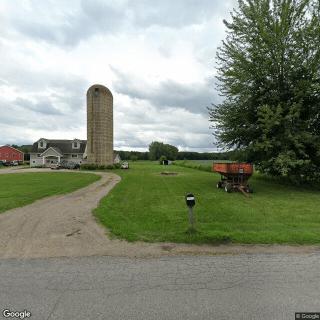
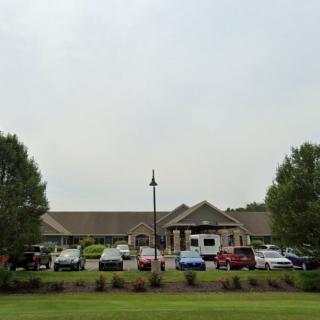
10785 Burlingame Avenue SW, Byron Center, MI 49315
For more information about senior living options: (866) 208-4318
Overall Review of Rehoboth Adult Foster Care
Pros
 Rehoboth is a loving, close, active home.
- Residents enjoy home made meals, crafts and activities, old time music on the record player, and trips to different locations.
- They may go out to a park where they enjoy live music, fishing or just hanging with family and each other.
- They have taken trips to lunch and to see the tulips in Holland, they go to Meijer Gardens or a movie.
- Jenn is amazing keeping the residents busy and happy inside the home and out.
- The new addition is going to make for even happier residents with more activities, companionship and room to roam.
- The staff at Rehoboth are caring and interactive, keeping residents busy and involved with their families.
- The staff treat every resident as if they were family, making the home feel welcoming and like home.
Cons
 The reviewer warns not to take elders there, calling the place extremely immoral.
- They claim that if you had a dog there, the staff would kill it with no consequences.
Review
Rehoboth Adult Foster Care in Byron Center, Michigan, is best suited for families seeking a warm, home-like environment where care feels personal and daily life centers on companionship and meaningful activity. The home operates on a small, intimate scale, with residents enjoying homemade meals, crafts, and a steady stream of social outings. Regular activities include old-time music, park trips, and outings to gardens or Meijer locations, all designed to keep residents engaged and socially connected. A standout feature across reviews is the staff-driven warmth, particularly Jenn, who is repeatedly credited with keeping residents busy and content both inside and outside the home. The recent addition signals a deliberate expansion of space and programming, suggesting a commitment to maintaining a lively, communal atmosphere.
That intimacy, however, makes it essential to align expectations with the level of care needed. Families pursuing strong medical oversight, robust memory-care programming, or 24/7 clinical supervision may prefer a larger, more traditional assisted-living setting. Those seeking a highly structured routine or a campus with extensive on-site resources might find a bigger facility better suited to evolving needs. One highly critical review stands out as an extreme departure from the general tenor of feedback; while it should be weighed, it is prudent to verify claims through direct conversations with staff and licensing authorities, and to corroborate impressions with multiple references before deciding.
The upside centers on the human fabric of the operation. Residents consistently experience a genuine home atmosphere, with meals prepared in-house and a calendar of activities that blends crafts, music, and neighborhood outings. The ability to step outside for parks, tulip displays, or garden visits broadens everyday life beyond four walls, a recurring theme in family feedback. Families praise staff warmth and the sense that care providers treat residents as part of a family, extending that care to visiting relatives. The expansion adds capacity for more companionship and movement, which can translate into improved mood and appetite, a meaningful signal when assessing overall well-being.
These strengths offset several potential drawbacks because the core value proposition is relational: residents are known, remembered, and included in daily life, not merely monitored. For seniors who prize being treated with dignity and staying engaged, the staff’s attentiveness and the campus’s community-centric culture deliver emotional security that larger, impersonal campuses often struggle to match. The anecdote about weight gain, while not a clinical measure, underscores effective nutrition and encouragement of activity, reinforcing overall health without demanding intensive medical supports. Yet the small size can lead to variability in care if staffing needs spike, so families should confirm staffing continuity and the ability to handle urgent situations on a predictable basis.
For decision-making, prudent touring and targeted questioning will reveal how well the positives translate into day-to-day living. Inquiries should cover who coordinates activities, how personalized attention is allocated, and the continuity of care across shift changes. Request recent licensing documents and any inspection history, and speak with current families about communication quality and consistency. Observe meal service, kitchen operations, and how outings are organized to gauge whether the home-like advantages persist as needs evolve. Given mixed public feedback, it is essential to triangulate experiences with official records and multiple references, ideally during a trial visit.
Ultimately, Rehoboth Adult Foster Care stands out for those prioritizing warmth, belonging, and ongoing social engagement within a small, family-style setting. The combination of home-like care, active programming, and a culture that treats residents as kin makes it a compelling option for seniors who thrive on relational support and personalized attention. If medical complexity, specialized dementia care, or the security and scale of a larger campus are non-negotiable, alternative communities should be explored. For many families, the right move is to lean into the intimate, participatory atmosphere offered here, paired with due diligence and a concrete plan for monitoring care as needs evolve.
 6 resident community capacity
 Assisted Living
 Cable or satellite TV
 Dining room
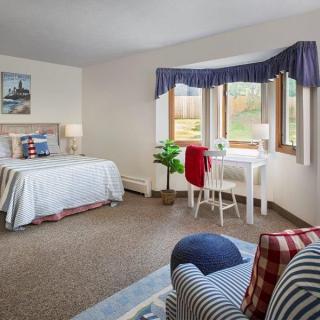
 Fully furnished
 Garden
 Housekeeping services
 Move-in coordination
 Outdoor space
 Telephone
 Wi-Fi/high-speed internet available
 Kent County International (12 miles away)
 24-hour supervision
 Activities of daily living assistance
 Assistance with bathing
 Assistance with dressing
 Assistance with transfers
 Diabetes diet
 Meal preparation and service
 Medication management
 Special dietary restrictions
 Transportation arrangement (medical)
 Transportation to doctors appointments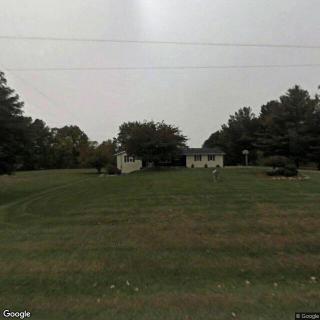


 Comprehensive Insights into Activities of Daily Living (ADLs) and Their Assessment
 Medicare Coverage for Assisted Living: An In-Depth Exploration
 Choosing the Right Senior Care: A Detailed Exploration of Assisted Living and Nursing Homes