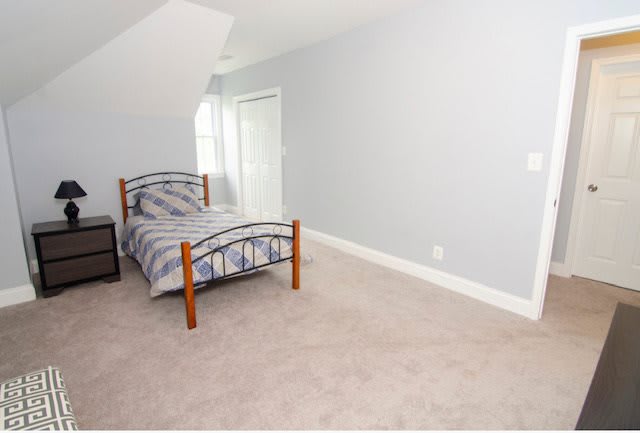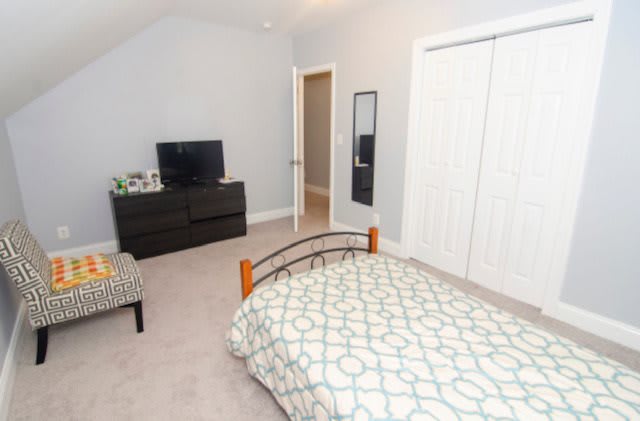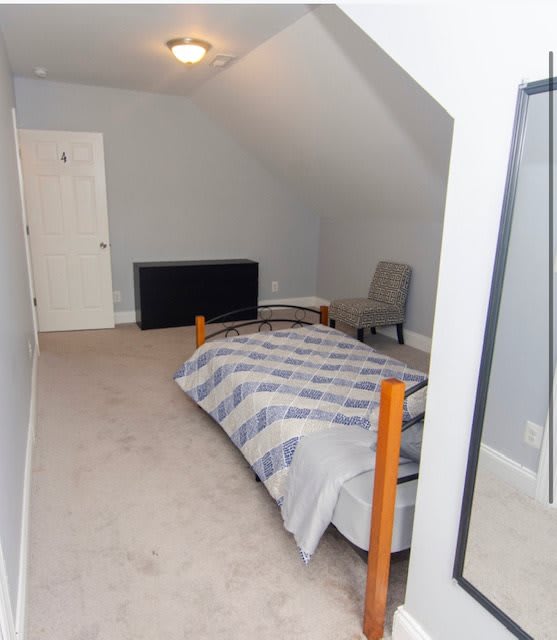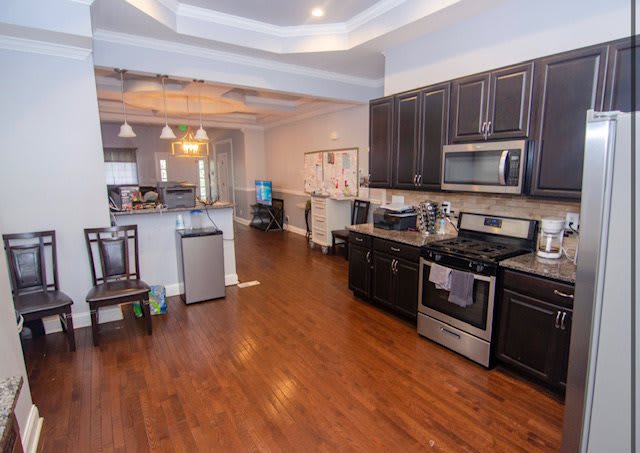
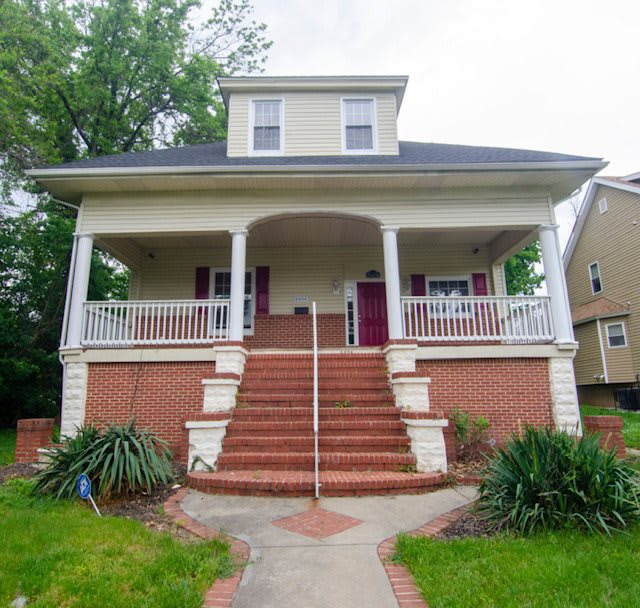
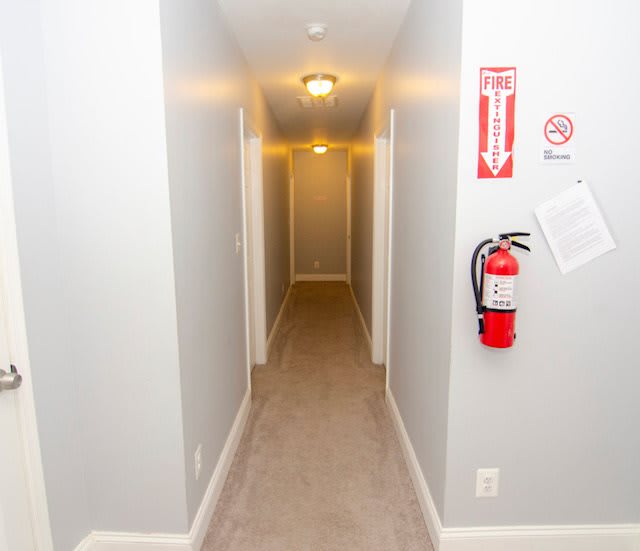

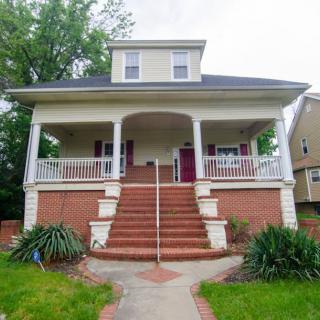
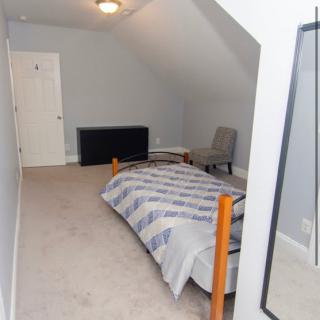





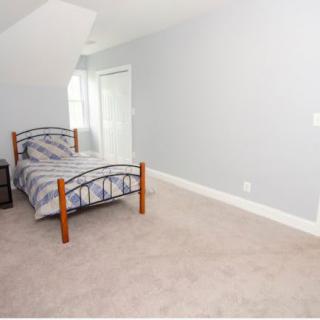
4404 Maine Avenue, Baltimore, MD 21207
For more information about senior living options: (866) 208-4318
Glory House Assisted Living Costs & Pricing
At Glory House Assisted Living, the monthly costs for accommodations are notably competitive compared to both Baltimore City and the broader state of Maryland. For a semi-private room, residents are charged $1,700, which is significantly lower than the city average of $3,116 and the state average of $3,545. Those opting for a private room will find their rates at $2,800 - again presenting a more affordable alternative to Baltimore City's $3,729 and Maryland's $4,112. These pricing structures make Glory House an attractive option for individuals seeking quality assisted living services without the financial strain often associated with such care in urban settings.
| Floor plans | Glory House Assisted Living | Baltimore city | Maryland |
|---|---|---|---|
| Semi-Private | $1,700 | $3,116 | $3,545 |
| Private | $2,800 | $3,729 | $4,112 |
Assisted Living communities with a similar price nearby
-
from +$300 / mo

Senior's Place
$2,000 to $2,500 / month24.9 miles away -
from +$300 / mo

Young at Heart Assisted Living
$2,000 to $2,500 / month21.1 miles away -
from -$200 / mo
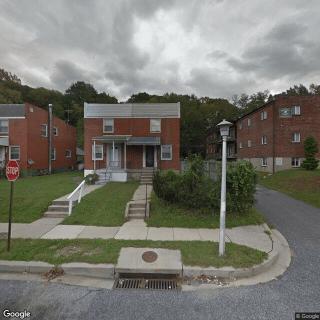
Dee's House of Care
$1,500 to $2,000 / month8.0 miles away -
About the same

Moms & Pops Place
$1,700 to $2,000 / month9.4 miles away -
from +$300 / mo

Pearls of Wisdom
$2,000 to $3,500 / month13.6 miles away
Overall Review of Glory House Assisted Living
Pros
 The staff at Glory House Assisted Living are very kind and take a personal interest in residents' care.
- The owner is easy to communicate with, and the staff are efficient in meeting residents' needs.
- They would recommend Glory House Assisted Living to anyone with a loved one who needs care.
- Visitors report good vibes when visiting their loved ones at Glory House Assisted Living.
- The facility and staff are highly recommended, with knowledgeable caretaking and 24-hour medical support.
- Meals are provided that cater to a variety of dietary requirements, and the facility is handicap-friendly.
- Glory House is considered a great place to transition back to the community.
- The staff show extra effort in caring for residents, and the owner helps with benefits such as VA.
Cons
 There are too many things Glory House Assisted Living needs to improve on to better the experience.
- The best course of action the home should be shut down.
- They lost MY 84 YEAR OLD MOTHER for 48 hours.
- Very nice owner but staff has language barriers.
- Meals are lacking and repetitive. House needs better maintenance and cleaning.
- No activities, TV and phone are problematic.
- Too techy for older people.
Review
Glory House Assisted Living in Baltimore is best suited for seniors who want a small, home-like atmosphere with hands-on, personal attention from an accessible owner and engaged staff. This community can be particularly appropriate for veterans and older adults with disabilities who need help navigating benefits and coordinating care, and for families seeking a caregiver team that invests in daily, individualized support. For residents who crave the vast programming, polished campus environment, or highly structured memory-care pathways that larger operators offer, alternatives may be more appropriate. The right fit hinges on valuing intimate oversight over scale and standardized routines.
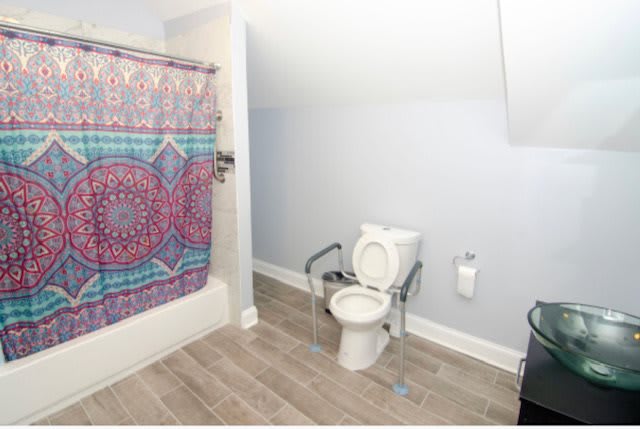
The strongest positives revolve around warmth and reliability in daily care. Staff are described as kind and genuinely interested in residents’ personal needs, with an owner who remains easy to communicate with and responsive to concerns. The facility delivers round-the-clock medical assistance and adheres to dietary requirements, which reduces worries about ongoing health needs and nutrition. The environment is noted to be handicap-friendly, facilitating movement and independence for residents with mobility challenges. For families prioritizing a personal touch and dependable caregiving, these elements carry significant weight.
However, serious safety and operational concerns surface in several accounts. A resident was reportedly lost for 48 hours, a crisis that cannot be dismissed and demands urgent attention to procedures, tracking, and accountability. Language barriers among staff complicate communication with families and residents who rely on precise instructions, potentially undermining trust and safety. Meals are sometimes described as lacking variety, while maintenance and cleaning are questioned, and activities appear sparse or impractical for residents who benefit from engagement beyond passive time in front of screens. These gaps threaten the overall experience and must be addressed decisively.
These cons do not erase the value of the core strengths, but they do shape a clear risk/return calculation. The combination of compassionate staff, hands-on ownership, comprehensive daily care, and VA-benefits navigation creates a meaningful return for residents who prize a close-knit, attentive setting. When safety protocols are strengthened, communication is sharpened, and maintenance and programming are enhanced, the positives can more than offset the remaining drawbacks. In other words, the measure of fit rests on whether risk controls and quality improvements keep pace with the care promise already in place.
For families weighing options, a practical decision framework is essential. Verify the facility’s safety culture: incident reporting, accountability, staff-to-resident ratios, and real-time tracking of residents. Observe meal times for variety and nutrition, assess how activities are structured for different levels of ability, and test communication clarity, especially for families that rely on straightforward, multilingual exchanges. Consider a trial period or a focused evaluation on dementia-care readiness if needed. If safety, maintenance, and engaging programming can be demonstrably improved, Glory House becomes a compelling choice; if not, the search should move toward facilities with proven, scalable safety records and richer activity calendars.
Bottom line: Glory House offers a warm, person-centered environment with notable strengths in staff compassion, accessibility, and assistance with veterans’ benefits, making it a strong option for residents who value intimate oversight and direct caregiver relationships. Yet safety lapses and operational gaps require rigorous scrutiny and clear, committed fixes. Families should pursue a thorough, objective assessment that confirms robust risk controls, consistent maintenance, and transparent communication. When those elements are in place, Glory House can be an excellent match for the right resident; if they are not, exploring alternatives with stronger safety track records and more robust activity programming is the prudent course.
 8 resident community capacity
 Assisted Living
 Board and Care Home
 Cable or satellite TV
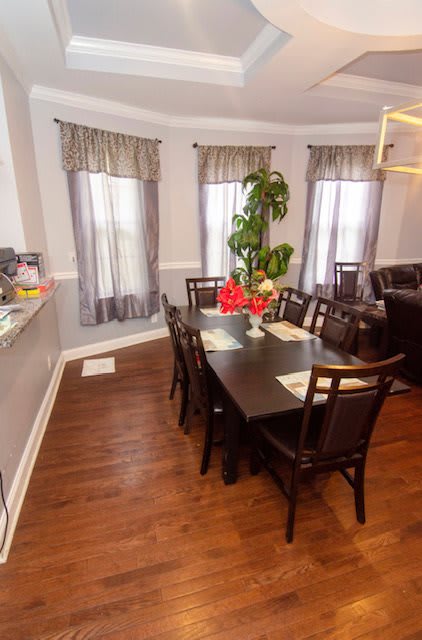
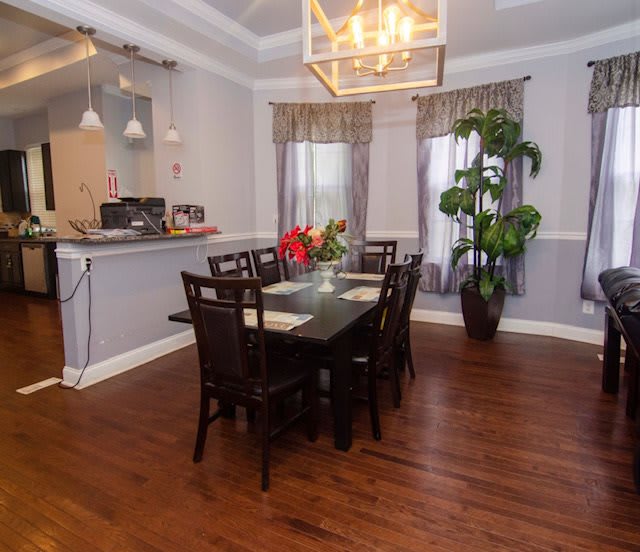
 Dining room
 Fully furnished
 Garden
 Housekeeping services
 Move-in coordination
 Outdoor space
 Private
 Telephone
 Wi-Fi/high-speed internet available
 Baltimore-Washington International (11 miles away)
 24-hour supervision
 Activities of daily living assistance
 Assistance with bathing
 Assistance with dressing
 Assistance with transfers
 Diabetes diet
 Meal preparation and service
 Medication management
 Special dietary restrictions
 Transportation arrangement (medical)
 Transportation to doctors appointments


 8 Key Indicators That Suggest It May Be Time to Transition from Assisted Living to Skilled Nursing Care
 Vibrant Senior Living: A Comprehensive Guide for Active Older Adults
 When to Transition from Assisted Living to Memory Care: Key Indicators, Steps, and Finding the Right Community