
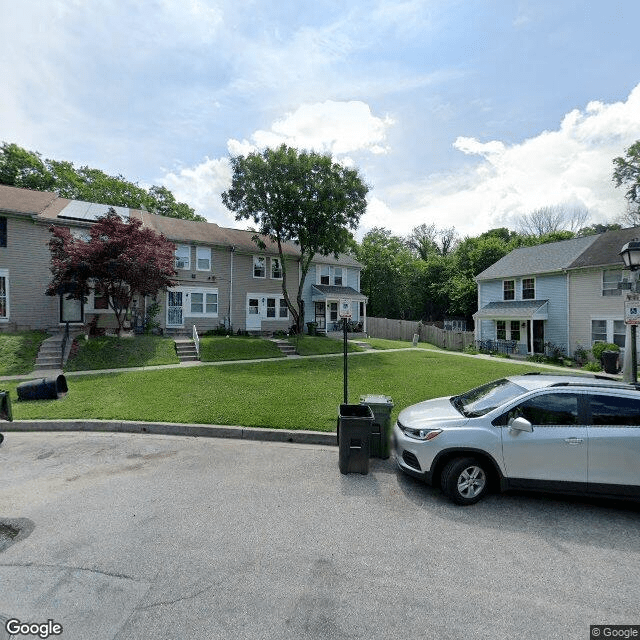
23 1/2 Cobber Lane, Baltimore, MD 21229
For more information about senior living options: (866) 208-4318
Gneale Home Care Costs & Pricing
Gneale Home Care offers competitive pricing for its semi-private rooms at $2,975 per month, which is notably lower than both Baltimore city and the broader Maryland state averages. In Baltimore city, similar accommodations typically cost around $3,116, while the statewide average rises to approximately $3,545. This positioning not only reflects Gneale Home Care's commitment to affordability but also underscores its dedication to providing quality care in a supportive environment. The significant savings compared to local and state benchmarks make Gneale Home Care an attractive option for families seeking reliable home care services without compromising on quality.
| Floor plans | Gneale Home Care | Baltimore city | Maryland |
|---|---|---|---|
| Semi-Private | $2,975 | $3,116 | $3,545 |
Assisted Living communities with a similar price nearby
-
from +$525 / mo

Best Home for Mom and Dad
$3,500 to $4,500 / month23.6 miles away -
from +$225 / mo

Mumsey's Residential Care
$3,200 to $5,400 / month4.9 miles away -
from +$525 / mo

Greenway Manor
$3,500 to $3,800 / month8.0 miles away -
from +$525 / mo

Unique Care Assisted Living
$3,500 to $4,000 / month22.0 miles away -
from -$505 / mo

Ovalstone Comfort Home
$2,470 to $3,300 / month20.3 miles away
Overall Review of Gneale Home Care
Pros
 The staff are very helpful.
- The agency is great.
- The office provides outstanding service for families.
- Greater Baltimore Home Care offers help and support for all parental needs.
- The father is happy with his aid, and the team is proud to be part of Greater Baltimore Home Care.
- The entire staff is professional.
- Mr. Upreti is known for his pure heart and willingness to help people in need.
Review
This Baltimore-based home-care program is best suited for families seeking a responsive, coordinated in-home care partner for an aging relative. The reviews consistently describe very helpful staff and outstanding service, with a clear emphasis on practical support that lets loved ones stay at home. Families value an office that serves as a single hub for care needs, facilitating scheduling, problem-solving, and access to assistance without forcing families to chase multiple vendors. In short, it is a practical fit for those who want reliable, personable help to keep an aging relative safe and supported at home.
Those who require facility-based living, 24/7 medical-grade supervision, or highly specialized memory or rehabilitative care may want alternatives. The model here centers on in-home assistance and coordinated support, so families pursuing long-term residential care or aggressive clinical oversight should explore other options, such as assisted living communities or skilled-nursing facilities, and compare pricing and terms to ensure alignment with medical needs and financial expectations. For families needing extensive on-site medical equipment or constant inpatient oversight, the landscape of options will differ markedly.
Key strengths show up in everyday interactions: staff are described as very helpful, and the agency is repeatedly praised for delivering outstanding service. Professionalism across caregivers and nurses is a common theme, and leadership, highlighted by praise for Mr. Upreti, appears genuinely committed to helping people in need. The ability to route all care through a single office reduces fragmentation and delays, creating a smoother care journey for busy families juggling appointments, errands, and crisis moments. This combination translates into faster response times, clearer care plans, and a tangible sense of trust that the same team is consistently invested in a relative’s well-being.
Explicit drawbacks are not surfaced in the reviews, which is informative but not a substitute for due diligence. Still, any in-home care arrangement should contemplate caregiver availability, scheduling complexity, and ongoing cost management. Prospective clients should verify current caregiver turnover, training standards, and what happens if a shift cannot be filled on short notice. The overwhelmingly positive track record does mitigate these concerns, yet clarity on insurance or private-pay terms, back-up plans, and the scope of in-home medical capabilities remains essential for families making a financial and emotional commitment.
On balance, the strengths largely offset the common fragilities of in-home care. The evident benevolence and professionalism of the staff reduce stress and miscommunication, a frequent source of family friction when care is fragmented. The centralized office model further counteracts staffing risks by ensuring accountability and a coordinated care plan rather than a patchwork of visits. Leadership that feels personally invested contributes to greater caregiver continuity, which translates into more consistent routines and fewer surprises for families. The consistent, high-quality feedback across 15 five-star reviews signals reliability and a proven track record in the Baltimore area, providing a solid basis for choosing this option when home-based care is the goal.
For families in Baltimore prioritizing dependable, compassionate in-home care with strong coordination and a proven results track record, this agency stands out as a disciplined, practical choice. It is not the right path for those needing continuous, facility-based medical supervision or for households with constraints that demand aggressive cost containment without sacrificing care quality. The prudent next steps are clear: arrange a no-obligation care assessment, review the proposed care plan and caregiver-matching process, confirm pricing and insurance coverage, and request references. With a reputation built on helpful staff, professional service, and responsive leadership, Greater Baltimore Home Care presents a grounded, effective partnership for keeping loved ones safely at home.
 4 resident community capacity
 Assisted Living
 Board and Care Home
 Cable or satellite TV
 Dining room
 Fully furnished
 Garden
 Housekeeping services
 Move-in coordination
 Outdoor space
 Telephone
 Wi-Fi/high-speed internet available
 Baltimore-Washington International (8 miles away)
 24-hour supervision
 Activities of daily living assistance
 Assistance with bathing
 Assistance with dressing
 Assistance with transfers
 Diabetes diet
 Meal preparation and service
 Medication management
 Special dietary restrictions
 Transportation arrangement (medical)
 Transportation to doctors appointments






 An Extensive Exploration of the VA Aid and Attendance Benefit
 Senior Transition Services: Understanding Their Role, Cost, and Importance
 Exploring the Path to Senior Living: A Comprehensive Look at Independent Living and Assisted Living