
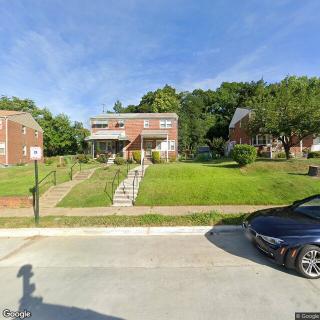
812 Regester Avenue, Baltimore, MD 21239
For more information about senior living options: (866) 208-4318
Overall Review of Blair House at Stoneleigh
Pros
 The staff are amazing and provide genuine care.
 - The Maples of Stoneleigh offers a home-like atmosphere where residents feel loved and supported.
- The caregivers are kind, caring, and patient.
- Residents experience improved well-being, including better conversation and mobility with assistance.
- The environment is clean, well maintained, and feels like a family-oriented home rather than an institution.
- The chef delivers daily culinary delights that residents enjoy.
- The community maintains excellent communication, keeping families informed and reassured.
- End-of-life care and hospice coordination are compassionate and respectful.
- Families report peace of mind knowing their loved ones are safe, well cared for, and treated with dignity.
Cons
 The mother was slowly declining at Charter before the move.
- The mother wasn’t eating or walking when she left Charter.
- The reviewer wishes they had known about Maples a year or more ago.
- Not all assisted living facilities are good with adults living with Alzheimer’s/dementia.
- There are many places that would be more convenient and closer to family and friends.
- The move was a little difficult for her initially.
Review
Blair House at Stoneleigh, home to the Maples memory-care program, is best suited for families seeking a dementia-focused community that treats a loved one as a person first. This is not a facility for those needing intensive acute medical care or heavy custodial needs; it is a home-like environment where residents with Alzheimer’s or other dementias can receive compassionate, patient supervision, consistent routines, and meaningful engagement. The reviews paint a clear picture: residents often improve or stabilize in function and mood when surrounded by staff who communicate well, plan transitions thoughtfully, and deliver daily meals and activities in a warm, familiar setting. When a loved one simply wants to be heard, included, and treated with dignity, Blair House at Stoneleigh excels in delivering that sense of belonging, backed by staff who feel like extended family.
There are obvious alternative considerations for families who do not need memory-care or who require more on-site medical oversight. If the loved one does not have dementia or would benefit from a broader continuum of care with stronger medical capabilities, other assisted-living options may be more appropriate. Proximity matters too; one review notes that there are facilities closer to family and friends, underscoring that the best fit isn’t only about quality of care but also about ease of frequent visits and spontaneous interactions. For those who crave a more clinical or hospital-adjacent setting, or for households seeking a facility with different specialty services, exploring nearby options can be wise. Blair House’s strength lies in memory-care excellence, which may feel like the wrong fit for residents who require different care profiles.
The core strengths here lie in the human factors that consistently appear in the feedback: remarkably caring staff, a home-like atmosphere, and a programmatic approach that centers on the resident’s needs. Staff are described as amazing, patient, and responsive, with the ability to translate a loved one’s changing condition into timely updates and actionable plans. Transitions into the Maples are supported by a structured approach; families note that staff designs and implements a plan that helps both resident and family adapt, reducing anxiety during what can be a difficult move. The environment itself reinforces belonging, clean, well-kept, and comfortable, with staff who make each resident feel seen during both individual moments and group activities. The culinary program is highlighted as a notable daily touchstone, with the chef contributing to a sense of normalcy and pleasure around meals, which is particularly meaningful for residents who previously struggled with appetite or routine.
Yet the community does come with tradeoffs that prospective families should weigh. The most frequently referenced caution is that the transition into memory care can be emotionally challenging for some residents, even when staff plans are solid. One family noted initial difficulty for their loved one, though it improved quickly with consistent staff support. Another practical consideration is geography: while the care and atmosphere are exceptional, Blair House at Stoneleigh is not the closest option for every family, which can affect the cadence of visits and the ease of spontaneous drop-ins. For families seeking a setting that emphasizes independence or a broader scope of activities beyond memory-care programming, Blair House may feel narrower in focus. The emphasis on memory care, while a strength, also means this isn’t the right choice for those who require a greater degree of medical management or faster access to diverse specialists.
When the pros align with the family’s needs, Blair House at Stoneleigh offsets potential drawbacks with a powerful payoff. The depth of communication and family involvement reduces the fear and guesswork that often accompany dementia care transitions. Families repeatedly express relief at knowing their loved one is in a safe, secure environment where cognitive challenges are met with patience and creativity, not condescension. The combination of a warm, homelike setting, responsive caregiving, and coordinated hospice support, seen in the way Gilchrist is integrated when appropriate, creates a stable, respectful end-of-life trajectory that brings tangible peace of mind to families. The environment’s cleanliness, the grounds’ comfort, and the consistent social and recreational programming further bolster the resident’s sense of identity and daily purpose, turning a potentially destabilizing circumstance into a steady, dignified experience.
For families weighing decisions, Blair House at Stoneleigh offers a compelling specialization: memory-care with a family-centered ethos and a proven track record of meaningful resident engagement. It is a strong recommendation for those whose loved one needs daily support, structured routines, and compassionate, highly attentive caregiving in a home-like setting. The guiding question becomes whether proximity and the specific care profile align with the family’s logistics and expectations. If so, a visit should focus on meeting the caregiving team, walking through the daily activity calendar, observing dining interactions, and confirming how staff communicate about changes in condition. For families facing a dementia-care decision, Blair House at Stoneleigh presents a confident, experienced choice that consistently translates empathy into observable improvements in quality of life.
 15 resident community capacity
 Assisted Living
 Cable or satellite TV
 Dining room
 Fully furnished
 Garden
 Housekeeping services
 Move-in coordination
 Outdoor space
 Telephone
 Wi-Fi/high-speed internet available
 Baltimore-Washington International (14 miles away)
 24-hour supervision
 Activities of daily living assistance
 Assistance with bathing
 Assistance with dressing
 Assistance with transfers
 Diabetes diet
 Meal preparation and service
 Medication management
 Special dietary restrictions
 Transportation arrangement (medical)
 Transportation to doctors appointments



 Understanding Medicaid Coverage for Assisted Living: A Comprehensive Guide
 How and When Medicaid May Cover Assisted Living Costs
 A Detailed Exploration of Assisted Living Medicaid Waivers Across the United States