Overall Review of Living Well Adult Day Health Stroudwater
common34 reviews mention this
Staff care and responsiveness
Residents and families consistently describe staff as caring and ready to help.
Across the reviews, families repeatedly say the staff treats residents with respect, dignity, and compassion, and that caregivers feel like they know residents personally. Multiple reviewers mention professionalism and frequent check-ins, including being attentive to needs such as reassurance during a move and ongoing communication with families. Residents and families also describe staff as welcoming to visitors and supportive when routines change.
common22 reviews mention this
Engaging daily activities
Many reviewers say the community keeps residents meaningfully busy.
Reviewers describe schedules filled with activities that feel purposeful, not just time-filling, including art, games, fitness or chair yoga, and musical or educational events. Several residents are said to enjoy day programming and resident-led or group events, and families mention seeing improved engagement and social connection. A few comments also highlight how activities are built into daily life and routines.
common16 reviews mention this
Food feels special
Residents and families frequently comment on meals and dining quality.
Many reviews praise meals as delicious, sometimes described as home-cooked or served with care, and some families mention improvement in appetite after moving in. Several reviewers also reference dining experiences that feel more welcoming than typical facility meals, including attention to presentation. The community also offers room service and supports special dietary needs, which aligns with the way dining is talked about in reviews.
differentiator14 reviews mention this
Memory care design and safety
Reviews frequently highlight a memory-focused environment and a sense of safety.
A number of families say the building and neighborhoods are intentionally set up for people living with memory impairment, including secure or outdoor space and separate living areas that feel more like home. Reviewers connect that environment to outcomes like residents adjusting well and feeling comfortable. In addition, families describe medication and ongoing care supports as part of what makes residents feel safe day to day.
caveat3 reviews mention this
Some concerns about operations
A small subset of reviews raise concerns about transparency and staffing management.
While most reviews are highly positive, a few critical reviews question operational decisions and how the facility handles staffing and communication. One review alleges review-prompting behavior that could distort online impressions, and another describes management issues they associate with understaffing and treatment of employees. A separate review criticizes end-of-life communication and billing-related handling during a difficult situation.
How we summarize
Counts show how many written reviews mention each theme; a review can touch several themes, and only frequently mentioned themes are displayed.
Features
Housing
20 resident community capacity
1-bedroom apartments
Studio apartments
Types of Care
Assisted Living
Amenities
Beautician on-site
Beauty salon
Cable or satellite TV
Cafe
Computer center
Dining room
Financing advice
Fully furnished
Garden
General store
Guasts at mealtime
Guest parking
Hiking trails
Home sale assistance
Housekeeping services
Kitchenette
Laundry
Move-in coordination
Outdoor space
Overnight guests
Party space
Security gate
Spa
TV room
Telephone
VA Benefits Consultation
Wi-Fi/high-speed internet available
Transportation
Portland International Jetport (3 miles away)
Transportation & parking
Care Services
24-hour call system
24-hour supervision
Activities of daily living assistance
Assistance with bathing
Assistance with dressing
Assistance with transfers
Coordination with health care providers
Diabetes diet
Meal preparation and service
Medication management
Mental wellness program
Special dietary restrictions
Transportation arrangement (medical)
Transportation to doctors appointments
Dining
Diabetes diet
Room service
Special dietary restrictions
Activities
Activities off-site
Arts and crafts
Book club
Community-sponsored activities
Cooking club
Educational speakers / life long learning
Fitness programs
Games
Gardening club
Live musical performances
Religious services
Resident-run activities
Scheduled daily activities
Stories
Wii bowling
Yoga / chair yoga
Nearby Places of Interest
Pharmacies
Omnicare of Maine Westbrook (0.7 miles)
Hannaford Pharmacy (0.8 miles)
CVS Pharmacy (1.1 miles)
Walgreens (1.2 miles)
Shaw's Pharmacy (1.5 miles)
Target Pharmacy (2.1 miles)
Hannaford Bros (2.4 miles)
Physicians
Nano Dentistry (0.9 miles)
Dr. Linford J. Stillson, DO (1 miles)
Scott P Williams MD (1.2 miles)
Spectrum Medical Group (1.6 miles)
Mercy Express Care (1.6 miles)
Maine Medical Center - Carol Ann Dean MD (1.6 miles)
Maine Proctology Center (1.7 miles)
Restaurants
Bakers Bench (1 miles)
Mr Bagel-Westbrook (1 miles)
China Villa (1.1 miles)
McDonald's (1.4 miles)
Firehouse Subs (1.4 miles)
Smiling Hill Farm (1.7 miles)
Burger King (1.7 miles)
Cafes
Roots Cafe (1 miles)
Starbucks (2.2 miles)
Coveside Coffee (3.6 miles)
The Holy Donut (4 miles)
Tandem Coffee + Bakery (4.3 miles)
Yordprom Coffee Shop (4.3 miles)
Aroma Joe's (4.4 miles)
Hospitals
Mercy Hospital (1.6 miles)
Maine Medical Center-Brighton Campus (3.1 miles)
HealthSouth (3.1 miles)
Mercy Hospital (3.8 miles)
Mercy Hospital (3.8 miles)
The Barbara Bush Children's Hospital (4 miles)
Maine Medical Center - Chaplain's Office (4 miles)
Transportation
Portland International Jetport (PWM) (2.5 miles)
Northeast Air (2.5 miles)
PWM Baggage Claim (2.5 miles)
Portland Transportation Center (3.2 miles)
Places of Worship
Thornton Heights United Methodist Church (3.7 miles)
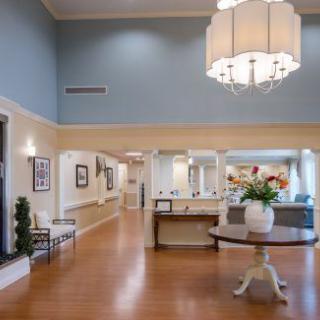
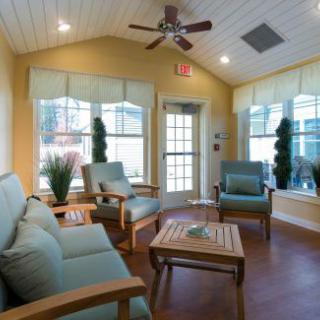
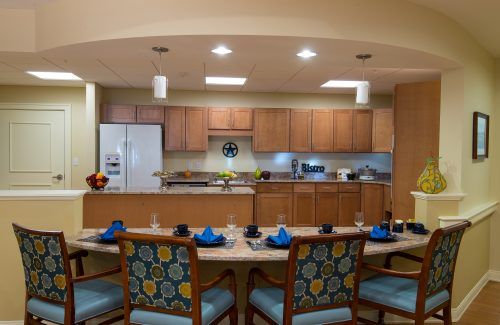
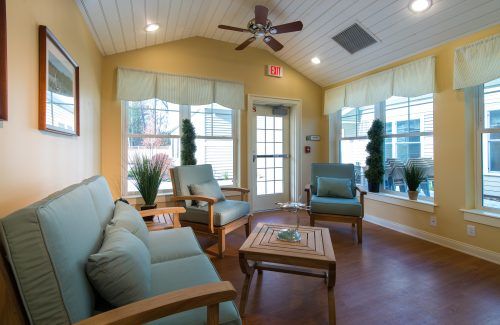
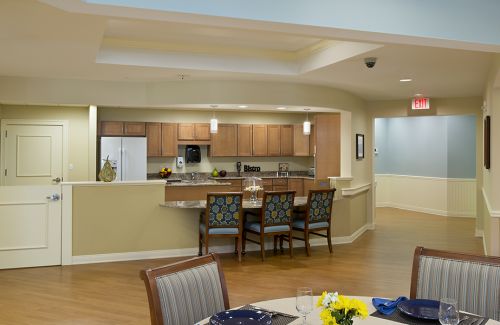
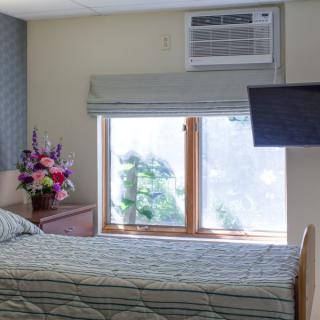
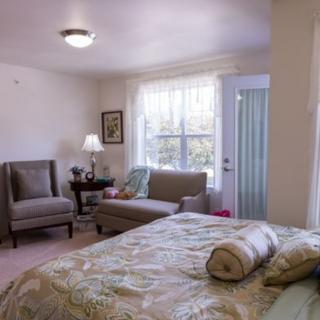
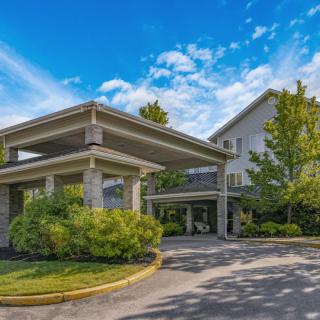
Living Well Adult Day Health Stroudwater on seniors.fyi includes 5 photos including images showing interior, living room, kitchen, dining, lobby, chandelier, decor, appliances, and more.
Nearby Communities
Avita of Stroudwater
Westbrook, ME
4.6 from 91 reviews
$7,040 to $7,550 / month
Caring, patient staff with frequent family communication.
Stroudwater Lodge
Westbrook, ME
5 from 100 reviews
$4,300 to $6,560 / month
Friendly, attentive staff with on-site therapy and a warm, community-focused atmosphere.
Springbrook Center
Westbrook, ME
3.8 from 96 reviews
Some staff were attentive; private rooms were clean; good on-site amenities.
Stroudwater Street Residence
Westbrook, ME
Comprehensive care and all-inclusive amenities (24/7 supervision, ADL support, meals, transport).
Chesley Street Program
Westbrook, ME
4.3 from 25 reviews
Small, intimate community with comprehensive care and activities.
Monroe Home
Westbrook, ME
Fully furnished assisted living with diabetes care and transportation to medical appointments.
Sable Lodge Retirement Community
South Portland, ME
4.4 from 52 reviews
$3,540 to $5,224 / month
High-quality meals with flexible dining, extensive on-site amenities, and a welcoming, active community.
Birchwoods At Canco Senior Living
Portland, ME
4.3 from 82 reviews
Clean environment with friendly staff and engaging activities.
Woods At Canco
Portland, ME
4.3 from 97 reviews
$3,219 to $4,499 / month
Clean, friendly staff with a varied activities program and comfortable living spaces.
Vibrant Senior Living emphasizes active senior living communities that promote independence and engagement through diverse amenities and activities, fostering wellness and social interaction among older adults. These communities range from independent to assisted living, with a focus on personal growth, family involvement, financial planning, and leveraging technology to enhance residents' experiences.
Transitioning from assisted living to memory care is driven by an individual's cognitive decline and specific needs, requiring careful evaluation of indicators like increased confusion and wandering. The process involves consulting medical professionals, researching suitable communities, considering financial and legal aspects, and ensuring effective communication for personalized care plans.
Assisted living provides moderate support for seniors seeking independence, while memory care offers specialized support for individuals with dementia or cognitive impairments through structured routines and trained staff. Key differences include care approaches, environment security measures, staff training levels, activity types, and cost considerations.
Get PricingAsk A QuestionSchedule A TourContact Senior Advisor
By clicking submit, you agree to our Partner's Terms of Use. You
also consent to receive calls and texts, which may be autodialed, from our Partner. Your consent is not a condition to
using our Partner's service. Please visit our Partner's Privacy Policy for information about their privacy practices.






 20 resident community capacity
 1-bedroom apartments
 Assisted Living
 Beautician on-site
 Cable or satellite TV
 Cafe
Cafe Computer center
 Dining room
 Financing advice
 Fully furnished
 Garden
 General store
 Guest parking
 Hiking trails
 Housekeeping services
 Kitchenette
 Laundry
 Move-in coordination
 Outdoor space
 Overnight guests
 Party space
 Security gate
 Spa
Spa Telephone
 Wi-Fi/high-speed internet available
 Portland International Jetport (3 miles away)
 Transportation & parking
 24-hour call system
 Activities of daily living assistance
 Assistance with bathing
 Assistance with dressing
 Assistance with transfers
 Diabetes diet
 Meal preparation and service
 Medication management
 Mental wellness program
 Special dietary restrictions
 Transportation arrangement (medical)
 Arts and crafts
 Book club
 Cooking club
 Educational speakers / life long learning
 Fitness programs
 Games
Games Live musical performances
 Religious services
 Wii bowling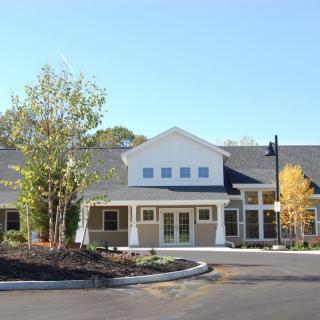
 Caring, patient staff with frequent family communication.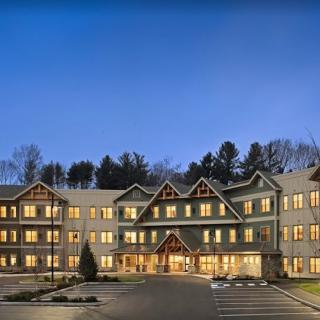


 Vibrant Senior Living: A Comprehensive Guide for Active Older Adults
 When to Transition from Assisted Living to Memory Care: Key Indicators, Steps, and Finding the Right Community
 Assisted Living and Memory Care: Understanding Their Core Differences