
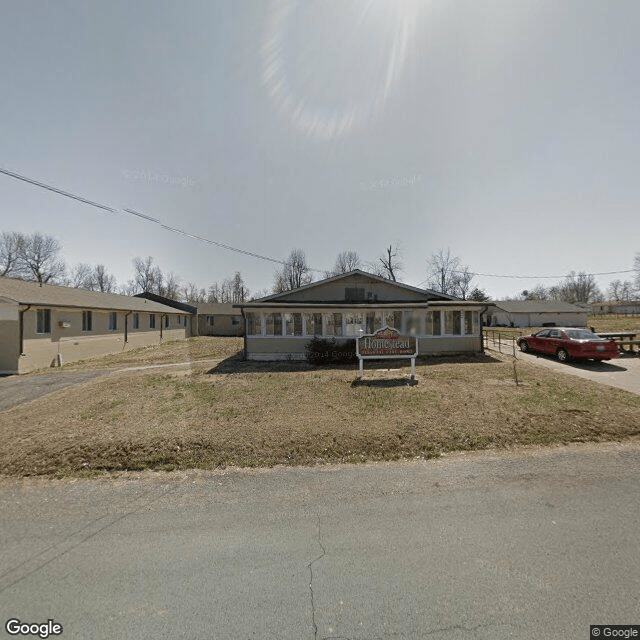
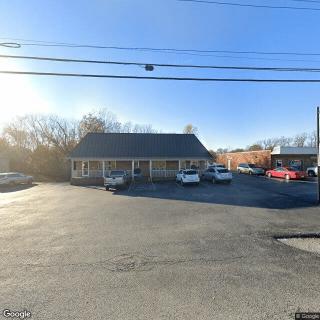
384 Thompson Ave, Madisonville, KY 42431
To contact a resident: (270) 821-5294
For more information about senior living options: (866) 208-4318
The Homestead Costs & Pricing
The Homestead offers competitive monthly rates for its residents, particularly when compared to both Hopkins County and the broader state of Kentucky. For a semi-private room, The Homestead is priced at $1,410, which aligns with the average cost in Hopkins County but significantly undercuts the statewide average of $3,681. Similarly, studio accommodations at The Homestead are offered at $1,710, providing a more affordable option compared to the local county rate of $2,566 and the state figure of $3,357. This pricing strategy positions The Homestead as an appealing choice for individuals seeking quality care without the financial burden often associated with similar facilities in the region.
| Floor plans | The Homestead | Hopkins County | Kentucky |
|---|---|---|---|
| Semi-Private | $1,410 | $1,410 | $3,681 |
| Studio | $1,710 | $2,566 | $3,357 |
Overall Review of The Homestead
Pros
 Some staff are very respectful.
- Administrators care for the staff.
- The Homestead fosters a family-like environment with caring, clean, and family-oriented staff and residents.
- Administrators go over and beyond for the residents.
- The food is very good.
- The facility is very clean and the staff are very attentive to residents.
Review
The Homestead in Madisonville, KY is best suited for families seeking a warm, home-like community where residents feel part of a caring extended family. Reviews consistently paint a picture of a clean, family-oriented environment with staff who treat residents with familiarity and respect. The administrator is repeatedly described as someone who goes over and beyond for residents, and the kitchen earns praise for solid, dependable meals. For seniors who value daily friendliness, predictable routines, and a sense of belonging over clinical grandeur, The Homestead offers a compelling, practical fit.
Those weighing options should explicitly consider alternatives if medical acuity and specialized care are non-negotiable. The reviews do not detail memory-care pathways, on-site therapy programs, or formal clinical oversight, leaving gaps for families with residents who require intensive medical management or highly structured rehabilitation. In short, for individuals needing robust clinical services, advanced dementia care, or highly programmatic support, it is prudent to explore facilities that advertise dedicated memory-care wings, nurse-led rounds, and clearly defined therapy schedules.
The strongest, consistently reported advantages are cleanliness, attentiveness, and a genuine sense of community. A spotless environment reduces daily stress and infection risk, while responsive staff can translate into timely help, better safety, and smoother routines. The administrator’s participatory leadership is not just symbolic; it tends to foster continuity and a culture where residents feel valued. Coupled with dependable meals, these elements create a daily life that many families find reassuring and comfortable, even when other facilities might emphasize clinical depth over homelike warmth.
Countering this, the presence of two one-star reviews signals that not every resident or family will share the same positive experience. The scarcity of detail in those critiques makes it hard to diagnose precise shortcomings, but the low scores cannot be ignored. The lack of explicit information about clinical capabilities or specialized programming means potential residents must verify, in person, whether care depth, staffing consistency, and activity options meet individual needs. This is not a red flag so much as a cue to perform targeted diligence before making a commitment.
The practical takeaway centers on aligning personal priorities with what The Homestead delivers. For families prioritizing a welcoming, low-stress home environment, reliable daily routines, and a leadership approach that values residents and staff alike, the positives strongly support a move-in. For those whose decision hinges on medical intensity, memory-care nuance, or expansive rehab services, the decision should tilt toward facilities with transparent clinical programs and demonstrable outcomes. Pros offset cons when visits verify real-world interactions: observe staff responsiveness during a tour, sample the dining experience, and review how activity calendars shape each resident’s day.
In conclusion, The Homestead stands as a solid option for seniors who want a nurturing, clean, and sociable setting backed by engaged leadership and good meals. It is less aligned with families seeking high-level clinical care, broad rehabilitation offerings, or formal memory-care specialization without additional corroboration. The best path is a structured visit that probes staffing patterns, care planning, and daily schedules, complemented by candid conversations with the administrator and frontline staff. With thoughtful due diligence, The Homestead can deliver a dependable, comforting home for the right resident and family.
 Assisted Living
 Activities on-site
 Devotional services off-site
 Indoor common areas
 Ambulatory care
 Diabetic care
 Meals provided



 Medicare Coverage for Assisted Living: An In-Depth Exploration
 Choosing the Right Senior Care: A Detailed Exploration of Assisted Living and Nursing Homes
 Understanding the True Cost of Assisted Living in 2025: A Comprehensive Guide