
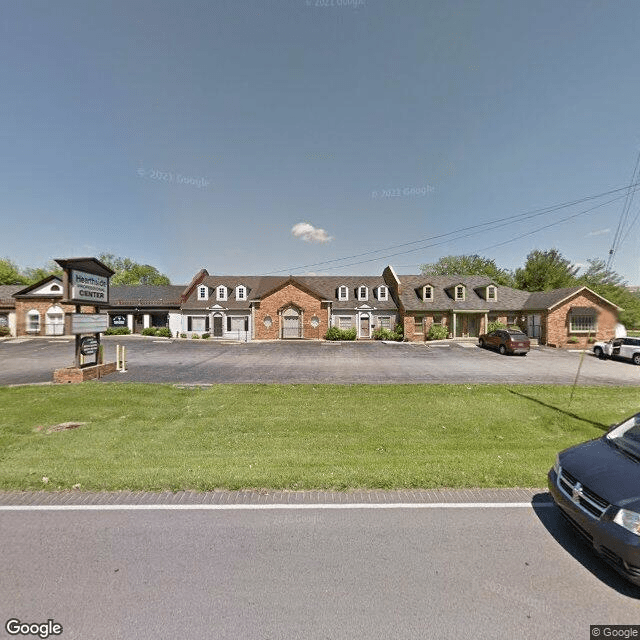
1860 Old Lebanon Rd, Campbellsville, KY 42718
To contact a resident: (270) 465-9279
For more information about senior living options: (866) 208-4318
Campbellsville Active Day Care Costs & Pricing
At Campbellsville Active Day Care, the monthly costs reflect a competitive pricing structure within both Taylor County and across Kentucky. For a one-bedroom unit, residents can expect to pay $3,095, which is notably higher than the county average of $2,773 but remains slightly below the state average of $3,458. When considering two-bedroom accommodations, the rate rises to $4,150 - positioning it above the county's average of $3,625 while still being competitive compared to the statewide figure of $3,702. This tiered pricing strategy suggests that Campbellsville Active Day Care offers facilities or services that justify its higher rates in both room types when compared to local and state averages.
| Floor plans | Campbellsville Active Day Care | Taylor County | Kentucky |
|---|---|---|---|
| 1 Bedroom | $3,095 | $2,773 | $3,458 |
| 2 Bedrooms | $4,150 | $3,625 | $3,702 |
Overall Review of Campbellsville Active Day Care
Pros
 The staff at Active Day of Campbellsville is wonderful.
- They are always busy providing fun activities for their clients.
- Their Facebook page showcases the fun and exciting things they do.
Cons
 Some of the staff is so hateful.
- They do not treat people with respectful and talk down to people.
- Hateful employees.
Review
Campbellsville Active Day Care is best suited for seniors in the Campbellsville area who want lively daytime engagement and social connection more than 24/7 medical oversight. This program shines as a structured day option where residents can participate in a steady stream of activities, conversations, and group outings, making it a natural fit for those who thrive on variety and interaction but do not require round-the-clock nursing or memory-care specialization. In short, it serves as a robust day program for socially oriented seniors whose primary need is daytime engagement rather than continuous clinical support.
Those who should consider alternatives are residents who demand consistently respectful treatment from every staff member, regardless of the time of day, or who require reliable, uniform interactions. The most pressing caveat from the feedback is the inconsistency in staff demeanor: some caregivers are described as hateful and as talking down to residents. For families prioritizing dignity, seamless interpersonal standards, or individualized, attentive care, other options, such as centers known for stronger staff training, more membranes of oversight, or 24/7 supervision, will likely be a better fit. Memory-care needs, heightened medical monitoring, or a home-like environment with consistent caregivers may also push families toward different facilities or in-home arrangements.
The strongest positives revolve around programming and energy. When staff are at their best, the day program delivers meaningful activity, camaraderie, and visible enthusiasm. The community reportedly stays busy with entertaining events, and families can see the energy reflected in the activity calendar, evidenced, as some families note, by active posts on the facility’s social media. That level of engagement can translate into genuine social benefits: residents remain socially integrated, caregivers stay visibly involved, and families gain reassurance from a lively, structured routine. For residents who are socially oriented or who benefit from a full slate of daytime opportunities, these advantages are substantial and real.
However, the main drawbacks cannot be glossed over. The most troubling theme across the negative feedback is the presence of staff who fail to treat residents with the respect they deserve, including instances of talking down to people. Such behavior undermines trust, increases resident stress, and can erode willingness to participate in activities, a direct strike against the very objective of the day program. Even if the majority of staff are capable and kind, the visibility and impact of disrespectful interactions are magnified in a setting that relies on daily morale and participation. Families should not normalize this risk; they should instead evaluate how consistently residents are treated with dignity and whether any pattern of behavior is promptly addressed.
With the pros weighed against the cons, the decision hinges on resident temperament and family expectations. For a resident who can capitalize on energetic programming and social engagement, with a plan to monitor interactions and advocate for cueing toward respectful communication, the positives may outweigh the negatives. For a resident who places a premium on predictable, consistently courteous care, or who has heightened sensitivity to tone and attitude, these negative experiences are likely to overshadow the benefits. The key is to test-drive the environment: visit during a typical activity period, observe staff-resident interactions, and ask directly about how concerns are resolved, who is responsible for training, and what the escalation process looks like.
In the end, Campbellsville Active Day Care can deliver vibrant days and meaningful social opportunities for the right resident, primarily those who need structured daytime programming and thrive on activity-rich engagement. It is not the best fit for anyone requiring steady, uniformly respectful treatment from every staff member, or for families prioritizing constant, high-level supervision and specialized care. Prospective families should arrange a tour, request to observe interactions during a regular shift, speak with multiple staff members and residents, and inquire about staff training, accountability measures, and the facility’s approach to resident dignity. If these checks align with the family’s standards, the program offers a compelling, life-enhancing daytime option; if not, broader exploration of alternatives will likely yield greater peace of mind.
 Day Program




 9 Stimulating Memory Activities for Seniors: Puzzles, Cards, and Much More
 Managing Nursing Home Expenses After Medicare Coverage Ends
 Is a Geriatric Care Manager the Right Choice for Your Family?