EPOCH Assisted Living of Overland Park Costs & Pricing
EPOCH Assisted Living of Overland Park offers a range of accommodations with monthly costs that vary significantly based on the room type. For studios, residents can expect to pay between $1,995 and $7,395, which is notably lower than the average costs in both Johnson County at $4,549 and across Kansas at $4,094. One-bedroom apartments are priced from $3,195 to $4,467, slightly below the county's average of $4,262 but above Kansas's average of $3,859. For two-bedroom units, costs fall between $3,395 and $5,220, again surpassing the state average of $3,562 while remaining competitive with Johnson County's average of $4,411. Overall, EPOCH provides a flexible pricing structure that caters to various budgets while still offering considerable value compared to local and state averages.
| Floor plans | EPOCH Assisted Living of Overland Park | Johnson County | Kansas |
|---|
| Studio | $1,995 to $7,395 | $4,549 | $4,094 |
| 1 Bedroom | $3,195 to $4,467 | $4,262 | $3,859 |
| 2 Bedrooms | $3,395 to $5,220 | $4,411 | $3,562 |
Memory care communities with a similar price nearby
-
from +$305 / mo
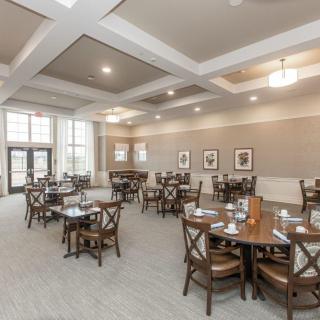
The Madison Senior Living
$2,300 to $4,375 / month
7.2 miles away
-
from +$254 / mo
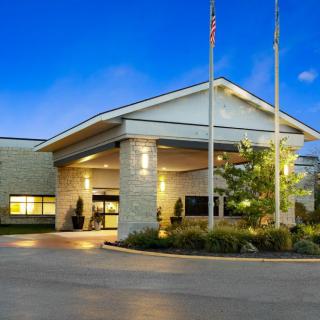
Anthology of Olathe
$2,249 to $3,349 / month
10.9 miles away
-
from +$335 / mo
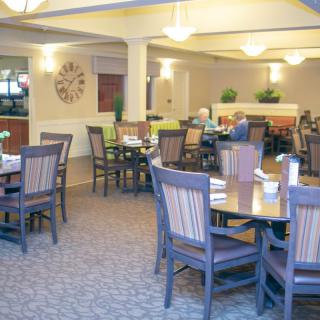
The Parkway Senior Living
$2,330 to $3,880 / month
22.9 miles away
-
from +$350 / mo
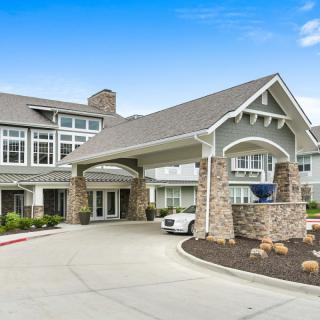
Anthology at Burlington Creek
$2,345 to $6,499 / month
17.3 miles away
-
About the same

Silverado Overland Park
$2,000 to $3,500 / month
5.8 miles away
Overall Review of EPOCH Assisted Living of Overland Park
common
17 reviews mention this
Staff caregiving feels responsive
Residents and families describe staff as professional, caring, and responsive to needs.
Many reviews mention staff as knowledgeable and helpful, with multiple families saying the caregivers were attentive and professional during the move-in and day-to-day transition. A few reviews also describe the level of care as actively managed—such as staff providing assistance and keeping residents safe. There are also serious negative exceptions, including reports of long call response times, short staffing, and billing inaccuracies, which should be weighed when considering care reliability.
caveat
10 reviews mention this
Food quality is mixed
Food is a recurring point of both dissatisfaction and praise.
Several residents and families say the food was a problem, including complaints that it was not satisfying or could be bland, along with comments that staff was aware and working on it. Other reviews balance that with praise, describing very good meals and a variety of options, including the ability to choose from menu items. Even where food is liked overall, at least one review notes that a specific meal experience wasn’t impressive.
common
12 reviews mention this
Activities keep residents engaged
Activities and social programming show up across reviews as a strength.
Reviews repeatedly point to an active schedule, with mentions of group activities like bingo, book club, happy hour, and exercises. Families also describe residents being encouraged to get out of their rooms and socialize, and one review calls out frequent planned outings and community trips. A couple of reviews also suggest the weekend schedule may be lighter than weekdays.
caveat
4 reviews mention this
Memory care is only sometimes preferred
Memory care support is available, but dementia experience varies by review.
The community is described as having an attached memory care option, and at least one reviewer frames it as a potential fit when one person needs memory care while the other does not. At the same time, another review says the community did not specialize in dementia, which contrasts with the idea of memory-care fit. One review also flags that the level of care may be more advanced than what the family needed at the time, so matching care level to needs looks important.
common
9 reviews mention this
Clean, comfortable rooms matter
Reviews commonly describe the facility as clean and the rooms as well-kept.
Many reviews mention cleanliness and room condition as positive, describing well-maintained interiors and a fresh, adequate feel. Several families also comment on how nice the spaces look and how well the facility is cared for. One review stands out with a negative impression related to an odor at the time of visiting, and that difference is worth considering.
caveat
3 reviews mention this
Price shows up as a concern
A few reviews raise cost concerns or billing friction.
One reviewer reports problems with billing accuracy and late-fee handling, including the need to scrutinize charges. Another review lists price as the only concern, while a separate review mentions a fee for a family member to join a meal. Even when other families describe comfort with pricing, these specific cost and billing experiences suggest checking the details closely.
How we summarize
Counts show how many written reviews mention each theme; a review can touch several themes, and only frequently mentioned themes are displayed.

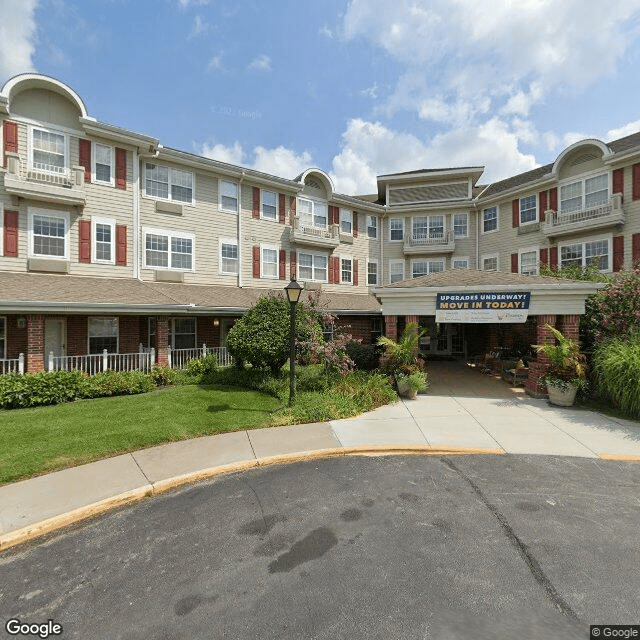
 1-bedroom apartments
 Assisted Living
 Memory Care
 Cats allowed
 Dogs allowed
 Activities on-site
 Beautician on-site
 Cable or satellite TV
 Computer center
 Devotional services off-site
 Dining room
 Financial aid
 Garden
 Guest parking
 Housekeeping services
 Indoor common areas
 Laundry
 Spa
Spa Kansas City International (23 miles away)
 Transportation & parking
 Ambulatory care
 Diabetic care
 Meal preparation and service
 Medication management
 Walking wheelchair assistance
 Arts and crafts
 Book club
 Cooking club
 Educational speakers / life long learning
 Fitness programs
 Games
Games Live musical performances
 Wii bowling
 English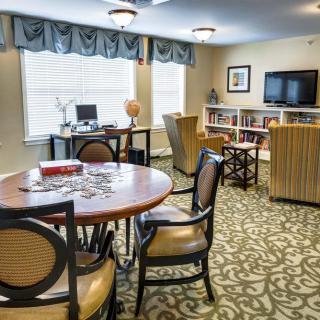
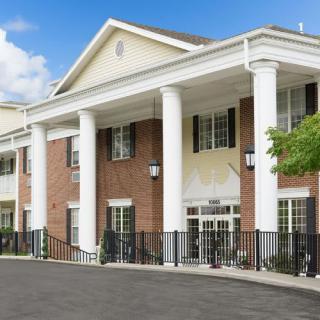
 Friendly, caring staff in a warm, home-like community with engaging activities.
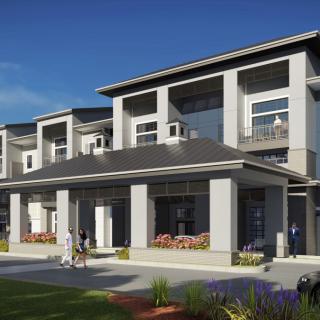

 Engaging Memory Care Activities That Enhance Quality of Life
 When to Transition from Assisted Living to Memory Care: Key Indicators, Steps, and Finding the Right Community
 Understanding the Distinctions: Assisted Living and Memory Care Explained