

515 Delaware, Leavenworth, KS 66048
To contact a resident: (913) 680-0493
For more information about senior living options: (866) 208-4318
Prestige Home Care Costs & Pricing
Prestige Home Care offers a range of accommodations with pricing that reflects both the quality of care and the amenities provided. For a semi-private room, residents can expect to pay $5,233 per month, which is notably higher than the average costs in Wyandotte County at $4,495 and across Kansas at $4,562. If one opts for a private room, the monthly fee increases to $6,279, again surpassing county and state averages of $5,543 and $5,137 respectively. The studio option is available at $6,802, significantly exceeding the county's rate of $3,580 and Kansas's average of $4,094. These figures indicate that while Prestige Home Care may be on the pricier side compared to local alternatives, they likely correspond to a level of service and care that families can trust for their loved ones.
| Floor plans | Prestige Home Care | Wyandotte County | Kansas |
|---|---|---|---|
| Semi-Private | $5,233 | $4,495 | $4,562 |
| Private | $6,279 | $5,543 | $5,137 |
| Studio | $6,802 | $3,580 | $4,094 |
Senior living communities with a similar price nearby
-
from -$733 / mo

Brightstar Healthcare
$4,500 / month18.8 miles away -
from -$983 / mo

Addington Place of Shoal Creek
$4,250 to $4,800 / month23.4 miles away -
from -$1033 / mo

Benton House of Staley Hills
$4,200 to $5,220 / month19.3 miles away -
from +$162 / mo
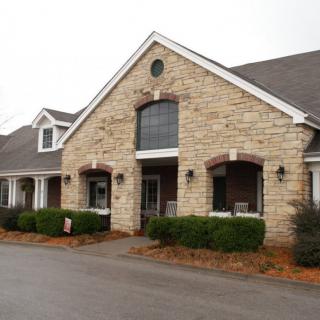
Homestead of Leavenworth
$5,395 / month3.5 miles away -
from +$662 / mo
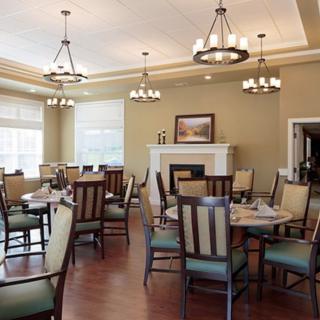
Linden Woods Village
$5,895 to $8,395 / month20.9 miles away
Overall Review of Prestige Home Care
Pros
 They listened to clients and understood what they were looking for.
- They offer backup care when someone can’t make it and communicate with families.
- They have been wonderful in caring for loved ones.
- They have been very helpful with communication and care for a father.
- They have been a big help around the house.
Cons
 None found.
Review
Prestige Home Care in Leavenworth, KS is best suited for families that want their aging loved ones to stay safely at home with dependable, practical support. It fits seniors whose needs are moderate and steady enough to be managed in a home setting, yet who still require regular assistance and reliable scheduling. The strongest fit is for households that prize clear communication, responsive adjustment of plans as needs change, and hands-on help with daily tasks. A veterans-friendly thread runs through the service, with referrals that tend to align well with veteran families seeking continuity and supportive connections.
Those considering alternatives should note that Prestige Home Care is centered on at-home support, not on-site medical supervision or memory-care-focused environments. If a loved one requires 24/7 nursing oversight, highly specialized therapies, or a facility-based community with structured programming, a traditional assisted living or skilled-nursing setting may be more appropriate. For families prioritizing constant clinical monitoring or a more immersive social calendar, exploring facility options is a prudent hedge against escalating care needs.
The core strengths translate into meaningful, practical benefits. First, the team’s ability to listen and align with family expectations reduces the risk of mismatched care. Second, backup care capacity, an option when a caregiver cannot attend a shift, minimizes disruption and helps maintain routines. Third, ongoing, transparent communication keeps relatives informed about developments, scheduling, and any adjustments to care plans. Fourth, hands-on help around the house lightens daily burdens and supports safety and comfort in the home. The veteran referral context adds a pragmatic convenience, connecting families to a network that may streamline access to veteran-specific supports. Taken together, these elements deliver dependable, at-home continuity that often matters more than other variables.
No explicit downsides appear in the feedback, but a practical caveat should be acknowledged: care needs can evolve, and the strength of a home-care model depends on scalable staffing and responsive care-plan updates. If the loved one’s situation shifts toward intensive medical complexity or requires round-the-clock, facility-based supervision, the advantages of in-home care may diminish relative to a high-acuity care setting. The knowledge that backup coverage exists helps, yet families should verify how escalation works, what triggers a change in caregivers, and how quickly changes can be enacted as conditions change.
In evaluating Prestige, families should press for concrete, systematized clarity. Request a written outline of the typical care plan, the roster of available back-up caregivers, and the exact process for activating substitute staff. Inquire about scheduling norms for holidays and weekends, caregiver qualifications and ongoing training, and how communication is maintained, daily notes, direct updates, and family briefings. Clarify pricing, including any surcharges for backup shifts, and obtain a clear sense of how care plans are updated as needs evolve. These specifics convert goodwill into a durable operating framework that protects continuity and peace of mind.
The decisive takeaway is straightforward: Prestige Home Care is a practical, trustworthy partner for families seeking to maintain at-home living with steady communication, reliable backup coverage, and hands-on daily support. It is especially well-suited for veterans and their families who value a referral-driven, relationship-focused approach. If the goal is to maximize independence in a familiar home environment while avoiding frequent care disruptions, Prestige makes a compelling case. Should the situation demand more intensive clinical oversight or a facility-based experience, alternatives should be explored early so transitions, if needed, are smooth and predictable.
 Kansas City International (11 miles away)


 Top Canine Companions for Older Adults
 Comprehensive Guide to Blood Pressure Charts for Older Adults: Understanding Normal and High Readings by Age
 Financing Long-Term Nursing Home Care Through Social Security: A Thorough Exploration