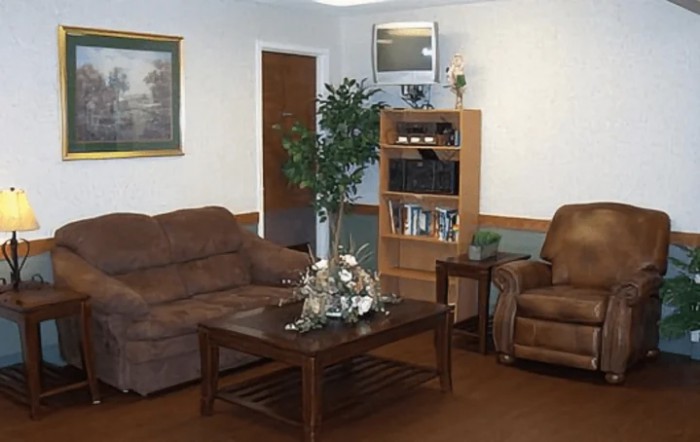
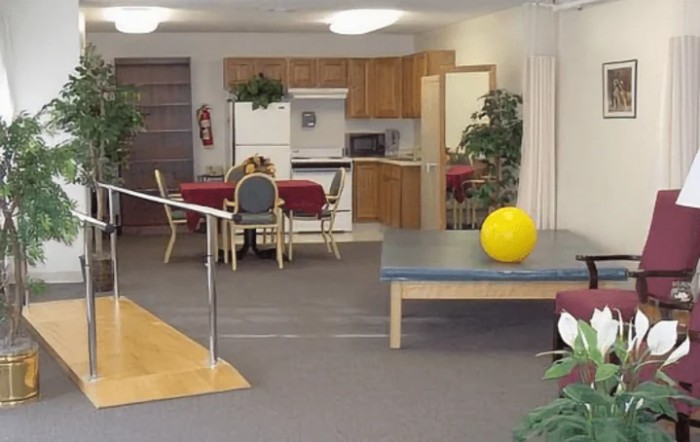
612 E 11th St, Rushville, IN 46173
To contact a resident: (765) 932-4127
For more information about senior living options: (866) 208-4318
Millers Merry Manor Costs & Pricing
Millers Merry Manor offers a competitively priced alternative for those seeking assisted living options, with monthly costs that stand out when compared to both Rush County and the broader state of Indiana. For instance, a studio at Millers Merry Manor is priced at $1,970, significantly lower than the county average of $3,145 and the state average of $3,258. Similarly, the one-bedroom option is available for $2,120, which is markedly less than both the county's rate of $3,534 and Indiana's average of $3,300. These figures highlight Millers Merry Manor's commitment to providing accessible care while maintaining quality living standards in an increasingly challenging financial landscape for seniors and their families.
| Floor plans | Millers Merry Manor | Rush County | Indiana |
|---|---|---|---|
| Studio | $1,970 | $3,145 | $3,258 |
| 1 Bedroom | $2,120 | $3,534 | $3,300 |
Assisted Living communities with a similar price nearby
-
from +$371 / mo

Addison Place
$2,341 to $5,107 / month20.5 miles away -
About the same
Springhurst Health Campus
$1,950 to $2,760 / month22.9 miles away -
from +$305 / mo
Crownpointe Of Greenfield
$2,275 to $3,190 / month21.2 miles away -
About the same
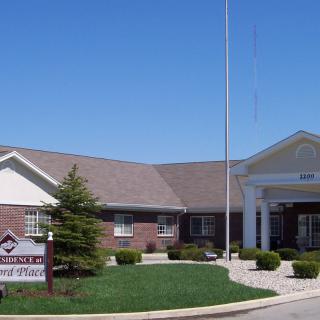
Ashford Place Health Campus
$1,950 to $4,710 / month18.6 miles away
Overall Review of Millers Merry Manor
Pros
 Most of the staff is amazing.
- They have activities for them daily.
- They all appear to be very well taken care of.
Cons
 The management is god awful.
- They fail to properly report things to the state as they should.
- The staff is overworked and underappreciated.
- Residents deemed "annoying" or "too much to deal with" are not taken care of like they should be.
- They would not recommend bringing family members or loved ones here unless they are completely dependent.
Review
Millers Merry Manor in Rushville is best suited for seniors who want daily engagement and generally reliable hands-on care from staff, with moderate care needs that can be managed with routine oversight. The setting works well for residents who are relatively independent but appreciate structured activities, regular assistance with transitions, and predictable routines. It is not the right fit for someone who requires continuous, highly individualized supervision or intensive medical support. Families should expect to play an active oversight role, ensuring care plans are followed and that responses to concerns are timely, because the facility’s administration is the element that carries significant risk of inconsistency.
Those with higher acuity or memory-care requirements should seriously consider other options where management accountability and transparent reporting are clearly evident. The harsher note from one reviewer about failing to report to state authorities signals governance weaknesses that can undermine day-to-day care. Families seeking a space where every resident, including those deemed challenging, receives consistent attention and where staff workload is managed to prevent neglect should explore facilities with stronger administrative stability and proven oversight practices.
On the upside, the care staff that are not overwhelmed come across as devoted and capable. A visitor’s weekly rounds show residents appearing well cared for and engaged in daily activities, suggesting a steady rhythm and social opportunities. The combination of compassionate caregiving and a structured activity calendar can deliver meaningful quality-of-life gains for residents who respond well to routine and social stimulation, helping to offset a lot of the daily stress that comes with aging in place.
The darker side is real and tangible. The complaints about management being “god awful” and about improper reporting to state authorities point to systemic weaknesses that can erode confidence and trigger compliance risks. When staff are overworked and underappreciated, burnout becomes a genuine threat, increasing the likelihood of missed cues, slow responses, or uneven care, especially for residents labeled as problematic or “annoying.” In practice, this creates a tension between the steady, caring presence of frontline workers and the underlying risk that supervision may falter if administration does not address workload and accountability.
Yet the positives do matter. The availability of engaged staff and daily activities means that for many residents the day-to-day experience remains satisfying, and it provides a counterweight to governance gaps. For families weighing this community, the decisive question is whether oversight and advocacy can compensate for administrative weaknesses. If choosing Millers Merry Manor, request a formal care plan with defined accountability, insist on an assigned caregiver, and establish regular, documented check-ins with administration. Schedule frequent family visits and appoint a trusted spokesperson to observe adherence to reporting and to escalate concerns promptly.
Bottom line: this community can deliver meaningful social engagement and dependable daily care for residents with moderate needs, but it requires vigilant family involvement and a willingness to navigate administrative weaknesses. Alternatives should be strongly considered for those needing consistent management transparency or higher-acuity care without the safety net of active advocacy. For families prepared to supervise and demand accountability, Millers Merry Manor offers a workable option that can still support comfortable, engaged elder years, just not without guardrails.
 Assisted Living
 Independent Living
 Activities on-site
 Devotional services off-site
 Indoor common areas
 Ambulatory care
 Diabetic care
 Meals provided




 A Detailed Exploration of Assisted Living Medicaid Waivers Across the United States
 Comprehensive Residential Support and Assisted Living Solutions for Individuals with Disabilities
 Comprehensive Supportive Living Arrangements for Adults with Disabilities