
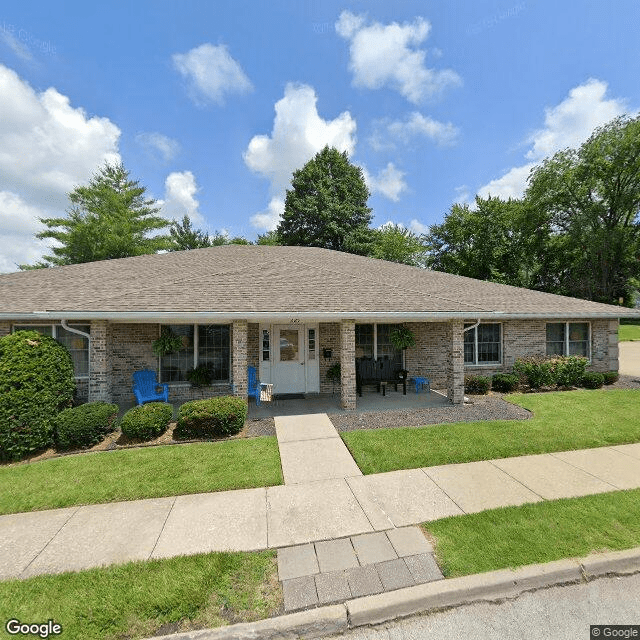
225 W B St, Belleville, IL 62220
To contact a resident: (618) 234-5657
For more information about senior living options: (866) 208-4318
Overall Review of Belle Manor
Pros
 The reviewer cares about maintaining a peaceful, respectful neighborhood for everyone.
- They advocate for better neighbor relations to enhance community life.
- They emphasize the importance of quiet, predictable daily routines for residents.
- They encourage constructive dialogue to improve the living environment.
- They seek improvements that reduce disruption and improve outdoor enjoyment for all.
Cons
 They do not respect their neighbors.
- There is a loud door alarm that repeats "STOP YOU ARE BEING WATCHED" about 30 times an hour, making it impossible to keep windows open nearby or enjoy outdoor activities.
- Buses start arriving around 7 a.m. and honk loudly and repeatedly.
- The place is awful to live in.
Review
Belle Manor in Belleville is best suited for seniors who are pragmatic about daily rhythm and neighborhood interactions, prioritizing value and location over a pristine quiet. The community will feel workable for residents who donā€™t require perfect serenity or flawless noise control, and who are willing to accept a busy, active environment as the trade-off for convenient access to services and social engagement. In short, this is a practical option for those who can tolerate a less tranquil atmosphere in exchange for the perceived efficiencies of a straightforward senior-living setting.
There is a clear caveat for those with strict expectations around quiet, neighborly harmony, or predictable routines. Families or residents who hinge comfort on a consistently quiet living space, or who depend on a highly organized, noise-free environment to sleep or concentrate, should consider alternatives. Likewise, if a strong, transparent reputation for safety, reliability, and respectful community standards is non-negotiable, Belle Manor merits comparison against other options with more demonstrable track records in these areas. The advisory stance is to treat this as a functional choice rather than a flawless one.
The most salient drawbacks revolve around audible disturbances and the perception of a tense surrounding environment. A door alarm described as loudly repeating a control message can dominate the soundscape, interrupt windows-open moments, and disrupt outdoor enjoyment. Early-morning transportation activity adds another layer of daily disruption, with buses arriving around 7 a.m. and producing repeated, conspicuous honking. Taken together, these elements create a living environment that feels less like a peaceful home and more like a high-traffic, high-noise setting. The third notable concern is the impression, voiced by at least one reviewer, that the facility does not always demonstrate clear respect for neighboring residents, which compounds the sense of an unsettled, noisy atmosphere.
The lone five-star review suggests there are redeeming qualities that some residents value. That signal should not be dismissed; it points to factors such as personal comfort, functional amenities, or staff interactions that residents may find satisfactory. However, without corroborating detail, the positive signal remains isolated and cannot offset the weight of the documented disruptions. The practical calculation is that even if certain residents enjoy aspects of the community, the persistent noise and the questionable neighbor dynamics substantially erode daily quality of life for others. In decision-making terms, the balance tips away from a broad, universal recommendation when these negatives are present.
Pros and cons must be weighed in real terms. The potential strengths, whether they lurk in staffing responsiveness, routine programming, or general affordability, appear insufficient to neutralize the impact of constant alarm-driven noise and intrusive early-morning activity. For a family evaluating options, the question is whether these positives are meaningful enough to tolerate ongoing disturbance. The loud, repetitive alarms and the sense that neighbor boundaries are not respected will likely outweigh any perceived advantages for most prospective residents who place quiet, neighborly norms high on their list. In practical terms, Belle Manor asks families to decide between a value-forward, livelier environment and a quieter, more predictable living experience elsewhere.
For families actively touring Belle Manor, the decisive move is to test the environment directly. Visit at different times of day to observe how the alarm system actually affects daily life, how staff and administration respond to community concerns, and whether noise levels remain manageable during peak activity periods. Request a clear plan for alarm management and neighbor-relations improvements, and compare what is learned with alternative communities that promise stronger reassurance around quiet and respectful coexistence. If quiet confidence and predictable rhythms are the priority, alternatives should be seriously considered; if the family can tolerate a livelier pace and a straightforward, budget-conscious option, Belle Manor may still be worth a closer look.
 Board and Care Home






 Is a Geriatric Care Manager the Right Choice for Your Family?
 Compassionate Conversations: How to Comfort Someone Who Is Grieving
 Home Health Care Aides: Understanding Their Role and Supporting Your Family