Grace At Chubbuck offers competitive pricing for various room types compared to both Bingham County and the broader state of Idaho. For a semi-private room, residents can expect to pay $2,200 per month, significantly lower than the county average of $2,567 and the state average of $3,026. Studio apartments at Grace are available for $3,000, which is also more economical than the county's $2,753 and the state's rate of $3,213. One-bedroom units are priced at $4,000 - while this is higher than the county's average of $3,215, it remains lower than Idaho's average of $3,774. Finally, two-bedroom accommodations at Grace At Chubbuck are offered at $4,500 a month; this price stands out as higher than Bingham County's rate of $3,075 but still favorable compared to Idaho's overall average of $3,599. This positioning reflects Grace At Chubbuck's strategy to provide quality senior living at accessible rates within the community.
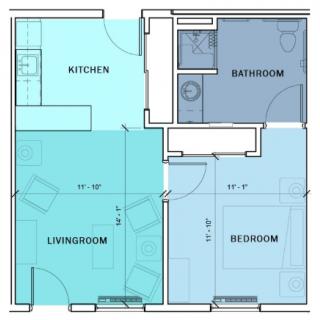
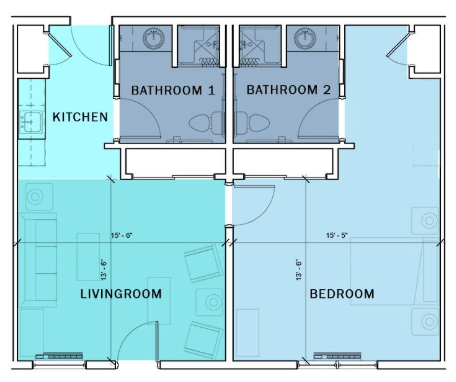
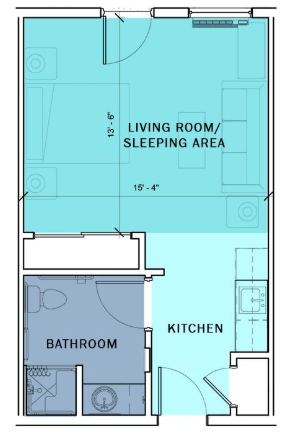
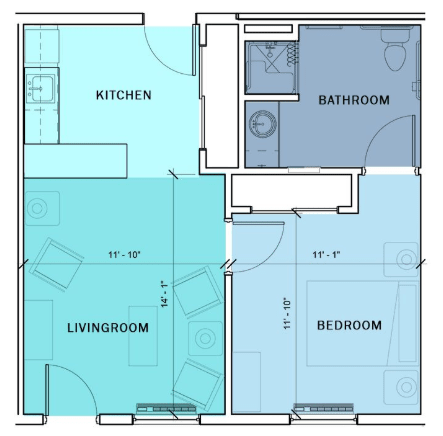
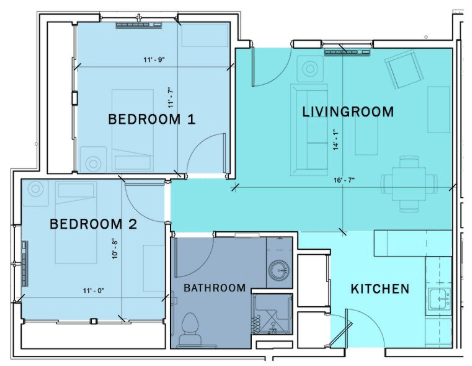
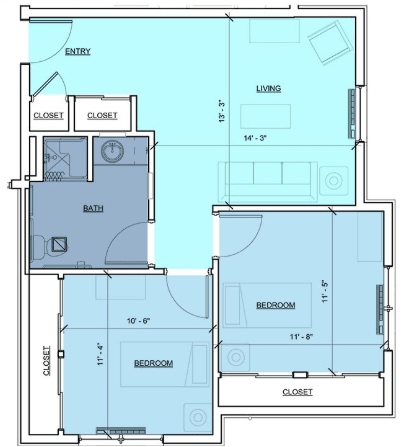
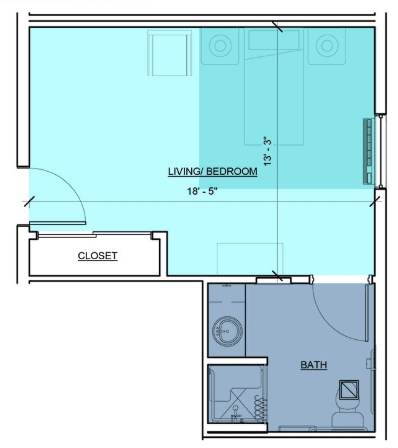
Floor plans
Grace At Chubbuck
Bingham County
Idaho
Semi-Private
$2,200
$2,567
$3,026
Studio
$3,000
$2,753
$3,213
1 Bedroom
$4,000
$3,215
$3,774
2 Bedrooms
$4,500
$3,075
$3,599
Memory care communities with a similar price nearby
Residents and families repeatedly describe staff as kind, professional, and responsive.
Across many reviews, families describe staff members as friendly, attentive, and easy to communicate with, including front office, nursing, housekeeping, maintenance, and administrative teams. Residents also mention the facility feeling spotless and well maintained, with less of the “institutional” feel some people worry about. Even when reviews include complaints, the contrast most often centers on staffing needs and cleanliness consistency rather than any lack of concern for residents.
common6 reviews mention this
Medication routines and check-ins
Reviews frequently mention medication handling and wellness check routines.
Several families highlight regulated medication and medication-team responsiveness, along with wellness checks as part of daily care. Others also mention nursing availability for medical questions. A small number of reviewers raise concerns about staffing levels and care consistency, including a complaint about shift coverage that affected how well the support was delivered.
differentiator8 reviews mention this
Meals are a frequent bright spot
Dining stands out in reviews, including meal planning and special dietary needs.
Multiple reviews praise the quality of meals, with residents and families describing meals as enjoyable and a dining setup that provides structured daily options. Several also mention the ability to request or accommodate specialty meals and dietary needs, and one reviewer specifically references a meal plan that helps residents feel consistently nourished. One review also flags that medication distribution could use improvement, but dining quality is still described positively overall.
common12 reviews mention this
Activities keep residents engaged
Reviews frequently describe daily activities and an active activities director.
Residents and families often point to scheduled activities, group games, and community programming that help people stay engaged. Several reviews mention specific engagement from the activities coordinator or activity director, including encouragement to participate and help with practical needs around events. One review also suggests that during the pandemic there could have been more consistency in dining and resident activities, which is the main activity-related downside mentioned.
differentiator4 reviews mention this
Memory care support and safety
Families describe strong memory care support, including smooth transitions.
Families with loved ones in the memory care portion of the community describe improved attention and feel confident about safety and day-to-day care. One reviewer specifically describes choosing the community after memory issues surfaced and being transitioned efficiently into memory care. Another points to the dementia experience as a mix of good and difficult days while still describing consistent safety and care.
caveat3 reviews mention this
Pricing feels better than most
Pricing appears competitive, but at least one review questions staffing and care-level cost changes.
At least a couple of reviews describe the overall cost as better than other nearby options and credit the level of care for the value. In contrast, one dissatisfied reviewer raises concerns about staffing and says the experience shifted toward cost concerns and care-level increases. The community’s posted price ranges show it generally comes in below county and state benchmarks across unit types.
How we summarize
Counts show how many written reviews mention each theme; a review can touch several themes, and only frequently mentioned themes are displayed.
Features
Housing
115 resident community capacity
Types of Care
Assisted Living
Independent Living
Memory Care
Amenities
Activities off-site
Activities on-site
Air-conditioning
Beautician on-site
Beauty salon
Cable or satellite TV
Computer center
Devotional services off-site
Dining room
Fitness room
Fully furnished
Gaming room
Garden
Ground floor units
Handicap accessible
Housekeeping services
Indoor common areas
Kitchenette
Move-in coordination
Outdoor common areas
Outdoor space
Private bathrooms
Respite or short term stays offered
Restaurant-style dining
Small library
Telephone
Wellness center
Wheelchair accessible showers
Wi-Fi/high-speed internet available
Transportation
Pocatello Regional (7 miles away)
Community operated transportation
Transportation arrangement
Transportation arrangement (non-medical)
Care Services
12-16 hour nursing
24-hour call system
24-hour supervision
Activities of daily living assistance
Ambulatory care
Assistance with bathing
Assistance with dressing
Assistance with transfers
Coordination with health care providers
Diabetes diet
Diabetic care
Incontinence care
Meal preparation and service
Medication management
Mental wellness program
Special dietary restrictions
Transportation arrangement (medical)
Transportation to doctors appointments
Dining
Diabetes diet
Guest meals
Low / no sodium
Meals provided
No Sugar
Professional chef
Restaurant style dining
Room service
Special dietary restrictions
Special dining programs
Activities
Art classes
Catholic services
Community-sponsored activities
Concierge services
Cooking classes
Day trips and outings
Devotional activities offsite
Educational speakers / life long learning
Fitness programs
Happy hour
Live well programs
Mormon/LDS services
Planned day trips
Protestant services
Resident-run activities
Scheduled daily activities
Visiting chaplain or priest
Wine tasting
Videos
Nearby Places of Interest
This part of Chubbuck, Idaho, offers a mix of amenities and services that may be appealing for seniors looking to settle in the area. There are several places of worship nearby for those seeking spiritual fulfillment, as well as a variety of restaurants offering diverse dining options. Transportation options such as taxi services are available for ease of mobility. Additionally, there are pharmacies and medical facilities in close proximity for healthcare needs. The presence of parks allows for outdoor leisure activities, while theaters and cafes offer entertainment options. Overall, this neighborhood provides a blend of convenience and community that could make it a comfortable choice for seniors looking to retire in the Chubbuck area.
Places of Worship
United Methodist Church At Chubbuck (0.6 miles)
Gate City Christian Church (0.6 miles)
Church of Jesus Christ of Latter Day Saints (1.9 miles)
Church of Jesus Christ of Latter Day Saints (2 miles)
Grace At Chubbuck offers competitive pricing for various room types compared to both Bingham County and the broader state of Idaho. For a semi-private room, residents can expect to pay $2,200 per month, significantly lower than the county average of $2,567 and the state average of $3,026. Studio apartments at Grace are available for $3,000, which is also more economical than the county's $2,753 and the state's rate of $3,213. One-bedroom units are priced at $4,000 - while this is higher than the county's average of $3,215, it remains lower than Idaho's average of $3,774. Finally, two-bedroom accommodations at Grace At Chubbuck are offered at $4,500 a month; this price stands out as higher than Bingham County's rate of $3,075 but still favorable compared to Idaho's overall average of $3,599. This positioning reflects Grace At Chubbuck's strategy to provide quality senior living at accessible rates within the community.
The features offered at Grace At Chubbuck are essential for enhancing the quality of life for residents with memory impairments. The 24-hour supervision ensures that residents receive constant support and immediate assistance in case of emergencies, fostering a secure environment. Assisting with activities of daily living--such as bathing, dressing, and transfers--promotes dignity while ensuring safety during these essential routines. Coordination with health care providers facilitates seamless medical oversight, addressing any health issues promptly. Incontinence care is handled with sensitivity, maintaining comfort and hygiene, while meal preparation and service are tailored to meet dietary needs and encourage proper nutrition. Medication management alleviates concerns about adherence to prescribed regimens, contributing to overall well-being. Additionally, the mental wellness program engages residents cognitively and emotionally, promoting mental health through structured activities. Finally, transportation arrangements for medical appointments ensure that residents can access necessary healthcare services without stress or disruption to their routine.
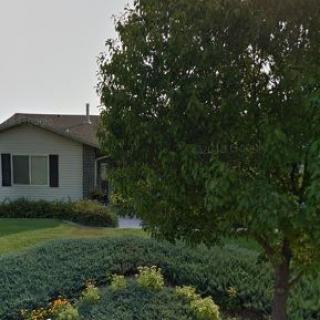
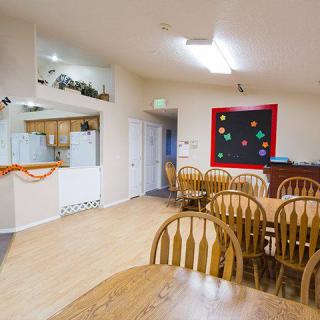
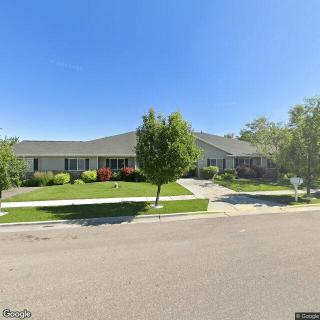
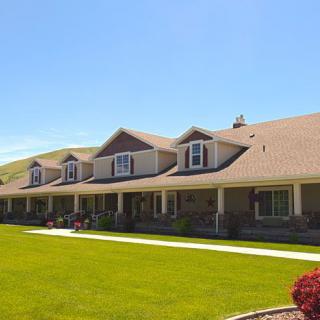
Grace At Chubbuck on seniors.fyi includes 7 photos including images showing floor plan, living room, interior, studio apartment, bathroom, kitchen, architecture, architectural design, and more.
Nearby Communities
Aspen Grove In-Home Assistance
Pocatello, ID
4.8 from 16 reviews
$3,690 / month
Competitive pricing with comprehensive in-home care and strong access to local medical services and amenities.
Diamond Peak Of Chubbuck
Pocatello, ID
Small, well-supervised community offering both assisted living and memory care with 24/7 staff and mental wellness programs.
Ashley Manor Hawthorne
Pocatello, ID
4.2 from 10 reviews
$2,800 to $3,200 / month
Previously clean and welcoming with friendly staff.
Elegant Residential Assisted Living
Pocatello, ID
4 from 21 reviews
Fully furnished rooms with in-room amenities and 24/7 supervision and coordinated care.
Elegant Residential Living
Pocatello, ID
4.2 from 17 reviews
Extensive amenities and comprehensive assisted living services.
Elegant Residential Assisted Living
Pocatello, ID
4.2 from 17 reviews
Memory care and diabetic care in an elegant residential setting with access to numerous nearby amenities.
Rosetta Of Pocatello
Pocatello, ID
4.8 from 42 reviews
$2,500 to $3,200 / month
Warm, home-like environment with compassionate, personalized care.
The Gables of Pocatello Assisted Living
Pocatello, ID
4.7 from 10 reviews
Welcoming, home-like atmosphere with caring staff and a facility dog.
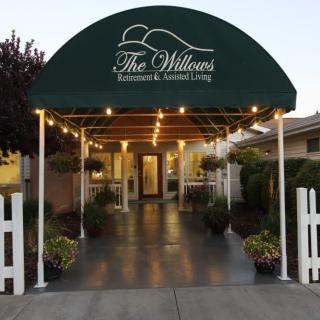
Willows
Blackfoot, ID
3.9 from 32 reviews
$2,200 to $2,800 / month
Caring staff with engaging activities and strong safety practices.
Medicaid coverage for assisted living varies by state and is primarily available to low-income individuals, with eligibility dependent on strict income and asset limits. Some states offer HCBS waivers for specific services in assisted living, but families must generally cover room and board costs, and should verify facility acceptance of Medicaid while considering potential waiting lists.
Medicaid waivers for assisted living services provide vital support for seniors and individuals with disabilities in need of long-term care, with varying state-specific eligibility criteria and benefits. These waivers cover personal care and case management but often do not fully cover room and board, leading to waiting lists for many applicants.
The article compares assisted living and skilled nursing facilities, detailing their differing levels of assistance, medical support, cost structures, and day-to-day experiences. It emphasizes that assisted living is for those needing help with daily activities while maintaining independence, whereas skilled nursing facilities provide intensive medical care with 24-hour staff supervision.
Get PricingAsk A QuestionSchedule A TourContact Senior Advisor
By clicking submit, you agree to our Partner's Terms of Use. You
also consent to receive calls and texts, which may be autodialed, from our Partner. Your consent is not a condition to
using our Partner's service. Please visit our Partner's Privacy Policy for information about their privacy practices.


 115 resident community capacity
 Assisted Living
 Independent Living
 Memory Care
 Activities off-site
 Air-conditioning
 Beautician on-site
 Cable or satellite TV
 Computer center
 Devotional services off-site
 Dining room
 Fitness room
 Fully furnished
 Gaming room
 Garden
 Ground floor units
 Handicap accessible
 Housekeeping services
 Indoor common areas
 Kitchenette
 Move-in coordination
 Outdoor common areas
 Private bathrooms
 Respite or short term stays offered
 Restaurant-style dining
 Small library
 Telephone
 Wellness center
 Wheelchair accessible showers
 Wi-Fi/high-speed internet available
 Pocatello Regional (7 miles away)
 Community operated transportation
 12-16 hour nursing
 24-hour call system
 Ambulatory care
 Assistance with bathing
 Assistance with dressing
 Assistance with transfers
 Diabetes diet
 Diabetic care
 Incontinence care
 Medication management
 Mental wellness program
 Special dietary restrictions
 Transportation arrangement (medical)
 Art classes
 Catholic services
 Concierge services
 Cooking classes
 Day trips and outings
 Educational speakers / life long learning
 Happy hour
 Wine tasting
 Competitive pricing with comprehensive in-home care and strong access to local medical services and amenities.


 How and When Medicaid May Cover Assisted Living Costs
 A Detailed Exploration of Assisted Living Medicaid Waivers Across the United States
 Exploring the Contrasts Between Assisted Living and Skilled Nursing