

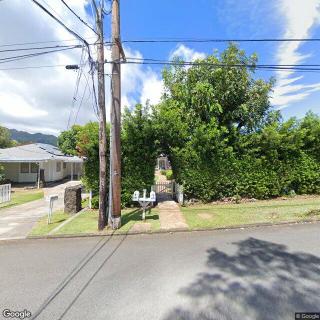
2035 Kamehameha Avenue, Honolulu, HI 96822
For more information about senior living options: (866) 208-4318
Overall Review of Manoa Cottage
Pros
 Manoa Cottage has staff who speak Japanese and offers oriental foods.
- The staff at Manoa Cottage are very nice and very calm.
- The staff at Manoa Cottage are very helpful.
- Exceptional work was noted at Manoa Cottage.
- Visitors describe Manoa Cottage as good.
Cons
 The rooms were very small and very simple.
- It's an old place.
- Registered nurse available only during the day.
Review
Manoa Cottage is best suited for seniors who want a small, home-like setting in Honolulu where language and cultural preferences matter. The community operates as a cluster of three compact houses, collectively offering roughly 23 beds, with eight bedrooms per house in the original framing. This layout creates an intimate, neighborhood feel that can be comforting for residents who prefer familiar faces and steady routines. It is especially attractive for Japanese-speaking residents or families who value culturally aligned meals and staff who can communicate in Japanese. Residents who thrive on quiet surroundings, calm staff, and a sense of belonging within a tight-knit group will likely find the environment supportive. Those who prize private rooms and a modern, expansive facility should look elsewhere.
Those weighing alternatives should consider whether medical oversight and privacy are non-negotiables. If round-the-clock nursing care, seamless access to medical services, or larger, more private accommodations are priorities, several other options in the Honolulu area will better meet those needs. For families seeking robust programming, memory-care specialization, or a facility with contemporary design and more generous space, Manoa Cottage may feel too small or understated. In short, this community serves a niche audience: residents who can live with limited room size and a daytime-only nurse presence in exchange for language compatibility, cultural meals, and a calm, homelike atmosphere.
The strongest positives are tangible and meaningful. The presence of Japanese-speaking staff and culturally oriented cuisine directly addresses language barriers and comfort foods that can profoundly affect daily happiness and engagement for certain residents. Staff are described as nice and calm, which can translate into lower stress for both residents and families during transitions. The three-house arrangement, while modest, can foster a sense of belonging and routine, a pattern that supports predictable caregiving rhythms. A koi pond and common TV provide gentle, familiar diversions that help residents feel more at ease in a non-institutional setting. For many, these elements offset the perception of age or simplicity, reinforcing a feeling of being cared for rather than processed.
However, several notable drawbacks temper the appeal. Small rooms and shared bathrooms limit privacy and personal space, which matters for longer stays or for residents who value autonomy in daily living. The facility is described as old, which can imply maintenance considerations and potentially dated fixtures or layouts that are less forgiving for walkers, wheelchairs, or other mobility needs. The nursing model is constrained by daytime availability only, with one nurse aide per house, meaning nighttime medical needs or urgent concerns require a stepwise response that may feel inadequate for some families. Capacity is tight, with approximately 23 beds across three houses, suggesting limited availability and potential competition for placement or transfers.
When the pros are weighed against the cons, the decision comes into sharper focus. For families seeking cultural resonance, language accommodation, and a tranquil, low-stress environment, Manoa Cottage delivers tangible emotional and daily-life benefits that can ease transitions and support ongoing comfort. The intimate staffing and calm demeanor help ensure caregivers know residents well, enabling personalized attention within the constraints of a small operation. Yet the lack of private rooms and 24/7 clinical coverage creates clear boundaries on medical resilience and privacy. For residents with stable medical needs, strong appetite for familiar cultural meals, and a preference for a small, homelike setting, the trade-offs are manageable. For those with higher medical acuity, privacy expectations, or the need for around-the-clock nursing, alternatives are likely to deliver greater peace of mind.
Practically, the decision hinges on match with priorities and risk tolerance. Prospective families should verify RN hours, assess night-time support availability, and tour how the three-house footprint translates to daily routines, navigation, and safety. They should probe how shared spaces are managed, what privacy protections exist, and how meal programs are structured beyond general descriptions. A candid questions-to-ask list should include: can residents receive dialysis or injections on-site, what is the emergency protocol after hours, and how quickly can transfers to higher levels of care be arranged? For those who prize cultural affinity and a tranquil, small-scale home, Manoa Cottage is a solid, considered choice. For others, especially those prioritizing private accommodations, robust 24/7 medical oversight, or expansive activity programming, alternative communities will likely offer substantially greater alignment.
 8 resident community capacity
 2-bedroom apartments
 Assisted Living
 Board and Care Home
 Independent Living
 Memory Care
 Skilled Nursing Facility
 Activities on-site
 Cable or satellite TV
 Devotional services off-site
 Dining room
 Fully furnished
 Garden
 Housekeeping services
 Indoor common areas
 Move-in coordination
 Outdoor space
 Telephone
 Wi-Fi/high-speed internet available
 Honolulu International (6 miles away)
 24-hour supervision
 Ambulatory care
 Assistance with bathing
 Assistance with dressing
 Assistance with transfers
 Diabetes diet
 Diabetic care
 Hospice care
 Meal preparation and service
 Medication management
 Physical therapy
 Special dietary restrictions
 Transportation arrangement (medical)
 Transportation to doctors appointments
 English



 How and When Medicaid May Cover Assisted Living Costs
 A Detailed Exploration of Assisted Living Medicaid Waivers Across the United States
 Exploring the Contrasts Between Assisted Living and Skilled Nursing