
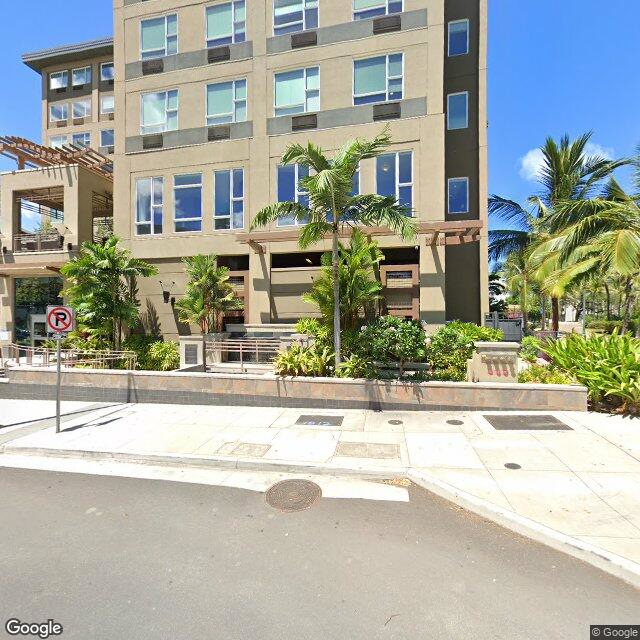
1812 Kalakaua Ave, Honolulu, HI 96813
To contact a resident: (808) 955-0800
For more information about senior living options: (866) 208-4318
The Plaza at Waikiki Costs & Pricing
The Plaza at Waikiki offers competitive pricing for its accommodations when compared to both Honolulu County and the state of Hawaii. For a studio unit, residents can expect to pay $4,950 monthly, which is slightly above the county average of $4,880 but remains higher than the state average of $4,687. The one-bedroom option is priced at $5,875, notably exceeding both the county's $4,557 and the state's $4,452 benchmarks, reflecting its premium offerings. Additionally, the semi-private units are available for $6,150 per month; this rate stands significantly higher than Honolulu County's average of $4,228 and the state average of $4,244. Overall, while The Plaza at Waikiki's rates may appear elevated relative to local averages, they align with the property's exclusive features and desirable location in a vibrant area.
| Floor plans | The Plaza at Waikiki | Honolulu County | Hawaii |
|---|---|---|---|
| Studio | $4,950 | $4,880 | $4,687 |
| 1 Bedroom | $5,875 | $4,557 | $4,452 |
| Semi-Private | $6,150 | $4,228 | $4,244 |
Memory care communities with a similar price nearby
-
About the same
Faith Harbor Adult Care
$5,000 to $7,000 / month5.0 miles away -
from -$425 / mo

The Plaza At Punchbowl
$4,525 to $8,675 / month1.4 miles away -
from -$203 / mo
Wilson Senior Living Kailua
$4,747 to $9,900 / month10.8 miles away -
from -$425 / mo
The Plaza At Pearl City
$4,525 to $5,875 / month11.9 miles away -
from -$450 / mo
Prime Health Services Care Home
$4,500 to $6,000 / month8.3 miles away
Overall Review of The Plaza at Waikiki
Pros
 The Plaza at Waikiki offers a wonderful experience with friendly staff and a great activities department.
- The lobby is beautiful, shiny, and clean.
- The staff are nice and caring, providing attentive service.
- The facility is new with well-laid-out rooms and bright, spacious common areas.
- The meals are good with a variety, and there are many engaging activities.
- The community is well-maintained, clean, and a good value for care.
- The building is beautiful and current residents seem very happy to be there.
Cons
 A guest had a bad experience with a woman at the front desk.
 - The Plaza Waikiki’s memory care floor was described as unsanitary, with repeated falls, urine and feces on walls, floors, and bedding.
- The administration was reportedly aware of the problems but did not take adequate action, leading to a family moving their mother out.
- Staff were described as not wanting to care for residents, with nurses passing tasks to CNAs.
- The care was deemed shameful given the nearly $8,000 per month cost.
- There were reports of resident assaults and lost jewelry on the memory care floor.
Review
The Plaza at Waikiki is best suited for active seniors who want a polished, hotel-like setting in central Waikiki and for families willing to invest in a premium environment with robust programming. It appeals to those who value bright common areas, a modern, new-feel facility, a broad slate of activities, and reliable daytime staff interactions. The neighborhood advantages, close to beaches, shops, and convention centers, support a socially engaged lifestyle. However, this is not the place for residents who require strong, ongoing memory-care oversight or who have faced or fear repeated care failures; in those cases, alternatives that specialize in memory care with proven safety records should be pursued more aggressively.
The publicly perceived strengths line up with a confident, inviting atmosphere. The Plaza presents a clean, attractive entry, with an open floor plan, well-laid-out rooms, and abundant common spaces that encourage social activity. Families consistently note friendly, responsive staff and a robust activities department, including morning exercise and evening entertainment. Meals are described as varied and generally appealing, and the building’s fresh, well-maintained ambience reinforces a sense that residents are living in a higher-end, resort-like setting. For residents who can participate in the planned programs, the environment delivers on social stimulation and daily structure.
Yet the most consequential caution centers on the memory-care experience. Multiple accounts describe a Halia Memory Care Floor where sanitation lapses, staff burnout, and management gaps created dangerous conditions, urine and feces on walls, soiled bedding, and residents who suffered injuries from falls. Allegations of fallen residents with fractured eye sockets, missing items, and a pattern of care being delegated to CNAs rather than registered nurses underscore a systemic concern. These reports are not isolated anecdotes but repeated warnings that the on-site care culture on memory care days failed to meet basic standards. Even families who appreciated the beauty and warmth of the facility judged the memory-care operation unacceptable and ultimately moved loved ones elsewhere.
Those care-quality concerns carry a price-weighted consequence. The Plaza commands a premium, nearly eight thousand dollars monthly in some accounts, yet the reported experiences on memory care undermine the value argument for anyone with significant dementia or frailty needs. Other practical drawbacks emerge in the small-footprint grounds and limited space, which can constrain outdoor time and privacy. Even routine administrative friction, such as a negative front-desk interaction, adds up to a perception risk for families weighing daily living quality against the upscale veneer. When the main risk is memory care, the upscale ambiance cannot fully offset the potential for unsafe conditions and inconsistent staffing.
Because the positives are real and compelling for non-memory-care residents, alternatives deserve careful consideration for those with evolving care needs or budget constraints. If memory support is anticipated, identify communities with a transparent safety track record, explicit staffing ratios, and demonstrable incident-response protocols. For families seeking more expansive outdoor spaces or a quieter setting away from tourist corridors, other Honolulu senior communities may offer larger grounds or a calmer neighborhood vibe. If price sensitivity is a priority, compare total-cost-of-care scenarios with facilities that provide comparable programming in a more predictable care environment.
In the end, The Plaza at Waikiki delivers a strong lifestyle proposition for those without heavy memory-care requirements: stylish, well-staffed, and richly programmed, with a location that keeps social and cultural options within easy reach. The decision hinges on risk tolerance around memory care quality and the willingness to trade breadth of amenities for proven, consistent care excellence. Prospective families should prioritize a focused tour of the memory-care floor, insist on current safety and staffing metrics, and verify what protections are in place if concerns arise. A candid discussion with administration about remediation plans, past incident audits, and real-time care monitoring will determine whether this community can align with long-term safety and peace of mind expectations.
 Assisted Living
 Independent Living
 Memory Care
 Cats allowed
 Dogs allowed
 Activities off-site
 Devotional services off-site
 Indoor common areas
 Kitchenette
 Respite or short term stays offered
 Wheelchair accessible showers
 Honolulu International (6 miles away)
 Ambulatory care
 Diabetic care
 Incontinence care
 Medication management
 Kosher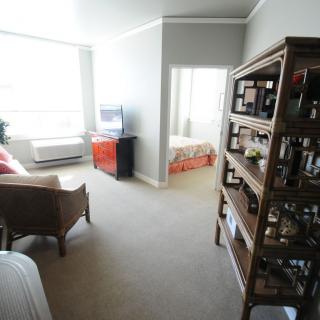


 Comprehensive Guide to VA Nursing Homes: A Crucial Long-Term Care Resource for Veterans
 Estimating the Expenses of At-Home Dementia Care: A Detailed Exploration
 Comprehensive Insights on the Late Stages of Dementia: What to Expect and How to Provide Care