
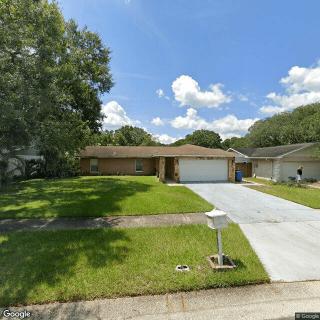
8814 Sleepy Creek Ct, Tampa, FL 33634
For more information about senior living options: (866) 208-4318
Villa La Esperanza III Costs & Pricing
Villa La Esperanza III offers competitive pricing for its residents, particularly when compared to both Hillsborough County and the broader state of Florida. The monthly cost for a semi-private room at Villa La Esperanza III is $2,500, significantly lower than the county average of $3,096 and the state average of $3,009. For those seeking more privacy, the facility's private room rate stands at $3,500, which is still quite reasonable compared to Hillsborough County's average of $3,384 and Florida's average of $3,699. This positioning allows Villa La Esperanza III to provide quality care and comfortable living arrangements while maintaining affordability for its residents and their families.
| Floor plans | Villa La Esperanza III | Hillsborough County | Florida |
|---|---|---|---|
| Semi-Private | $2,500 | $3,096 | $3,009 |
| Private | $3,500 | $3,384 | $3,699 |
Overall Review of Villa La Esperanza III
Pros
 Villa La Esperanza is felt to come just in time to meet the family's needs.
- The facility is very much to their liking.
- The directors are considered the best in the business.
- The staff is professional and dedicated.
- Their mother is happy and comfortable there.
- A Place for Mom delivered on its promise to help when it was most needed.
Review
Villa La Esperanza III in Tampa is best suited for families seeking a warm, attentive assisted living option where leadership is clearly engaged and care feels personal. The strongest signal from multiple reviews is a hands-on administrative team and a staff culture that operates with professionalism, dedication, and a genuine sense of partnership with families. This is not a generic, institution-like setting; it reads as a small-to-mid sized community where residents are known, routines are tailored, and concerns are addressed promptly. It suits seniors who want reassurance that someone will know their story, advocate for their needs, and maintain a comfortable, homelike daily rhythm.
That clarity of fit, however, naturally points to who may want to consider alternatives. If clinical acuity is high or memory care needs dominate, this community’s strengths may be less relevant unless explicit memory-support programs are in place and well communicated. Similarly, families weighing cost transparency, longer-term medical oversight, or a broader menu of on-site therapies may want to compare other facilities with a more defined medical continuum or larger campus resources. Those seeking a highly structured, hospital-like environment or robust therapy schedules may find other options better aligned with those expectations.
The core advantages, visible leadership, professional and dedicated staff, and a culture of attentive care, more than offset the potential gaps many families worry about. Residents benefit from director-level involvement and a staff that seems to take personal responsibility for each resident’s comfort and safety. The testimonials highlight a sense of reliability and continuity, with care teams that build trust through consistent, caring interactions. In practical terms, these strengths translate into smoother transitions, clearer communication with families, and a living experience that feels both respectful and responsive to day-to-day needs.
A standout feature in the reviews is the way certain staff members are singled out for special effectiveness. Directors are described as “the best in the business,” setting a tone of competence and warmth, while individual team members, such as Marisol and Victor, are praised for their professionalism and dedication. This level of recognition matters in daily life: residents enjoy real, staff-driven relationships; families gain confidence from knowing familiar faces are coordinating care; and the consistency of those relationships helps reduce the stress that often accompanies transitions to higher levels of care. When trust hinges on people, these endorsements carry significant weight.
For families evaluating next steps, a practical lens will yield clear questions. Request a face-to-face with the leadership team to discuss care planning, responsiveness, and how daily routines are personalized. Ask about pricing: what is included, what costs might arise, and how billing aligns with services promised. Inquire about the scope of medical oversight, availability of memory or specialized care, and a current activity calendar to ensure social and cognitive engagement aligns with expectations. Meeting Marisol, Victor, and other frontline caregivers can also illuminate whether the daily experience matches the expressed values of the community.
In the end, Villa La Esperanza III stands out for those who prize a compassionate, well-led environment where staff dedication translates into evident comfort and happiness for residents. It is a strong recommendation for families seeking reassurance, personal attention, and a collaborative care approach. Those needing more intensive clinical programming, explicit memory-care specialization, or a broader spectrum of on-site therapies should compare alternatives to ensure the chosen community can deliver the exact level of medical and cognitive support required. A thoughtful visit should confirm fit, clarify expectations, and cement the sense that the right choice here can meaningfully ease the transition for both resident and family.
 6 resident community capacity
 Assisted Living
 Board and Care Home
 Memory Care
 Activities on-site
 Cable or satellite TV
 Dining room
 Fully furnished
 Garden
 Housekeeping services
 Indoor common areas
 Move-in coordination
 Outdoor common areas
 Private
 Respite or short term stays offered
 Telephone
 Wi-Fi/high-speed internet available
 Tampa International (4 miles away)
 24-hour supervision
 Assistance with bathing
 Assistance with dressing
 Assistance with transfers
 Diabetes diet
 Diabetic care
 High acuity care
 Incontinence care
 Meal preparation and service
 Medication management
 Special dietary restrictions
 Transportation arrangement (medical)
 Transportation to doctors appointments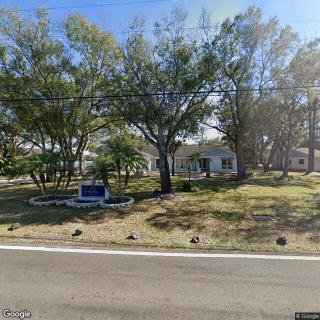



 Are Dementia and Alzheimer's Disease Lethal? A Comprehensive Exploration
 Exploring the Power of Reminiscence Therapy for Individuals With Dementia
 An In-Depth Look at Reminiscence Therapy in Dementia Care