
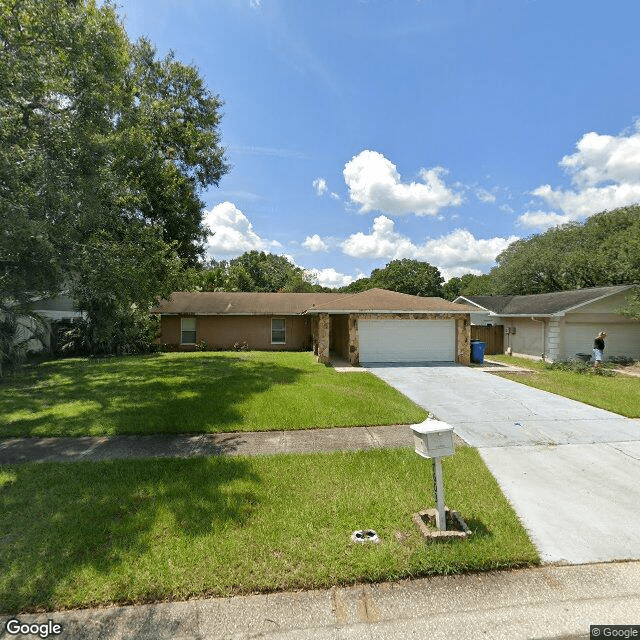
7603 Winging Way Dr., Tampa, FL 33615
To contact a resident: (813) 877-6581
For more information about senior living options: (866) 208-4318
Our Lady of Charity Costs & Pricing
At Our Lady of Charity, the monthly costs for various room types are competitively aligned with the broader market in Hillsborough County and the state of Florida. The pricing for private rooms, studios, and one-bedroom units is set at $3,500, which positions it slightly above Hillsborough County's average for private rooms at $3,384 and studio apartments at $3,685. However, when compared to statewide averages, which stand at $3,699 for private rooms and $3,823 for studios, Our Lady of Charity offers a compelling value. Notably, its pricing for one-bedroom units at $3,500 makes it significantly more attractive when considering that the average cost across Florida is $3,864. This strategic pricing structure reflects Our Lady of Charity's commitment to providing quality accommodations while remaining an accessible choice within the local market landscape.
| Floor plans | Our Lady of Charity | Hillsborough County | Florida |
|---|---|---|---|
| Private | $3,500 | $3,384 | $3,699 |
| Studio | $3,500 | $3,685 | $3,823 |
| 1 Bedroom | $3,500 | $3,786 | $3,864 |
Memory care communities with a similar price nearby
-
from -$405 / mo
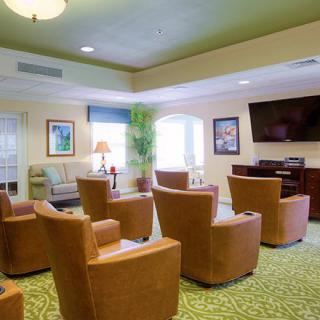
Homewood At Sun City Center
$3,095 to $6,500 / month24.4 miles away -
from +$200 / mo

The Meridian at Brandon
$3,700 to $5,900 / month14.6 miles away -
from +$500 / mo
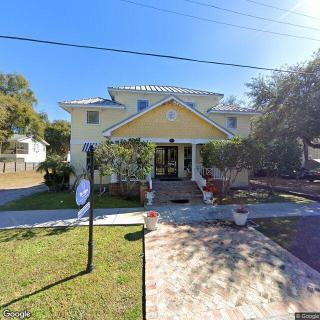
The Abigail
$4,000 / month8.0 miles away -
from -$325 / mo
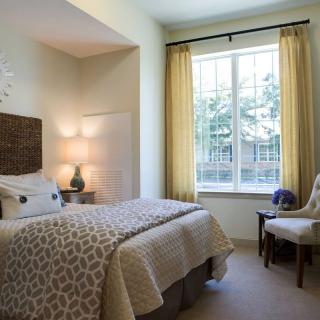
Arbor Terrace at Citrus Park
$3,175 to $5,999 / month3.9 miles away -
from +$515 / mo
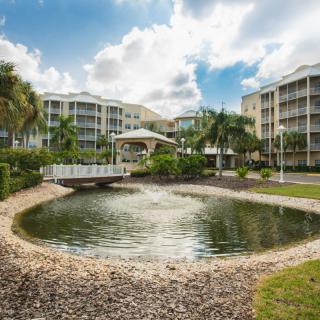
Regal Palms
$4,015 to $5,985 / month14.5 miles away
Overall Review of Our Lady of Charity
Pros
 The home is wonderful.
- Everything is updated.
- The owner is welcoming.
- The residents are very pleased with the care, cleanliness, and food.
Cons
 None detected.
Review
Our Lady of Charity in Tampa is best suited for seniors who want a small, home-like living environment with direct, hands-on leadership. This community appeals to families seeking a freshly updated setting where the owner is clearly involved and approachable, and where daily life centers on warmth, routine, and personal attention rather than a big-box feel. It is a compelling option for those who prize a welcoming first impression, clean spaces, and a sense that someone who cares is overseeing day-to-day operations. In short, it suits residents who want a comfortable, unpretentious address where staff know residents by name and care feels personal rather than procedural.
Those needing extensive medical oversight, a large, resource-rich campus, or specialized memory or skilled nursing services should consider alternatives. With only a single positive review on record in this data set, potential residents should probe whether the level of care, staffing patterns, and service mix align with current medical needs. Families should also confirm whether transportation, activity programming, and assisted living services match expectations, since a smaller operator can mean fewer on-site options.
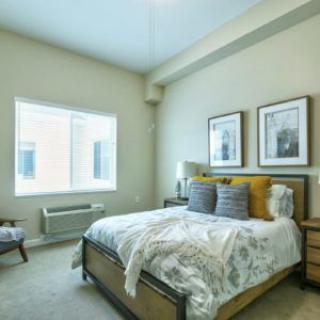
On the upside, the key strengths here center on updated interiors, a visible commitment to a fresh, clean environment, and a leadership presence that residents and families notice. The owner’s welcome creates an atmosphere where newcomers feel seen and supported from day one, which can ease the transition for both residents and family members. Residents’ praise for care, cleanliness, and food signals reliable daily routines, consistent housekeeping, and meals that meet basic quality standards. Those factors matter a lot when negotiating cube-by-cube living, safety, dignity, and enjoyment should not be sacrificed for price.
However, the main caveat is the lack of breadth in the evidence. One favorable snapshot does not establish a track record across diverse needs, shifts, and seasons. There is no documented detail about staffing ratios, specific care levels, memory care accommodations, or the range of social and recreational programming. Without more data, concerns such as responsiveness at night, assistance with mobility, or how emergencies are managed remain open questions. For families needing robust medical integration or more comprehensive activity calendars, alternatives may provide clearer assurances.
Still, the positives do not vanish in the face of uncertainty. The combination of an updated, home-style setting and direct owner oversight can offset potential gaps by delivering quick decisions, personalized accommodation, and consistent attention to cleanliness and meals. When residents feel valued and staff demonstrate reliable routines, the risk of unmet needs diminishes, even in a smaller operation. The tangible care outcomes implied by resident satisfaction with care and food are meaningful signals for families prioritizing daily quality of life over a long list of additional services.
Decision takeaway: Our Lady of Charity is a practical choice for families prioritizing a warm, updated, low-key setting with hands-on leadership and clearly visible resident-focused care. It is especially suited to seniors who thrive on personal interactions, routine, and homelike comfort. Those who require broad medical oversight, specialized memory care, or a wide array of campus amenities should explore alternatives that offer more extensive service networks and more documented performance across multiple residents. In short, this community is worth a closer look for the right fit, one where the emphasis on care, cleanliness, and a welcoming owner aligns with the senior’s living preferences and family expectations.
 Board and Care Home
 Memory Care
 Activities on-site
 Devotional services off-site
 Indoor common areas
 Private
 Tampa International (4 miles away)
 Ambulatory care
 Diabetic care
 Meals provided


 Five Subtle Dementia Indicators to Observe: An In-Depth Guide to Understanding “Does My Mom Have Dementia?”
 Dementia, Paranoia, and Caregiver Guidance: Understanding the Connection
 Engaging Memory Care Activities That Enhance Quality of Life