Dacco Behavioral Health I is an assisted living community in Tampa, FL.
Information last verified:
3107 North 50Th Street, Tampa, FL 33619
For more information about senior living options: (866) 208-4318
3.6 from 97 reviews
5 stars
50
4 stars
12
3 stars
7
2 stars
3
1 stars
25
Overall Review of Dacco Behavioral Health I
caveat3 reviews mention this
Calls and mail are hard to reach
Residents and families report trouble getting timely phone or mail support.
Several reviewers say they could not reach the facility by phone, including waiting days for a return call. Others describe problems with sending and receiving mail and note that basic information was difficult to find. A reviewer also reports repeated phone calls being answered and immediately hung up.
caveat2 reviews mention this
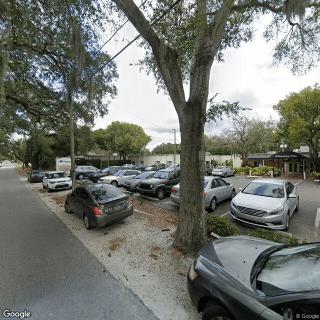
Parking feels tight on-site
Parking availability is a recurring frustration for visitors.
One reviewer mentions there are no parking spaces. Another describes the parking as pretty tight, which suggests limited room when people arrive for visits or appointments.
caveat4 reviews mention this
Prison-like atmosphere is criticized
Some reviewers describe the environment as punitive or not conducive to healing.
A few reviews use strongly negative language, describing the program as jail- or prison-like. Others describe it as intentionally uncomfortable or bare-bones, emphasizing that it is not designed to feel comfortable. One reviewer also warns that staying clean is constantly challenged by the presence of active use or distribution in the area.
caveat2 reviews mention this
Physical activity and outings vary
Residents and families disagree on access to exercise and outings.
One reviewer says there is no physical activity and that outings were rare. Another reviewer mentions a gym that appears in decent shape but needs renovation and newer equipment.
How we summarize
Counts show how many written reviews mention each theme; a review can touch several themes, and only frequently mentioned themes are displayed.
Features
Housing
8 resident community capacity
Types of Care
Assisted Living
Amenities
Cable or satellite TV
Dining room
Fully furnished
Garden
Housekeeping services
Move-in coordination
Outdoor space
Telephone
Wi-Fi/high-speed internet available
Transportation
Tampa International (8 miles away)
St. Petersburg-Clearwater International (18 miles away)
Care Services
24-hour supervision
Activities of daily living assistance
Assistance with bathing
Assistance with dressing
Assistance with transfers
Coordination with health care providers
Diabetes diet
Meal preparation and service
Medication management
Special dietary restrictions
Transportation arrangement (medical)
Transportation to doctors appointments
Dining
Diabetes diet
Special dietary restrictions
Activities
Community-sponsored activities
Scheduled daily activities
Nearby Places of Interest
Parks
Grant Park (0.6 miles)
McKay Bay Nature Park (2 miles)
Curtis Hixon Waterfront Park (4 miles)
Rivercrest Park (4.1 miles)
Mango Dog Park (6.3 miles)
Restaurants
McDonald's (1.1 miles)
McDonald's (2.2 miles)
Columbia Restaurant - Ybor City (2.2 miles)
James Joyce Irish Pub & Eatery (2.5 miles)
Florida State Fairgrounds (2.7 miles)
McDonald's (2.8 miles)
McDonald's (2.9 miles)
Pharmacies
Walgreens (2.7 miles)
Walmart Pharmacy (3 miles)
Winn-Dixie (3.2 miles)
CVS Pharmacy (4.1 miles)
Walgreens (4.2 miles)
CVS Pharmacy (4.3 miles)
Walgreens (4.3 miles)
Cafes
King State (3.3 miles)
Starbucks (3.7 miles)
JW Marriott Market Cafe (3.8 miles)
Starbucks (4 miles)
Starbucks | UT (4.5 miles)
Starbucks (5 miles)
Starbucks (5.1 miles)
Transportation
Nairobi Train Station (4.6 miles)
Stanleyville Train Station (4.7 miles)
Places of Worship
The River at Tampa Bay Church (4.7 miles)
Grace Family Church (5 miles)
Limona Village Chapel United Methodist Women (6.1 miles)
The guide outlines the complexities of Medicaid coverage for assisted living, highlighting significant state-to-state variations, limited coverage often restricted to personal care services, and the existence of specialized waivers for certain needs like memory care. It advises families to consult local Medicaid offices for options while emphasizing the importance of understanding state-specific regulations and facility policies.
Medicaid coverage for assisted living varies by state and is primarily available to low-income individuals, with eligibility dependent on strict income and asset limits. Some states offer HCBS waivers for specific services in assisted living, but families must generally cover room and board costs, and should verify facility acceptance of Medicaid while considering potential waiting lists.
Medicaid waivers for assisted living services provide vital support for seniors and individuals with disabilities in need of long-term care, with varying state-specific eligibility criteria and benefits. These waivers cover personal care and case management but often do not fully cover room and board, leading to waiting lists for many applicants.
Get PricingAsk A QuestionSchedule A TourContact Senior Advisor
By clicking submit, you agree to our Partner's Terms of Use. You
also consent to receive calls and texts, which may be autodialed, from our Partner. Your consent is not a condition to
using our Partner's service. Please visit our Partner's Privacy Policy for information about their privacy practices.

 8 resident community capacity
 Assisted Living
 Cable or satellite TV
 Dining room
 Fully furnished
 Garden
 Housekeeping services
 Move-in coordination
 Outdoor space
 Telephone
 Wi-Fi/high-speed internet available
 Tampa International (8 miles away)
 24-hour supervision
 Activities of daily living assistance
 Assistance with bathing
 Assistance with dressing
 Assistance with transfers
 Diabetes diet
 Meal preparation and service
 Medication management
 Special dietary restrictions
 Transportation arrangement (medical)
 Transportation to doctors appointments
 Intimate 12-resident setting with 24-hour supervision and comprehensive ADL and medication support, plus diabetes-friendly dining.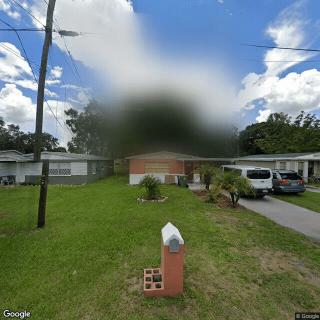

 Understanding Medicaid Coverage for Assisted Living: A Comprehensive Guide
 How and When Medicaid May Cover Assisted Living Costs
 A Detailed Exploration of Assisted Living Medicaid Waivers Across the United States