
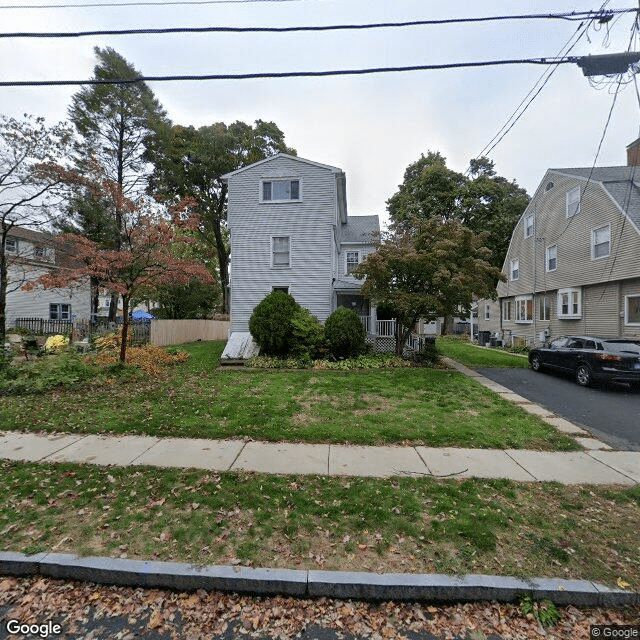
18 Fenn Way, West Hartford, CT 06119
To contact a resident: (860) 965-4736
For more information about senior living options: (866) 208-4318
Tracy Manor II Costs & Pricing
At Tracy Manor II, the monthly cost for a private room is $1,600, which presents a compelling value when compared to the average expenses in Hartford County and across the state of Connecticut. In Hartford County, the average monthly cost for similar accommodations reaches $6,492, while the statewide average stands at $5,479. This significant difference underscores Tracy Manor II's commitment to providing affordable living options without compromising on quality care and service, making it an attractive choice for individuals seeking personalized living arrangements in a supportive environment.
| Floor plans | Tracy Manor II | Hartford County | Connecticut |
|---|---|---|---|
| Private | $1,600 | $6,492 | $5,479 |
Senior living communities with a similar price nearby
-
from -$150 / mo
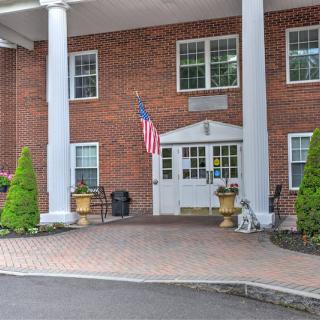
The Court of Saint James
$1,450 to $1,650 / month1.5 miles away -
from +$200 / mo
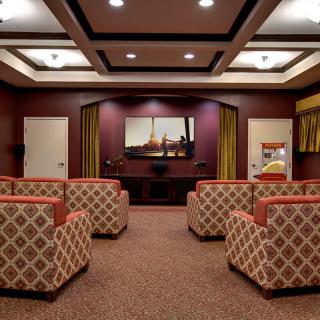
Farmington Station
$1,800 to $2,300 / month8.3 miles away -
from +$200 / mo
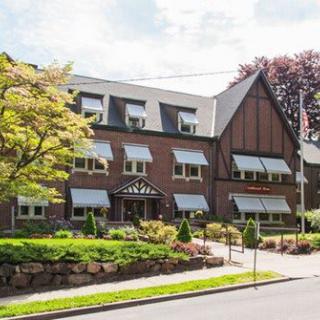
Southmayd Home for Women
$1,800 to $1,950 / month21.4 miles away -
About the same
Comfort Keepers - Bloomfield
$1,600 to $2,000 / month3.9 miles away -
from +$270 / mo

Suffield Commons, LLC
$1,870 to $2,495 / month15.6 miles away
Overall Review of Tracy Manor II
Pros
 The staff at Tracy Manor are caring, professional, and attentive.
- Tracy Manor has excellent facilities and a warm, welcoming atmosphere.
- Residents feel at home and treated like family at Tracy Manor.
- The administration is warm, compassionate, and dedicated to residents.
- The staff consistently show respect for residents and meet their individual needs.
- Tracy Manor residents form a supportive, family-like community where neighbors help one another.
- Tracy Manor goes above and beyond to keep residents safe, cared for, and feeling valued.
- The home keeps residents engaged and entertained in a clean, comfortable environment.
Review
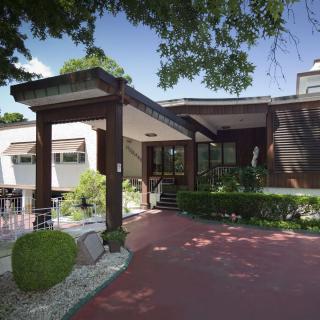
This community is best suited for families seeking a warm, home-like residential care option in West Hartford where seniors are treated as part of a close-knit family and daily life centers on attentive, personal caregiving. Tracy Manor II shines for residents who value a steady, compassionate presence from staff and a setting that feels more like a private home than a clinical building. It is a strong fit for those who want consistent warmth from an administrator who leads with empathy and for families who appreciate an environment where residents are known by name, engaged in their routines, and supported by a team that prioritizes respect and safety in equal measure.
Those considering alternatives should note that Tracy Manor II is not the place for high-acuity medical supervision or memory-care specialization. If a senior requires ongoing skilled nursing care, a formal memory-care program, or an environment crafted around rigorous clinical protocols, larger facilities with dedicated medical staff and memory units may be more appropriate. Families seeking a more institutional atmosphere, less reliance on homelike routines, or greater distance from the intimate, family-style dynamic might also find other options better suited to their expectations and needs.
The strongest advantages here lie in the staff and the atmosphere. The care team is consistently described as kind, professional, and genuinely attentive, with administrators who take ownership of the home and treat residents like family. That combination creates a sense of safety and belonging that translates into reliable daily support and meaningful, respectful interactions. Residents are described as safe and valued, with care plans that are responsive to individual needs, and families repeatedly note that Tracy Manor II goes above and beyond to meet those needs. The environment itself reinforces these benefits, clean, comfortable, and welcoming, with a focus on keeping residents engaged and connected to one another.
Yet the reviews do acknowledge that a small, intimate setting does not crash-proof every potential concern. A minority of ratings signal that experiences can vary, and some families may encounter gaps that are more noticeable in a home-like model than in larger, systematized facilities. The low scores imply that when expectations hinge on certain levels of structure, predictability, or clinical oversight, the experience may not fully align. While the bulk of feedback sings the praises of warmth and involvement, these caveats remind that Tracy Manor II’s strengths sit squarely in caregiving intimacy and personal attention rather than in formal medical programming or breadth of specialized services.
The key to understanding how the pros offset the cons lies in the core mission: to make residents feel valued, safe, and integrally part of a family-like community. The outstanding caregiver–resident relationships and the sense of belonging they foster often neutralize the need for clinical intensity by delivering reliable daily support, social connection, and purposeful activities. When staff know residents well, they can tailor routines, anticipate needs, and mobilize neighbors to help one another, which sustains quality of life in a way that larger campuses sometimes struggle to replicate. For families who prioritize emotional well-being, dignity, and a home-centered lifestyle, those advantages compellingly outweigh the potential trade-offs in medical depth.
In practical terms, Tracy Manor II emerges as a compelling choice for families prioritizing warmth, personal attention, and a living-space atmosphere that honors independence within a supportive framework. It stands out for people who want a place that feels like home, where residents are cherished and daily life is infused with purposeful engagement. For those whose main decision hinges on medical complexity, memory-care needs, or a highly structured clinical milieu, alternatives with broader clinical offerings deserve serious consideration. Prospective families should visit, observe interactions between staff and residents, and ask pointed questions about how care plans adapt over time. If the goal is a trusted, intimate setting where the human connection drives quality of life, Tracy Manor II is a difficult option to overlook.
 Board and Care Home
 Activities on-site
 Devotional services off-site
 Indoor common areas
 Private
 Bradley International (12 miles away)
 Ambulatory care
 Diabetic care
 Meals provided

 Comprehensive Exploration of Living Wills and Other Advance Directives
 A Detailed Exploration of Living Wills and Advance Directives
 Comprehensive Guide to Medicare Coverage for Hospice Care