
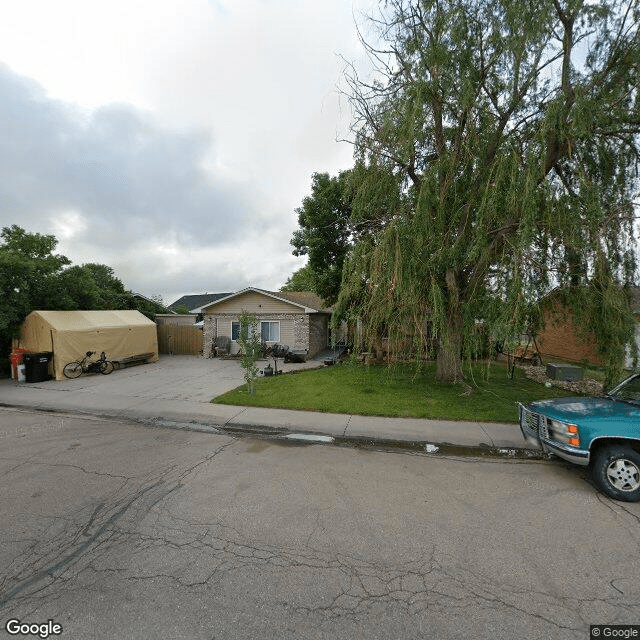
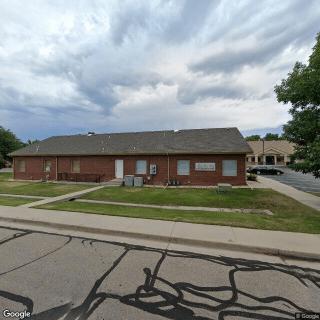
303 E Chestnut St, Windsor, CO 80550
To contact a resident: (970) 686-2258
For more information about senior living options: (866) 208-4318
Willows At Windsor Costs & Pricing
Willows At Windsor offers competitive pricing for its residents, particularly when compared to the broader market rates in Weld County and the state of Colorado. For a semi-private room, residents at Willows pay $1,700 per month, significantly lower than the county average of $3,334 and the state average of $4,009. Similarly, those opting for a private room benefit from an accessible rate of $2,075, while Weld County averages $4,032 and Colorado's state average is $4,142. This positioning highlights Willows At Windsor as an appealing choice for individuals seeking quality care without the financial strain often associated with other facilities in the region.
| Floor plans | Willows At Windsor | Weld County | Colorado |
|---|---|---|---|
| Semi-Private | $1,700 | $3,334 | $4,008 |
| Private | $2,075 | $4,032 | $4,142 |
Assisted Living communities with a similar price nearby
-
from +$250 / mo
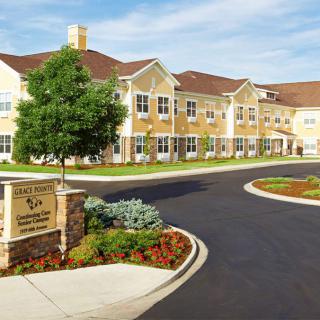
Grace Pointe
$1,950 to $6,300 / month6.9 miles away
Overall Review of Willows At Windsor
Pros
 The Willows is described as one of the best places the reviewer has seen.
- The residents at The Willows are happy and engaging.
- Staff on duty greet visitors with a smile and then engage with residents.
- The Willows invests in resident entertainment, including outings to the local senior lunch group, bingo, and a backyard Hoe-Down.
- The Willows is recommended for a loving, caring environment for loved ones.
- The Willows at Windsor is described as professional and easy to work with.
- The Willows at Windsor feels like a great big family due to its small size.
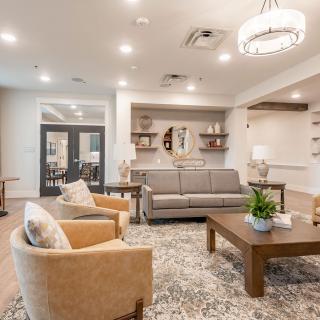
- The facility is clean and looks nice, contributing to a pleasant living environment.
Cons
 Some of the patients were young but had cognitive or mental impairments.
 - Some of these residents were best described as creepy.
- Even the staff members were made uncomfortable by them.
- The young female visitor sometimes felt uncomfortable walking the halls alone.
Review
Willows At Windsor is best suited for families seeking a genuinely intimate, home-like assisted living experience where staff become a regular, reassuring presence in daily life. The community’s small scale translates into visibility and warmth: residents appear engaged, content, and well cared for, with staff who greet visitors and immediately devote attention to the people living there. Programming stands out for its practical, on-location activities, local senior lunch outings, bingo, and outdoor events like a Hoe-Down in the yard, that keep residents socially connected and mentally stimulated. The climate is clearly upbeat, and the facility earns strong marks for the personal touch that comes from a close-knit staffing model.
This will not be the right choice for every family. Alternatives are worth considering for those prioritizing a larger footprint, more formalized memory-care architecture, or a setting with a stronger emphasis on clinical oversight. Families seeking a higher level of clinical services on-site, more regimented security, or a broader range of specialized programs may gravitate toward bigger campuses with dedicated memory-care wings or hospital-adjacent facilities. Likewise, households needing stricter partitioning by age or cognitive-status, where younger residents with impairments must be physically and socially kept apart, may prefer environments designed around more pronounced age- or condition-specific separation.
The strongest positives at Willows offset most ordinary rough edges through demonstrable strengths. The small size is repeatedly described as a strategic advantage: staff can know residents by name, monitor moods and preferences closely, and sustain a familial, collaborative culture among caregivers, residents, and families. Professionalism among the staff is consistently highlighted, with caregivers who are cheerful, patient, and attentive to individual histories. Residents respond with apparent happiness, and the atmosphere overall feels calm, clean, and welcoming. The ability to weave together daily routines with personalized attention creates a dependable quality of life that many families actively seek when choosing assisted living.
On the other hand, a concrete concern emerges from one former resident’s family perspective: the presence of younger residents who have cognitive or mental impairments can create occasional discomfort for visitors navigating the hallways. This is not framed as a safety risk, but as a perceptual challenge for guests who expect a uniformly tranquil, adult-centric environment. Staff are aware of these dynamics and try to manage them by keeping certain residents out of empty hallways, yet the experience can still unsettled some family members or new visitors who value a consistently quiet setting. This dynamic does temper the otherwise uniformly positive picture.
When weighing the strengths against the caveats, the Willows’ advantages carry substantial weight. The intimate setting fosters rapid communication and a sense of belonging that larger communities often struggle to emulate. The active, socially oriented calendar keeps residents social and engaged, while the daily warmth of the staff translates into reliable support for routine tasks and personal preferences. For families who prize a tightly knit, high-touch approach, where caregivers remember names, preferences, and story details, the Willows delivers with credibility. The overall happiness of residents and the visible pride in the staff’s work make a compelling case for choosing this community when these are the top criteria.
Bottom-line guidance: Willows At Windsor is a strong, practical match for families prioritizing warmth, personalization, and a lively but intimate social environment in Windsor. It excels for those who want a small, easily navigable setting with hands-on staff engagement and meaningful, locally anchored activities. However, for households that require stronger, explicit separation of demographics, more extensive on-site medical or memory-care capabilities, or a quieter, less varied resident mix, it is worth exploring larger facilities or communities that emphasize those features. Prospective movers should visit, speak with front-line staff, and observe activity during a typical day to confirm that the resident-care style aligns with the family’s expectations and the loved one’s needs.
 8 resident community capacity
 Assisted Living
 Board and Care Home
 Respite Care
 Cable or satellite TV
 Dining room
 Fully furnished
 Garden
 Housekeeping services
 Move-in coordination
 Outdoor space
 Private
 Telephone
 Wi-Fi/high-speed internet available
 24-hour supervision
 Activities of daily living assistance
 Assistance with bathing
 Assistance with dressing
 Assistance with transfers
 Diabetes diet
 Meal preparation and service
 Medication management
 Special dietary restrictions
 Transportation arrangement (medical)
 Transportation to doctors appointments


 Social Security Benefits and Assisted Living: Navigating Options Across the U.S.
 An Extensive Exploration of the VA Aid and Attendance Benefit
 Senior Transition Services: Understanding Their Role, Cost, and Importance