
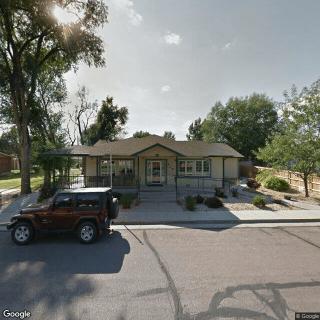
1920 Edison Street, Brush, CO 80723
For more information about senior living options: (866) 208-4318
Eben Ezer Lutheran Care Center II Costs & Pricing
Eben Ezer Lutheran Care Center II offers private rooms at a monthly cost of $4,732, positioning it within the context of both Washington County and the broader state of Colorado. While this cost exceeds the average for Washington County, which stands at $4,474, it is notably higher than the statewide average of $4,142. This pricing structure reflects the center's commitment to providing a high standard of care and specialized services that may justify the premium. For families seeking quality long-term care options in a supportive environment, Eben Ezer's offerings might be seen as an investment in personalized attention and holistic well-being.
| Floor plans | Eben Ezer Lutheran Care Center II | Washington County | Colorado |
|---|---|---|---|
| Private | $4,732 | $4,474 | $4,142 |
Assisted Living communities with a similar price nearby
-
from +$768 / mo

Pioneer Haven
$5,500 / month23.2 miles away
Overall Review of Eben Ezer Lutheran Care Center II
Pros
 Direct care staff seem caring.
- The staff and physicians are top notch.
- Eben Ezer has been a life saver for residents and their families.
- The nurses were amazing, friendly, and nice.
- Ashley, the manager, was very helpful and caring.
- The staff are described as wonderful people who make Eben Ezer the best.
Cons
 The after-hours care call wasn’t answered, leading to a family member falling and breaking her leg.
- Staff later found her and placed her in her chair as if everything was okay.
- Administration pays no attention to protocol, processes, or orienting families of new residents.
- There is no assessment for the least restrictive level of care, nor any response to ombudsman concerns.
Review
Eben Ezer Lutheran Care Center II in Brush, Colorado is best suited for families seeking a warm, home-like environment where care staff are genuinely devoted to daily well-being. The community thrives on personal connection, with direct care teams that residents and families repeatedly describe as caring and engaged. Rehab services and end-of-life support are meaningful strengths, supported by nurses who communicate well and a manager who is accessible to families. The setting feels intimate enough for residents to be known, with everyday life activities, baking, shared meals, and comfortable common spaces, contributing to a sense of belonging. This combination clearly serves those who prioritize warmth, sustained nursing attention, and a neighborhood feel over highly standardized systems.
The strongest positives center on the human side of care. Direct care staff and nurses are consistently praised for compassion, and management is lauded for responsiveness during challenging moments. Several families credit Eben Ezer with improving or preserving quality of life, including medication adjustments that reduce side effects and help with symptom relief. End-of-life care is described as deeply compassionate, with staff going beyond routine duties to honor families’ wishes and provide meaningful support. Bilingual staff ease communication with diverse families, and rehabilitation services are viewed as genuinely beneficial. The environment is framed as a supportive, homelike space where small acts of kindness, like fresh-baked treats or shared celebrations, carry real emotional weight.
Yet there are notable governance and safety concerns that cannot be ignored. Some families report administrative gaps, including inconsistent adherence to protocols and insufficient orientation for new residents. The absence of formal assessments for the least-restrictive level of care and a sense that ombudsman concerns are not always promptly or adequately addressed point to a fragmentation between bedside compassion and systemic oversight. Specific incidents describe after-hours calls not being answered promptly, culminating in a serious injury that required hospitalization. Medication management is also questioned in anecdotes about regimens and symptom control. Taken together, these threads suggest a service culture where frontline empathy exists alongside fragile risk oversight.
How the positives weigh against the negatives depends on what families prioritize. The evident care and approachable leadership can soften the impact of administrative gaps, especially for residents who rely on steady, personal interactions and reliable rehabilitation support. When staff members go the extra mile, supporting family events, enabling celebrations, and ensuring end-of-life comfort, the community earns trust and a sense of security for involved families. However, the absence of transparent planning and concerns about safety and escalation mechanisms leave open questions about risk management. For families with strong advocacy and the ability to stay closely involved, Eben Ezer can be workable; for those who demand rigorous governance and repeatable, accountable processes, the gaps may be unacceptable.
Who should look at alternatives is clear. Families requiring highly predictable, tightly controlled processes, rapid after-hours responsiveness, and clearly documented care-level assessments will likely find Eben Ezer insufficient. The trade-off here is warmth and personal touch in exchange for less consistent governance and risk controls. If a resident’s needs involve complex medication management, precise symptom monitoring, or robust ombudsman-driven oversight, it makes sense to compare facilities with stronger, more transparent incident reporting and escalation protocols. In short, Eben Ezer delivers meaningful humanity and rehab potential, but it is not the safest choice for those prioritizing ironclad governance and fail-safe response systems.
Bottom-line guidance: Eben Ezer Lutheran Care Center II can be an excellent fit for families who prize a life-affirming, resident-centered environment with strong caregiving relationships, meaningful rehab, and compassionate end-of-life support. The care team’s humanity stands out as a decisive strength, and accessible management can smooth transitions during difficult periods. The caveats, the administrative gaps, care-level planning uncertainties, and slower after-hours responsiveness, require thorough vetting through in-person conversations and a targeted tour focused on safety protocols, staffing coverage, and care-planning rigor. If these concerns are acknowledged and a concrete, transparent plan is in place, the community can be a wonderfully supportive home. If not, it is prudent to explore facilities with more reinforced governance and consistently reliable systems.
 28 resident community capacity
 Assisted Living
 Beauty salon
 Cable or satellite TV
 Dining room
 Fully furnished
 Garden
 Housekeeping services
 Kitchenette
 Move-in coordination
 Outdoor space
 Restaurant-style dining
 Small library
 Telephone
 Wi-Fi/high-speed internet available
 24-hour call system
 Activities of daily living assistance
 Assistance with bathing
 Assistance with dressing
 Assistance with transfers
 Diabetes diet
 Medication management
 Mental wellness program
 Special dietary restrictions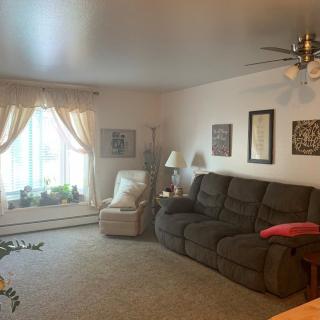



 An Extensive Exploration of the VA Aid and Attendance Benefit
 Senior Transition Services: Understanding Their Role, Cost, and Importance
 Exploring the Path to Senior Living: A Comprehensive Look at Independent Living and Assisted Living