
6724 Gaviota Avenue, Lake Balboa, CA 91406
For more information about senior living options: (866) 208-4318
Overall Review of Clarendon Village 1
Pros
 Balboa cottages willingly took her in even though we said it might only be a for few weeks.
- They took such great care of her, that we were recently able to move her into an assisted living facility where she has additional independence.
- She was surrounded by lovely staff and other older women who needed care.
Cons
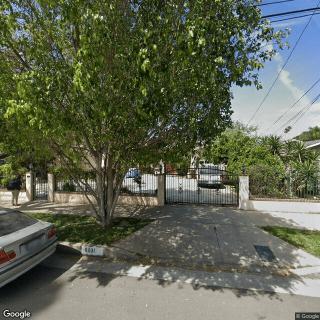
 They should not be allowed in the neighborhood; their staff and visitors park on the street, leaving homeowners without parking.
- They park in the red, obstructing views, fire hydrants, and sidewalks.
- Their workers and guests are extremely inconsiderate.
Review
Clarendon Village 1 in Lake Balboa is best suited for families seeking a warm, home-like assisted-living environment where caregivers deliver patient, personalized attention and can adapt the plan as a resident’s needs evolve. The standout value is a facility that has demonstrated real flexibility: a resident entering for a short-term need, as a result of a serious illness, can be kept comfortably in place until care needs ease into greater independence within an assisted-living setting. That kind of responsiveness matters when the family is navigating uncertain health trajectories and wants staff who will treat the elder as a person first, not a file. In short, this community works well for elders who require steady, compassionate caregiving, and for families who want a clear, humane bridge from intensive support to more autonomous living, without uprooting everyone again.
There are clear reasons some families may want to consider alternatives. The most tangible concern voiced is parking and traffic management in the surrounding street, an issue that can affect visitors, caregivers, and nearby neighbors more than the day-to-day care itself. When access for family members is inconsistent or creates friction with the neighborhood, some families may prefer a setting with stricter on-site parking or fewer external parking conflicts. Additionally, those who prioritize a more clinical or high-acuity medical environment, or who demand a facility with larger campuses, more extensive on-site medical services, or more robust emergency readiness, may find other communities that showcase these features to be a better fit.
The strongest positives, staff warmth, a clean and welcoming atmosphere, and a genuine sense of home, strike a meaningful balance against the drawbacks. Families repeatedly describe the staff as lovely, attentive, and deeply involved in residents’ daily lives, which translates into a calmer, more dignified experience for elders who crave reassurance and companionship. The environment itself feels tidy and inviting, reinforcing a sense of safety and comfort that families value when they cannot be at the bedside around the clock. This emotional and relational capital, staff who know residents well, routines that feel familiar, and a community that feels like a supportive extended family, often offsets the concern that the facility may not be the most modern or the most sprawling option on the market.
Beyond the ambience, the ability to support a resident’s transition toward greater independence within the same care framework is a notable pro. The anecdotes suggest the setting is capable of honoring a trajectory from more intensive care to stepping up autonomy in an assisted-living context. That continuum matters for families who want continuity and predictability, rather than moving a loved one to a new environment mid-trajectory. In practice, this means care plans can evolve in place, reducing disruption and preserving routines that are familiar and comforting to residents at a sensitive life stage.
The street-level concern about parking is not a trivial aside; it’s a real operational friction that affects the overall experience for families and visitors. It has the potential to affect timely visits, drop-offs, and even perceived safety in the neighborhood. While it does not directly erode the quality of care, it does color the perception of the community’s convenience and neighborliness. Families should weigh this against the care quality and relational strength when choosing, especially if proximity to the home and straightforward access are high priorities. It is wise to ask about current parking policies, visitor rules, and how the community coordinates with neighbors to minimize disruption.
In the end, Clarendon Village 1 stands out for offering a compassionate, homey environment with staff who demonstrate genuine care and an ability to support residents through a meaningful progression of independence. For families needing trusted, personable caregiving and a living space that feels like a caring home, the positives strongly outweigh the negatives. Those for whom neighborhood parking friction or the desire for a more clinical, on-site medical footprint are non-negotiables should explore alternatives that emphasize stricter traffic control and broader medical amenities. A thoughtful visit, asking to meet front-line caregivers, observing interactions with residents, and probing parking and visitation policies, will illuminate how well this community aligns with specific caregiving goals and logistical needs.
 6 resident community capacity
 Assisted Living
 Cable or satellite TV
 Dining room
 Fully furnished
 Garden
 Housekeeping services
 Move-in coordination
 Outdoor space
 Telephone
 Wi-Fi/high-speed internet available
 Burbank-Glendale-Pasadena (7 miles away)
 24-hour supervision
 Activities of daily living assistance
 Assistance with bathing
 Assistance with dressing
 Assistance with transfers
 Diabetes diet
 Meal preparation and service
 Medication management
 Special dietary restrictions
 Transportation arrangement (medical)
 Transportation to doctors appointments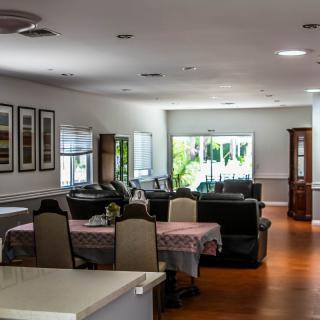



 Assisted Living Expenses and Long-Term Care Insurance: A Comprehensive Exploration
 Securing Financial Support for Assisted Living: A Comprehensive Overview
 Social Security Benefits and Assisted Living: Navigating Options Across the U.S.