
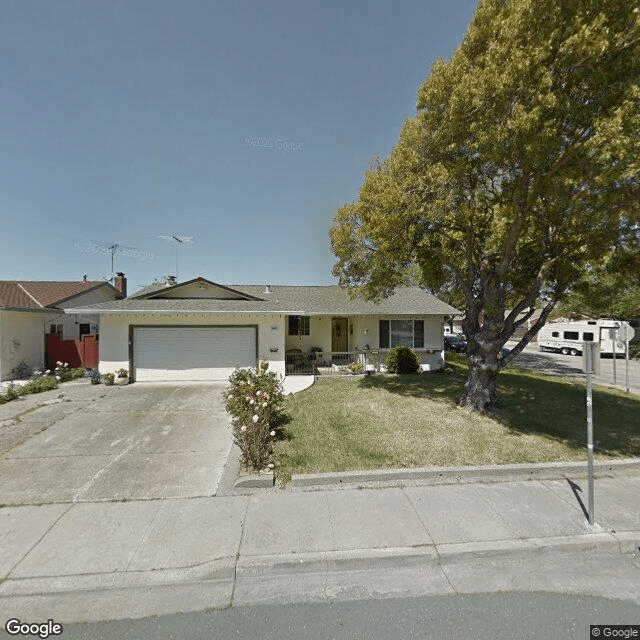
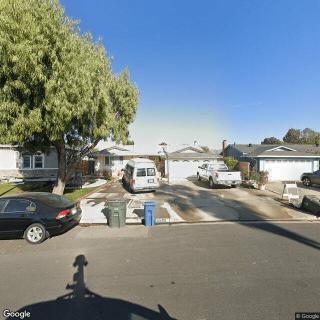
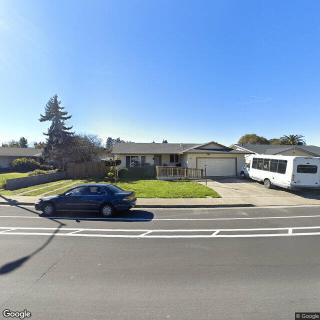
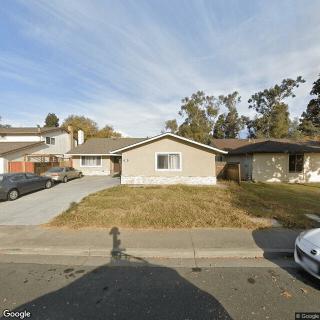
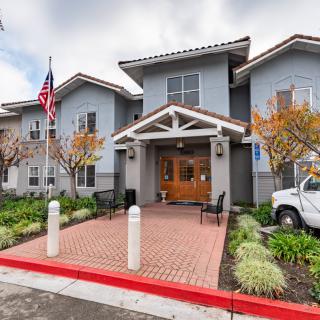
2480 Almaden Blvd, Union City, CA 94587
To contact a resident: (510) 429-8630
For more information about senior living options: (866) 208-4318
A and M Board and Care Costs & Pricing
A and M Board and Care offers competitive pricing for its services, particularly in comparison to the broader market in Alameda County and across California. For a semi-private room, the monthly cost at A and M is $2,800, significantly lower than the county average of $3,273 and the state average of $3,333. When it comes to private rooms, A and M's fee is $3,000, which again positions it favorably against the average costs of $3,748 in Alameda County and $3,939 statewide. This pricing structure not only reflects A and M's commitment to affordability but also highlights their value proposition within an industry characterized by rising living expenses.
| Floor plans | A and M Board and Care | Alameda County | California |
|---|---|---|---|
| Semi-Private | $2,800 | $3,273 | $3,333 |
| Private | $3,000 | $3,748 | $3,939 |
Senior living communities with a similar price nearby
-
from -$400 / mo
Homestead Care
$2,400 to $4,570 / month18.2 miles away -
from -$100 / mo

Home Instead Senior Care
$2,700 to $3,400 / month12.2 miles away -
from +$100 / mo
Parkside Manor
$2,900 to $3,600 / month10.4 miles away -
from +$200 / mo

Palm Garden Home Care
$3,000 to $4,000 / month15.9 miles away -
from -$300 / mo
Ava Bella Care Home
$2,500 to $3,000 / month0.0 miles away
Overall Review of A and M Board and Care
Pros
 The facility treats residents with love and kindness.
- The home is clean and bright.
- Remy consistently ensures Grace's care needs are met at all times.
- Malinda, the owner and a registered nurse, provides great service with compassion.
- Malinda is there for residents at all times, including during emergencies.
- The staff and ownership are highly regarded for prompt, attentive care.
- Families feel grateful and often refer others due to the quality of care.
Cons
 It is not the cleanest place.
- They run out of paper towels and soap in the bathroom.
- The father has the hardest time communicating with them.
- My father is really not happy with A and M Board and Care.
Review
This community is best suited for families seeking a small, home-like setting where a nurse-owner and a stable, long-tenured staff deliver highly personalized caregiving. A and M Board and Care thrives when residents value consistent attention, a warm interpersonal approach, and hands-on problem solving from leadership that understands medical nuances. It is especially suitable for seniors who primarily need daily assistance, enjoy a familiar, intimate environment, and benefit from staff who know them well and respond quickly to requests or changes in condition.
On the strengths side, the strongest endorsement comes from families who describe love, kindness, and a clean, bright atmosphere. The presence of a registered nurse owner who actively oversees care and a staff member with nearly a decade on the job translates into dependable medical judgment and continuity of care. Moments of tangible commitment stand out, emergency responsiveness that is prompt enough to reassure anxious relatives, and a willingness to go the extra mile, even in the middle of the night. These factors create a sense of security that many families prize when selecting a smaller, personalized setting over a larger, impersonal facility.
However, the experience is not without meaningful caveats. One family notes concerns about cleanliness and basic supplies, such as paper towels and soap, which can undermine the comfort level for residents and their families. The physical footprint also emerges as a recurring constraint: a single bathroom serving multiple residents plus others in residence strains privacy and logistics, particularly for nighttime needs. Communication challenges surface in the form of a language barrier, which can hinder nuanced care planning for residents who rely on precise, clear exchanges about preferences and symptoms. Taken together, these factors remind prospective residents that small scale can bring intimacy at the expense of some operational robustness.
These pros offset the cons when viewed through the lens of dependable caregiving and personal accountability. The combination of hands-on nursing oversight and staff familiarity with residents translates into rapid responsiveness and tailored routines that keep daily life smooth and predictable. The intimate setting fosters trust and reduces the stress that accompanies transitions to care. For families prioritizing a strong, personal connection with caregivers and a care team that knows the resident’s history, the positives often outweigh the inconveniences, especially when communications are actively supported and issues are addressed promptly by the owner.
That said, certain residents will want to steer toward alternatives. Those who require more than routine assistance, significant medical management, complex medications, or frequent transfers to hospitals, may find the lean staffing and small-scale layout insufficient. Families that demand pristine housekeeping standards, abundant and dedicated bathroom facilities, or multilingual communication support will likely prefer a larger, more resource-rich community. For residents who value structured programming, robust social activities, or memory care options with specialized staffing, a more expansive facility could offer the breadth and redundancy not present in this house-based model.
In the end, A and M Board and Care delivers a compelling value for families seeking warmth, continuity, and on-site nursing oversight in a compact, home-like setting. The decisive question centers on the resident’s care needs and tolerance for limited amenities, potential language barriers, and a shared bathroom arrangement. If the priority is intimate attention, swift caregiver responsiveness, and a trusted RN-led ethos, this option stands up well. If the priority is scale, pristine housekeeping, multi-language support, and broader medical capability, exploring alternative communities with larger staff ratios and more comprehensive infrastructure is advisable. A careful tour, direct conversations about staff-to-resident ratios, language support, and a clear plan for housekeeping and supplies will illuminate the best fit.
 Board and Care Home
 Private
 Metropolitan Oakland International (12 miles away)
 Diabetic care
 High acuity care

 Exploring Palliative Care in the Home: A Comprehensive Overview
 Comprehensive Insights into Palliative Home Care: What It Is and What to Expect
 Skilled Nursing Facilities vs. Nursing Homes: Making Sense of the Differences