

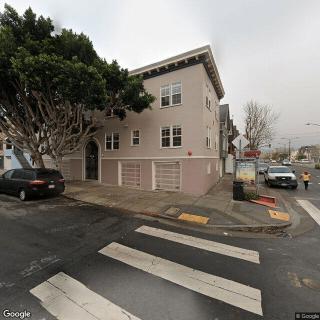
722 Girard St, San Francisco, CA 94134
To contact a resident: (415) 468-6172
For more information about senior living options: (866) 208-4318
Overall Review of May Rose Residential Facility
Pros
 The facility is clean and safe, with a friendly, caring staff.
- It provides a bed, meals, showers, and a roof over guests’ heads.
- The night staff are helpful and willing to find solutions for guests.
- Residents are treated with respect and empathy.
- The staff go above and beyond to help people in need.
- It offers a positive space for staying sober and focusing on health.
- The environment is quiet, clean, and comfortable for recovery.
Cons
 The facility has been closed down.
- Some staff are lazy and act as if they are above shelter residents, giving the place a bad name.
- The facility pockets funding and does not provide real outside help or services.
- The staff tell residents to come back for a bed instead of directing them to actual resources.
- The facility does not provide food, leaving residents starving.
- This place will likely make things worse.
- The place is run by a sleazy dirtbag who pockets funding.
Review
May Rose Residential Facility in San Francisco is best suited for adults who need a short-term, supervised safe haven to rest, reset, and access the basics, a clean bed, reliable meals, and functional showers, while they stabilize after a difficult stretch. It functions as a practical stopover for those who want to get off the streets, regain some dignity, and buy time to figure out next steps. The setting rewards routines and quiet, respectful handling of personal needs, making it a sensible choice for individuals seeking a nonjudgmental place to decompress and avoid street exposure for a day or so. This is not a long-term housing solution or a substitute for comprehensive recovery services; its strongest value lies in immediate safety and basic support.
Those evaluating alternatives should note who may want to look elsewhere. For anyone pursuing sustained recovery with robust case management, ongoing help connecting to external services, or a clear, long-term housing plan, May Rose may fall short. Several reviews raise concerns about consistency in staffing, the depth of outreach to resources outside the facility, and even the reliability of operations. Some guests report staff who seem disengaged or inconsistent, and a few emphasize experiences where the facility appeared more focused on bed turnover than on building sustained pathways to broader assistance. In short, if the priority is a reliable pipeline to housing, healthcare, or addiction services, stronger options with proven continuity should be considered.
The core pros are concrete and meaningful: a clean, safe environment; staff who can be genuinely caring and supportive; and tangible basics, bed, meals, clothes, and showers. The setting is described as quiet, respectful, and well maintained, with staff who, on many shifts, go above and beyond to help people in practical ways. The ability to access food and shelter promptly, especially for those trying to stabilize after a crisis, can make a critical difference. For some, the facility provides a temporary but real buffer that reduces street exposure and helps maintain a sober focus for a 24-hour window or slightly longer. When the goals align with quiet stabilization and a place to breathe, the strengths of May Rose become decisive.
Yet the main drawbacks cannot be ignored. A portion of reviews highlight inconsistent experiences with staff and services, including claims of lazy or unhelpful behavior from some personnel. There are reports of friction around food availability at odd hours, and questions about how well the facility connects residents to external help or durable solutions after the stay ends. One review even notes that the facility could be more transparent about its operations, with some respondents alleging a lack of follow-through beyond providing a bed and a basic meal. Such concerns weigh heavily for families seeking a reliable launchpad rather than a temporary hold pattern. The contrast between excellent night-shift responsiveness and occasional daytime disengagement is enough to influence decision-making.
From a safety and daily-life perspective, the experience is clearly variable, but there are redeeming patterns. Night staff are repeatedly praised for practical problem-solving and keeping residents safe and accommodated when needs arise in the thick of a stay. The environment tends to be calm, and when staff members are engaged, residents report feeling respected and treated with empathy. The flip side is that inconsistent engagement during other shifts can erode trust and make residents feel unseen or unsupported, particularly when requests for food, clothing, or guidance are viewed as optional rather than essential. For families weighing the decision, the reliability of staffing across all hours becomes a critical factor, not merely a bonus feature.
The bottom-line guidance centers on alignment of expectations with realities. May Rose serves well as a practical, no-nonsense option for immediate shelter, basic sustenance, and a nonjudgmental space to begin sobriety-focused reflection. It is less dependable as a pathway to long-term recovery, robust case management, or continuous, well-connected support services. Families should pursue May Rose if the primary need is a clean, safe place to land for a short period, with respectful staff who can address day-to-day concerns and provide a dignified pause from street living. If the resident requires ongoing assistance, proven connections to housing, treatment, and social services, or guaranteed staff consistency, it would be prudent to compare other facilities in San Francisco with stronger track records on continuity of care and external collaborations. Before deciding, confirm current operating status, clarify meal policies during late hours, and, crucially, ask how the facility facilitates connections to sustained recovery resources beyond the stay.
 Board and Care Home
 San Francisco International (7 miles away)

 Ten Vital Duties of a Senior Caregiver: A Comprehensive Guide
 9 Stimulating Memory Activities for Seniors: Puzzles, Cards, and Much More
 Managing Nursing Home Expenses After Medicare Coverage Ends