
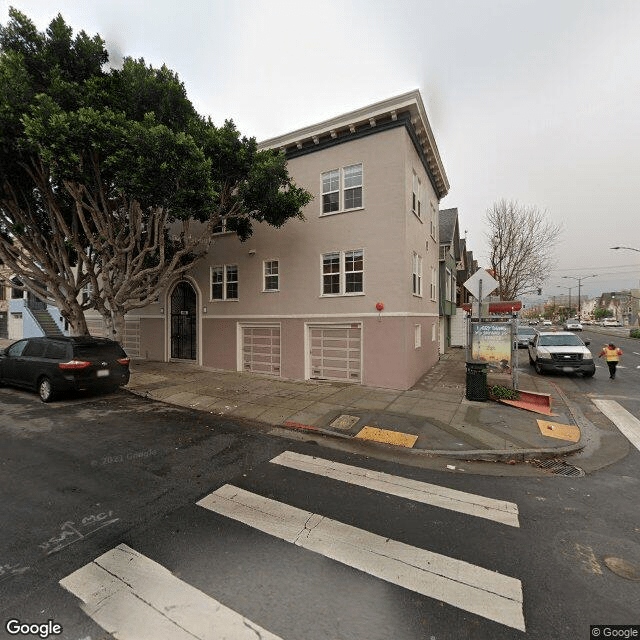
1506 Florida St, San Francisco, CA 94110
To contact a resident: (650) 799-5722
For more information about senior living options: (866) 208-4318
Araville Residential Care Home Costs & Pricing
Araville Residential Care Home offers competitive pricing compared to both San Francisco County and the broader California market. For a semi-private room, Araville's monthly rate is set at $4,000, which is slightly above the county average of $3,979 but significantly higher than the state average of $3,333. When it comes to private accommodations, Araville charges $5,000 per month - this figure surpasses the county rate of $3,591 and aligns closely with California's average of $3,939. Additionally, their one-bedroom units are priced at $5,000 per month, which is lower than the county's average of $5,843 yet higher than the state benchmark of $4,340. Overall, while Araville Residential Care Home's costs may be on the higher side in some categories compared to local averages, they reflect a commitment to quality care that many families seek for their loved ones.
| Floor plans | Araville Residential Care Home | San Francisco County | California |
|---|---|---|---|
| Semi-Private | $4,000 | $3,979 | $3,333 |
| Private | $5,000 | $3,591 | $3,939 |
| 1 Bedroom | $5,000 | $5,843 | $4,340 |
Memory care communities with a similar price nearby
-
About the same
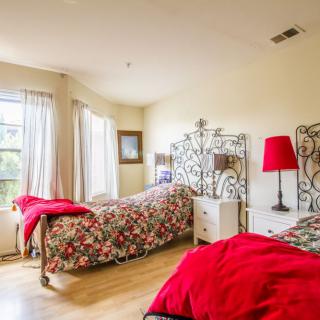
Golden Age Of Channing Way
$4,000 to $5,000 / month8.9 miles away -
from -$500 / mo
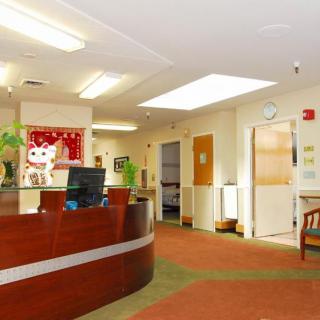
East Bay Assisted Living
$3,500 to $5,000 / month10.2 miles away -
from +$500 / mo
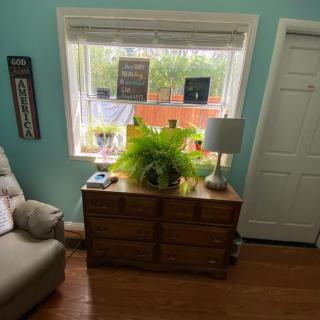
Lafayette Gardens
$4,500 to $5,000 / month18.8 miles away -
About the same
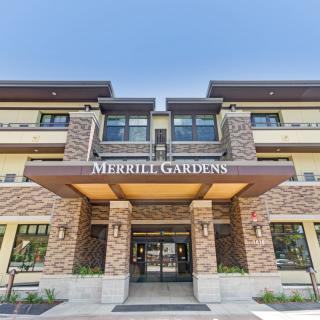
Merrill Gardens at Lafayette
$3,975 to $8,995 / month19.0 miles away -
About the same
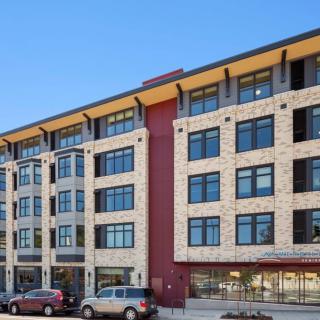
Merrill Gardens at Rockridge
$3,995 to $8,500 / month10.5 miles away
Overall Review of Araville Residential Care Home
Pros
 The facility offers all levels of care through hospice.
- It has a location in South San Francisco.
Cons
 The home is described as a small facility.
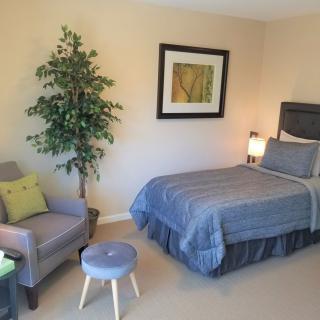
- There is only one room available, and it is a shared room.
- The bathroom is shared within the home.
- The SF location reportedly has many stairs.
- The reviewer is hesitant about the SF location because of the shared bathroom.
Review
This community is best suited for families seeking a tiny, home-like setting where care can be highly personalized and capable of stepping up to hospice-level support within a six-bed environment. Araville Residential Care Home in San Francisco offers intimate, one-on-one attention that larger facilities often cannot match, making it a viable option for residents who prioritize close caregiver relationships, direct communication, and a cohesive daily rhythm. The arrangement implies a low-stimulation, house-like atmosphere where staff know residents by name, routines are predictable, and end-of-life or advanced-care needs can be integrated without the churn of a bigger campus.
Carefully consider alternatives if privacy, ease of access, and autonomy are priorities. A private room is non-negotiable for many families, and this home presents a shared room as the available option. The shared bathroom further lowers the privacy bar, which can be disruptive for residents who value personal space or for families seeking dignity-centered accommodations. For those who require a fully accessible layout with no stairs, or for families who want a broader menu of activities, amenities, and dining options, a larger, elevator-equipped assisted living community may be a more suitable match. In short, Araville is best for those comfortable with a very small-scale arrangement that emphasizes caregiving closeness over hotel-like amenities.
The core positives, the small size and the capacity to deliver hospice-level care, attempt to offset the privacy and accessibility drawbacks, but only to a degree. A six-bed home can offer more consistent staffing and a stronger sense of safety; staff are likely to know every resident’s routine, preferences, and warning signs quickly. The ability to provide “all levels of care through hospice” suggests a flexible response to changing needs without relocating to another facility, which is a meaningful advantage for families anticipating end-of-life planning. However, these strengths are constrained by the practical realities of shared living: one shared room and a shared bathroom can erode comfort and dignity, particularly for residents with specific personal-care needs or for families expecting private, discreet arrangements during sensitive times.
Accessibility and location logistics compound the concerns. The San Francisco site is described as having stairs, which immediately raises concerns for mobility limitations, fall risk, and ease of daily transfers for residents who may need wheelchairs or walkers. The review notes confusion about a separate Southern California location, underscoring potential navigation challenges for families visiting or coordinating care across sites. When privacy is limited and access is physically challenging, the friction between excellent clinical capability and everyday practicality becomes the decisive factor for many families.
Decision points where families should press for clarity include confirming the exact room type at the SF location (is there any possibility of a private room at all, or a nearby option within the same provider?), the presence of an elevator or stair-free pathways, and whether the bathroom is shared among all residents or limited to a subset of rooms. It is essential to verify the staffing model: 24/7 coverage, staff-to-resident ratios, hospice training, and whether the hospice component is in-house or part of an external partner. Families should also request a candid look at a typical day, meet the caregiving team in person, and talk with a current resident or family to gauge day-to-day satisfaction and responsiveness.
The bottom-line recommendation is practical: Araville is a viable choice for families prioritizing a small, closely managed care environment with the flexibility to accommodate escalating care needs in-house. It is less suitable for those who require private accommodations, a no-stairs floor plan, or a setting that prioritizes privacy and a wider array of amenities. If privacy, accessibility, and independence are non-negotiables, steer toward a larger assisted living option with private rooms and barrier-free design. For families leaning into the hospice-ready, intimate-home model, schedule a visit, obtain precise room configuration details, assess accessibility needs against the stairs, and grill the team on their care plans and responsiveness. The right decision hinges on aligning the resident’s privacy expectations and mobility realities with the smallest possible, most attuned caregiving environment.
 Board and Care Home
 Memory Care
 Private
 San Francisco International (9 miles away)
 Ambulatory care
 Diabetic care
 Incontinence care
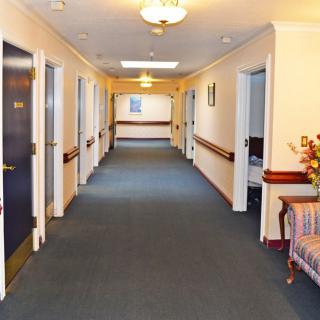




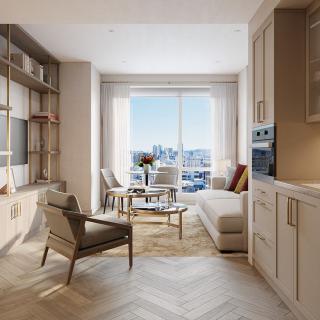
 Understanding Medicaid Coverage for Assisted Living: A Comprehensive Guide
 How and When Medicaid May Cover Assisted Living Costs
 A Detailed Exploration of Assisted Living Medicaid Waivers Across the United States