
2073 Hanford Drive, San Diego, CA 92111
For more information about senior living options: (866) 208-4318
Carpel Board And Care Facility Costs & Pricing
Carpel Board and Care Facility offers a range of accommodation options that reflect its commitment to providing quality care while remaining competitive within the broader market. For semi-private rooms, costs at Carpel range from $1,800 to $5,344, significantly undercutting the San Diego County average of $3,518. In contrast, private room rates range from $2,500 to $6,412, aligning closely with the county's median of $3,939. However, it's in the studio accommodations where Carpel stands out most distinctly; priced at $6,947 per month, this option exceeds both county ($4,217) and state ($4,145) averages considerably. Overall, Carpel Board and Care Facility provides an appealing balance of affordability and specialized care tailored to diverse needs within an often challenging financial landscape.
| Floor plans | Carpel Board And Care Facility | San Diego County | California |
|---|---|---|---|
| Semi-Private | $1,800 to $5,344 | $3,518 | $3,333 |
| Private | $2,500 to $6,412 | $3,939 | $3,939 |
| Studio | $6,947 | $4,217 | $4,145 |
Assisted Living communities with a similar price nearby
-
About the same

Splendor Valley
$5,500 / month22.2 miles away -
from -$1044 / mo

Vintage Residential 1
$4,300 to $5,500 / month12.4 miles away -
from -$844 / mo

La Costa Elder Care
$4,500 to $5,000 / month23.0 miles away -
from -$344 / mo

Olieva Home For Seniors
$5,000 / month9.1 miles away -
from -$1044 / mo

Cloisters of the Valley
$4,300 to $5,800 / month3.5 miles away
Overall Review of Carpel Board And Care Facility
Pros
 The caregiver is wonderfully caring, friendly and experienced.
 - The place is clean and run efficiently.
- The staff are great and take residents for walks.
- The facility promotes a family-like, homey atmosphere.
- The mother feels attended to and well cared for.
- There is plenty of food available and meals can be adjusted with foods they like.
- Rooms are nice, comfortable, and affordable.
- The staff ask residents daily what they would like for breakfast, lunch, and dinner.
Cons
 There is a lot of yelling, swearing, and spitting by the residents in the dining area.
- It is unclear whether people walking the hallways actually live there.
- Residents have their own room keys but anyone can enter the facility and roam around.
- The workers are the worst ever.
- They are racist.
- Telling someone to go back to Mexico is not okay and is disgusting.
- They do not come to get her at night to use the restroom.
- There is not much to do, and at this level they couldn't do much anyway.
Review
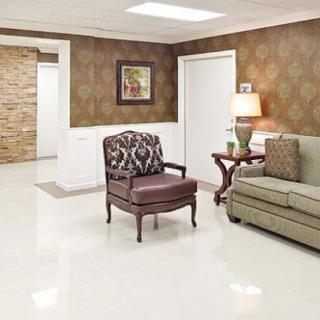
This community is best suited for families seeking a small, home‑like care setting where seniors receive highly personalized attention. The environment feels intimate rather than institutional, with a tidy, comfortable atmosphere and staff who treat residents like family. For seniors who do not require around‑the‑clock nursing in a large campus and who value predictable routines, a shared or private room at modest rates can be appealing. The care emphasis tends to suit daily living support more than complex medical management, and the setting is often described as warm and approachable, with a willingness to accommodate individual meal preferences and personal routines.
Those weighing alternatives should recognize that the same intimate scale and personal touch can be a drawback for residents with stronger safety needs or higher acuity. Several observations note disruptions in common areas, including boisterous or unpredictable behavior in dining spaces, which can feel chaotic and distracting. Security questions arise about who can enter or roam the building, and some families worry about the level of supervision at night. For residents requiring rigorous safety protocols, structured enrichment programs, or consistent 24/7 medical oversight, a larger, more tightly staffed facility may deliver the reliability that this location occasionally lacks.
On the plus side, the advantages in this setting often offset the rougher edges. Cleanliness is consistently praised, with rooms described as roomy and comfortable. Caregivers are frequently highlighted as loving, patient, and attentive to preferences, taking time to discuss meals and to offer companionship on walks. The ability to tailor meals and to allow favorites from home eases daily life for residents who dislike standard menus. Financially, the option structure is transparent: shared rooms around $1,500 and private rooms near $2,000, with meds administration and shower assistance included. For families watching dollars, this combination of warmth and affordability can be decisive when a less‑luxury setting meets the resident’s essential needs.
Yet the cons are not trivial and warrant serious consideration. The dining area and hallways can feel undersupervised, with sensory challenges or behavior that disrupts the flow of the day. Reports of staff conduct in some instances, including allegations of disrespect, are unacceptable and must be weighed heavily. Nighttime support for basic needs such as restroom trips is described as inconsistent, prompting families to adapt routines or provide external aids. While some caregivers are celebrated for their dedication, others may deliver a more routine experience with limited activities, which can leave residents seeking engagement beyond the essentials of care.
Decision‑makers should enter with a targeted checklist. Inquire how night supervision works and whether overnight staff are genuinely available to assist with urgent needs; clarify whether private or shared accommodations best fit the resident’s sleep, privacy, and budget priorities; request details on staff training, turnover, and responsiveness to emergencies; and speak with current residents or their families to gauge daytime livability. For a resident with Parkinson’s or mobility challenges, validate fall prevention measures, mobility assistance, and accessibility features in the living space. Collect tangible evidence about safety protocols and daily activity options to predict how well daily life will align with expectations.
Bottom line: Carpel Board And Care Facility delivers a warm, approachable, budget‑conscious option for families prioritizing personal attention in a homey setting. It is less suited for those demanding stringent safety guarantees, consistent high‑level programming, and uniformly exemplary staff performance. The strongest arguments in favor, cleanliness, individualized care, and flexible meal planning, can offset many routine limitations for residents with modest care needs and for families who value a intimate environment over institutional scale. For residents with higher care demands, security concerns, or a desire for richer enrichment opportunities, exploring alternatives with more robust oversight and structured activities is a prudent move.
 6 resident community capacity
 Assisted Living
 Board and Care Home
 Cable or satellite TV
 Dining room
 Fully furnished
 Garden
 Housekeeping services
 Move-in coordination
 Outdoor space
 Private
 Telephone
 Wi-Fi/high-speed internet available
 San Diego International-Lindbergh (4 miles away)
 24-hour supervision
 Activities of daily living assistance
 Ambulatory care
 Assistance with bathing
 Assistance with dressing
 Assistance with transfers
 Diabetes diet
 Diabetic care
 High acuity care
 Incontinence care
 Meal preparation and service
 Medication management
 Special dietary restrictions
 Transportation arrangement (medical)
 Transportation to doctors appointments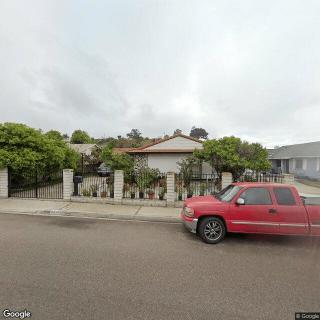




 An Extensive Exploration of the VA Aid and Attendance Benefit
 Senior Transition Services: Understanding Their Role, Cost, and Importance
 Exploring the Path to Senior Living: A Comprehensive Look at Independent Living and Assisted Living