The Chateau of Long Beach offers an appealing and competitive pricing structure for its residents, particularly when compared to the broader context of Los Angeles County and California as a whole. For semi-private rooms, The Chateau charges $1,450 per month, which is significantly lower than the Los Angeles County average of $3,349 and the state average of $3,333. Similarly, for studio apartments priced at $2,450 per month, The Chateau remains well below both the county's average of $4,172 and California's average of $4,145. This cost-efficiency makes The Chateau an attractive option for individuals seeking quality care without compromising on their budget in this high-cost region.
Floor plans
The Chateau of Long Beach
Los Angeles County
California
Semi-Private
$1,450
$3,349
$3,333
Studio
$2,450
$4,172
$4,145
Assisted Living communities with a similar price nearby
Residents and families frequently describe staff as kind, helpful, and attentive.
Many reviews say caregivers and other staff are friendly and supportive, including help with daily needs and one-on-one attention when residents require it. Several people also mention organization and that staff were doing their duties during tours or visits. A smaller number of comments include criticism about professionalism and weekend or night coverage, but positive experiences still show up repeatedly across families.
common7 reviews mention this
Activities and worship are built in
The community offers a steady mix of activities and religious programming.
Residents and families describe regular activities such as games, art projects, and holiday events, with multiple reviews saying residents participate and enjoy them. Several reviews specifically mention church-related activities and Sunday services. Others also describe access to transportation for getting residents to appointments or errands, alongside on-site spaces used for social time.
common8 reviews mention this
Food is repeatedly called enjoyable
Meals are commonly described as tasty, healthy, or satisfying.
Several reviews say residents like the meals, describing food as tasty, nutritious, or healthy. Families also mention the dining experience as part of their overall day-to-day impression, including that it looks like a dedicated dining area during tours. One review raises concerns about missing items involving food, and one person did not sample the food on a visit, but positive dining comments outnumber those negatives.
common7 reviews mention this
Cleanliness comes up often
Multiple reviewers comment on the community’s cleanliness and upkeep.
Some reviews describe clean bathrooms and an overall clean environment, with others noting that the building feels well maintained. A few families also mention ongoing sanitation efforts and that rooms or common areas appeared orderly. At the same time, one review reports pests, which is a serious downside and directly contradicts the cleanliness praise.
caveat4 reviews mention this
Safety and supervision concerns surface
A few residents’ experiences raise concerns about safety and oversight.
Some reviews describe major problems, including a missing resident during a transfer, theft of items, and a pest issue. Another review suggests possible understaffing, especially at night and on weekends, and also calls out security-related alarms. While many other comments describe feeling secure and that care is responsive, these concerns are significant enough to stand out against the positive themes.
How we summarize
Counts show how many written reviews mention each theme; a review can touch several themes, and only frequently mentioned themes are displayed.
Features
Housing
Studio apartments
Types of Care
Assisted Living
Pets
Cats allowed
Dogs allowed
Amenities
Activities off-site
Activities on-site
Beautician on-site
Devotional services on-site
Dining room
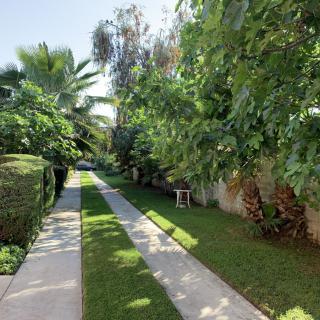
Garden
Housekeeping services
Indoor common areas
Laundry
Outdoor common areas
Respite or short term stays offered
Wheelchair accessible showers
Transportation
Long Beach (Daugherty) (4 miles away)
Los Angeles International (15 miles away)
John Wayne Orange Co (21 miles away)
Transportation & parking
Care Services
Ambulatory care
Diabetic care
Incontinence care
Medication management
Physical therapy
Dining
Low / no sodium
Meals provided
Vegetarian
Activities
Activities off-site
Activities on-site
Devotional activities on-site
Religious services
Languages Spoken
English
Nearby Places of Interest
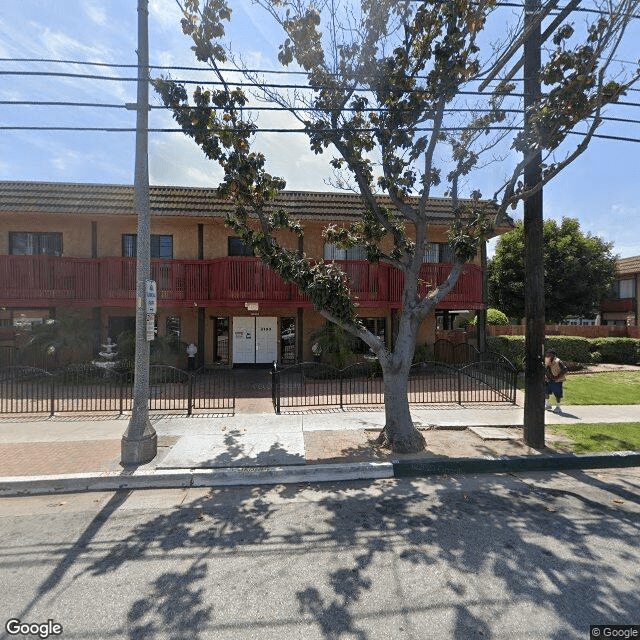
This area of Long Beach, California offers a variety of amenities and services that may appeal to seniors looking for a convenient and comfortable living environment. With several reputable physicians and hospitals nearby, residents have access to quality healthcare options. Additionally, there are numerous pharmacies in the area for easy access to medications and health supplies. The abundance of cafes, restaurants, and theaters provides plenty of entertainment options for leisure activities. Transportation options such as the Long Beach Airport and Metro stations make it easy to get around the city or travel further distances. Parks and places of worship offer opportunities for relaxation, reflection, and community engagement. Overall, this part of Long Beach provides a diverse mix of resources that can cater to the needs and preferences of seniors looking for a well-rounded living experience.
Physicians
Paramount Physicians (0.7 miles)
Dostzada, Ghulam Dr - Los Alamitos Cardiovascular (8.3 miles)
Harbor Ucla Medical Center - David Durkovich Do (8.5 miles)
Monica B Espiritu M.D. | Kaiser Permanente (9.8 miles)
Pharmacies
Walgreens (1.2 miles)
Costco Vision Center (2 miles)
CVS Pharmacy (2.7 miles)
CVS Pharmacy (3.4 miles)
CVS Pharmacy (3.4 miles)
Walgreens (3.7 miles)
Walgreens (4 miles)
Cafes
Starbucks (3 miles)
Bopomofo Cafe (4.2 miles)
Starbucks (5.5 miles)
Starbucks (7.3 miles)
Lees Sandwiches - Gard (8.4 miles)
Donut King 2 (8.9 miles)
Starbucks (9.1 miles)
Hospitals
Kaiser Permanente Hospital (3.5 miles)
Rancho Los Amigos National Rehabilitation Center (3.8 miles)
PIH Health Hospital (4.4 miles)
Martin Luther King Jr / Drew Medical Center (5.9 miles)
Department of State Hospitals (6.3 miles)
Del Rio Convalescent Center (6.9 miles)
VA Long Beach Healthcare System (7.1 miles)
Theaters
Harkins Theatres Cerritos 16 (3.7 miles)
AMC Norwalk 2 (5.6 miles)
Restaurants
Chick-Fil-A (3.8 miles)
In-N-Out Burger (4.6 miles)
McDonald's (6.5 miles)
McDonald's (7.1 miles)
Falcon (7.4 miles)
Chick-Fil-A (7.7 miles)
Hooters (7.9 miles)
Transportation
Long Beach Airport (LGB) (3.9 miles)
Komar Aviation Group (3.9 miles)
Metro - Willow Street Station (5 miles)
Metro La Mirada & Alondra Bus Stop (9.2 miles)
Port Of Long Beach (9.7 miles)
Parks
Temple Park (4.7 miles)
Cerritos Regional County Park (5.7 miles)
Shadow Park Hoa (5.9 miles)
Rossmoor Park (6.9 miles)
Rivera Park (7 miles)
Central Park / La Palma Recreation & Community Services (7 miles)
The Chateau of Long Beach offers an appealing and competitive pricing structure for its residents, particularly when compared to the broader context of Los Angeles County and California as a whole. For semi-private rooms, The Chateau charges $1,450 per month, which is significantly lower than the Los Angeles County average of $3,349 and the state average of $3,333. Similarly, for studio apartments priced at $2,450 per month, The Chateau remains well below both the county's average of $4,172 and California's average of $4,145. This cost-efficiency makes The Chateau an attractive option for individuals seeking quality care without compromising on their budget in this high-cost region.
Yes, The Chateau of Long Beach allows both dogs and cats.
Nearby Communities
Chateau Long Beach
Long Beach, CA
3.2 from 13 reviews
Extensive amenities and services, including 24/7 supervision, respite care, restaurant-style dining, beauty salon, transportation, fitness and wellness programs, activities, and on-site Wi-Fi.
Windsor Gardens Convalescent Center Of Long Beach
Long Beach, CA
3 from 39 reviews
Clean, well-maintained facility with attentive staff and engaging activities.
Long Beach Gardens Manor
Long Beach, CA
Comprehensive care with 24/7 supervision, ADL support, medication management, and diabetes-friendly dining.
Bellflower Post Acute
Bellflower, CA
4.5 from 67 reviews
Extensive on-site amenities and 24/7 care support.
Amber Ville
Long Beach, CA
2 from 3 reviews
$3,000 to $3,500 / month
Friendly, helpful staff in a well-kept, pleasant environment with engaging daily activities.
Country Villa Bay Vista Health Care Center
Long Beach, CA
3.5 from 54 reviews
Fully furnished private accommodations with private bathrooms, 24/7 care, and on-site amenities plus diverse dining options.
Bright Star Assisted Living
Bellflower, CA
4 from 1 review
24-hour supervision with extensive amenities and dining options
Paramount Convalescent Hospital
Paramount, CA
2.4 from 35 reviews
Comprehensive care with extensive amenities and transportation options.
Ivy Park At Cerritos
Cerritos, CA
4.4 from 35 reviews
$2,995 to $7,795 / month
Warm staff, clean facilities, engaging activities, and solid care; good value for studios/1-bedroom.
The guide outlines the complexities of Medicaid coverage for assisted living, highlighting significant state-to-state variations, limited coverage often restricted to personal care services, and the existence of specialized waivers for certain needs like memory care. It advises families to consult local Medicaid offices for options while emphasizing the importance of understanding state-specific regulations and facility policies.
Medicaid coverage for assisted living varies by state and is primarily available to low-income individuals, with eligibility dependent on strict income and asset limits. Some states offer HCBS waivers for specific services in assisted living, but families must generally cover room and board costs, and should verify facility acceptance of Medicaid while considering potential waiting lists.
Medicaid waivers for assisted living services provide vital support for seniors and individuals with disabilities in need of long-term care, with varying state-specific eligibility criteria and benefits. These waivers cover personal care and case management but often do not fully cover room and board, leading to waiting lists for many applicants.
Get PricingAsk A QuestionSchedule A TourContact Senior Advisor
By clicking submit, you agree to our Partner's Terms of Use. You
also consent to receive calls and texts, which may be autodialed, from our Partner. Your consent is not a condition to
using our Partner's service. Please visit our Partner's Privacy Policy for information about their privacy practices.


 Studio apartments
 Assisted Living
 Cats allowed
 Dogs allowed
 Activities off-site
 Beautician on-site
 Devotional services on-site
 Dining room
 Garden
 Housekeeping services
 Indoor common areas
 Laundry
 Outdoor common areas
 Respite or short term stays offered
 Wheelchair accessible showers
 Long Beach (Daugherty) (4 miles away)
 Transportation & parking
 Ambulatory care
 Diabetic care
 Incontinence care
 Medication management
 Physical therapy
 Low / no sodium
 English
 Extensive amenities and services, including 24/7 supervision, respite care, restaurant-style dining, beauty salon, transportation, fitness and wellness programs, activities, and on-site Wi-Fi.


 Understanding Medicaid Coverage for Assisted Living: A Comprehensive Guide
 How and When Medicaid May Cover Assisted Living Costs
 A Detailed Exploration of Assisted Living Medicaid Waivers Across the United States