For more information about senior living options: (866) 208-4318
3.9 from 72 reviews
5 stars
49
4 stars
5
3 stars
0
2 stars
1
1 stars
17
Irvine Cottage 12 Costs & Pricing
Irvine Cottage 12 offers a range of accommodation options that reflect a premium pricing strategy compared to both county and state averages. For semi-private rooms, the cost is $5,300, significantly higher than Orange County's average of $3,431 and California's overall average of $3,333. Transitioning to private rooms, Irvine Cottage 12 charges $6,400 - again surpassing the local measure of $4,104 and the state rate of $3,939. Notably, their one-bedroom units also come in at $6,400, which exceeds both the county average of $4,380 and California's figure of $4,340. This pricing structure suggests an emphasis on providing enhanced amenities or services that cater to residents seeking a more upscale living experience within the vibrant community of Irvine.
Floor plans
Irvine Cottage 12
Orange County
California
Semi-Private
$5,300
$3,431
$3,333
Private
$6,400
$4,104
$3,939
1 Bedroom
$6,400
$4,380
$4,340
Memory care communities with a similar price nearby
Residents repeatedly describe a friendly, caring culture with staff who respond and include people.
Many residents and visitors say the day-to-day atmosphere feels welcoming, with staff described as friendly, caring, and genuinely invested. Several reviews highlight supportive interactions, from introductions during tours to staff helping with requests or connecting residents with information. A few comments also describe a stronger sense of community and belonging here than at previous places.
common6 reviews mention this
Activities keep days full
Residents describe a full schedule of activities and engagement throughout the day.
Reviews commonly mention that there is plenty to do, including scheduled daily activities and a steady stream of events. Some residents specifically reference trips, lectures, exercise, and group interests, while others point to feeling energized by what happens day to day. The community also comes up in reviews as a place where residents can participate at different levels.
differentiator5 reviews mention this
Continuing care across levels
Residents and families describe access to multiple care levels on campus as part of a true continuum.
Several reviews say the community supports more than one level of care, including transitions beyond independent living into higher levels. Residents describe the campus as offering multiple care phases and say services are provided with care planning and coordination. One review also emphasizes memory care experience for a family member with dementia and high support needs.
common6 reviews mention this
Close to park and UCI
The location near a major university and Mason Regional Park is a frequent reason people choose this community.
Multiple reviews point to the convenience of being near UCI and the ability to get outdoors for walks at Mason Regional Park. Visitors and residents mention the park setting as a daily benefit, and some also reference local shopping and nearby destinations connected to the university area. Nearby options in the surrounding area include well-known restaurants, pharmacies, and other community services.
caveat4 reviews mention this
Management and service issues
Some reviews report problems with responsiveness, cleanliness, and overall management.
A minority of reviews describe frustration with how issues are handled, including delayed help and difficulty getting access to help when needed. Other comments raise concerns about cleanliness and basic upkeep, alongside complaints about communication with front desk or family access. There are also very strong negative claims about care quality and elder treatment, with families saying they moved a loved one out.
How we summarize
Counts show how many written reviews mention each theme; a review can touch several themes, and only frequently mentioned themes are displayed.
Features
Housing
6 resident community capacity
Types of Care
Assisted Living
Board and Care Home
Memory Care
Respite Care
Pets
Cats allowed
Dogs allowed
Amenities
Beautician on-site
Cable or satellite TV
Dining room
Fully furnished
Garden
Housekeeping services
Move-in coordination
Outdoor space
Private
Private bathrooms
Telephone
Wi-Fi/high-speed internet available
Transportation
John Wayne Orange Co (5 miles away)
Long Beach (Daugherty) (24 miles away)
Care Services
24-hour supervision
Activities of daily living assistance
Assistance with bathing
Assistance with dressing
Assistance with transfers
Coordination with health care providers
Diabetes diet
High acuity care
Meal preparation and service
Medication management
Special dietary restrictions
Transportation arrangement (medical)
Transportation to doctors appointments
Dining
Diabetes diet
Special dietary restrictions
Activities
Community-sponsored activities
Scheduled daily activities
Nearby Places of Interest
This area of Irvine, California offers a variety of amenities and services that can cater to the needs of seniors looking for a comfortable and convenient living environment. With several parks nearby such as William R. Mason Regional Park and Bonita Canyon Park, residents can enjoy outdoor activities and beautiful scenery. There are also numerous dining options including Chipotle Mexican Grill, Chick-Fil-A, and North Italia for those looking to dine out. The availability of pharmacies like CVS Pharmacy and Walgreens ensures easy access to medications and healthcare needs. Additionally, proximity to reputable physicians at Kaiser Permanente Orthopedics and hospitals like Kaiser Permanente Hospital provide peace of mind in case of medical emergencies. Public transportation is accessible with the Amtrak and Metrolink Irvine Station just a short distance away, making it convenient for seniors to travel if needed. Overall, this area offers a blend of recreational opportunities, healthcare services, and transportation accessibility that can enhance the quality of life for seniors considering this neighborhood for their retirement years.
Parks
William R. Mason Regional Park (2.2 miles)
Bonita Canyon Park (2.7 miles)
Giardino Altura (2.8 miles)
Valley Oak Park (3 miles)
Ashwood Park (3.5 miles)
Plaza Park (4.1 miles)
Corona Del Mar State Beach (4.6 miles)
Restaurants
Chipotle Mexican Grill (2.2 miles)
Chick-Fil-A (2.2 miles)
In-N-Out Burger (2.3 miles)
McDonald's (2.9 miles)
North Italia (3.5 miles)
The Cheesecake Factory (3.8 miles)
Javier's Irvine Spectrum (3.8 miles)
Pharmacies
CVS Pharmacy (2.3 miles)
Rite Aid (2.4 miles)
Walgreens (2.9 miles)
CVS Pharmacy (2.9 miles)
CVS Pharmacy (3.4 miles)
CVS Pharmacy (3.7 miles)
Rite Aid (3.7 miles)
Cafes
Starbucks (2.4 miles)
Starbucks (3.6 miles)
The Alley (3.8 miles)
Diamond Jamboree Shopping Center (4.2 miles)
Rose Bakery Cafe (4.4 miles)
Yifang Fruit Tea (4.5 miles)
Orobae (5.3 miles)
Physicians
Kaiser Permanente Orthopedics (2.6 miles)
Coastal Kids (3.9 miles)
Newport Orthopedic Institute (4.3 miles)
South County Orthopedic Specialists (4.8 miles)
Hoag Tustin Legacy (5.7 miles)
Hoag Medical Group (5.7 miles)
Saddleback Medical Group (5.8 miles)
Hospitals
Kaiser Permanente Hospital (2.6 miles)
South Coast Medical Center For New Medecine (5.4 miles)
Irvine Cottage 12 offers a range of accommodation options that reflect a premium pricing strategy compared to both county and state averages. For semi-private rooms, the cost is $5,300, significantly higher than Orange County's average of $3,431 and California's overall average of $3,333. Transitioning to private rooms, Irvine Cottage 12 charges $6,400 - again surpassing the local measure of $4,104 and the state rate of $3,939. Notably, their one-bedroom units also come in at $6,400, which exceeds both the county average of $4,380 and California's figure of $4,340. This pricing structure suggests an emphasis on providing enhanced amenities or services that cater to residents seeking a more upscale living experience within the vibrant community of Irvine.
Irvine Cottage 12's features are designed to provide comprehensive support tailored to the needs of residents with dementia or Alzheimer's disease, ensuring a safe and nurturing environment. Assistance with dressing and bathing helps residents maintain personal hygiene and dignity, while meal preparation and service guarantee proper nutrition, which can influence cognitive function. Medication management is critical in preventing missed doses or medication errors, providing peace of mind for both residents and their families. Transportation arrangements for medical appointments facilitate access to necessary healthcare services, while coordination with healthcare providers ensures continuity of care. Support with activities of daily living enables residents to engage actively with their environment in a way that promotes independence and cognitive stimulation. Additionally, assistance with transfers enhances mobility and reduces the risk of falls, complemented by 24-hour supervision that ensures immediate assistance if needed, fostering a sense of security for both residents and their loved ones.
Dementia, including Alzheimer’s disease, is often mischaracterized in terms of lethality as it leads to complications that can be fatal rather than being a direct cause of death; it causes a progressive decline in cognitive and physical health, making patients vulnerable to infections and other health crises. Effective management of nutrition, hydration, and communication is crucial in patient care, with palliative care becoming vital in advanced stages to enhance comfort and quality of life while caregivers play a key role amidst the challenges posed by the disease.
Reminiscence therapy helps individuals with dementia recall past memories through structured discussions and meaningful objects, enhancing mood, relationships, and sense of identity while celebrating their lives. It can be practiced in formal settings or at home, requiring sensitivity to personal histories and cultural backgrounds.
Reminiscence therapy is a structured method for older adults, especially those with dementia, to share life stories using prompts and sensory cues, fostering emotional well-being, social engagement, and self-identity. It aims to improve quality of life by enhancing interpersonal connections and cognitive stimulation while requiring careful facilitation to avoid distressing memories.
Get PricingAsk A QuestionSchedule A TourContact Senior Advisor
By clicking submit, you agree to our Partner's Terms of Use. You
also consent to receive calls and texts, which may be autodialed, from our Partner. Your consent is not a condition to
using our Partner's service. Please visit our Partner's Privacy Policy for information about their privacy practices.

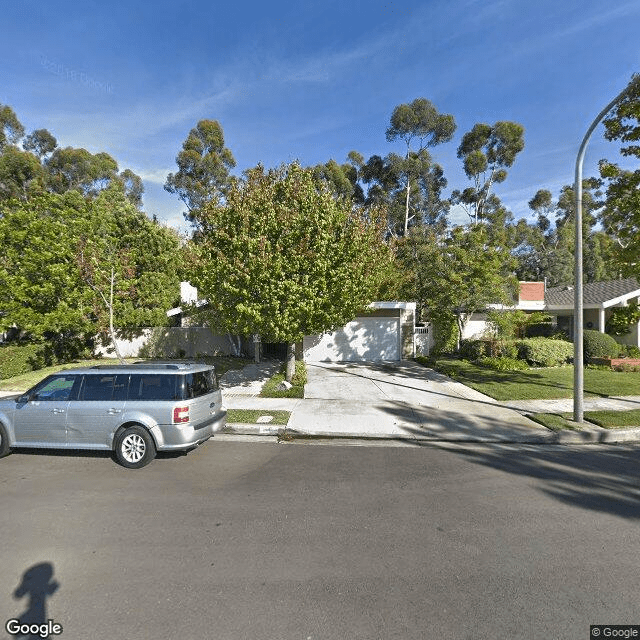
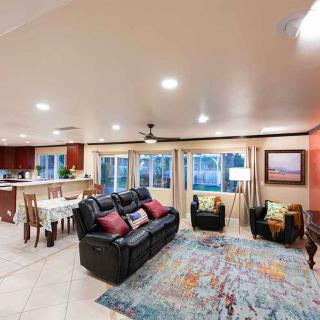
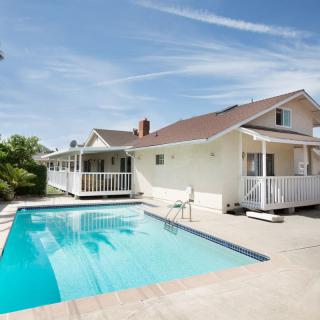
 6 resident community capacity
 Assisted Living
 Board and Care Home
 Memory Care
 Respite Care
 Cats allowed
 Dogs allowed
 Beautician on-site
 Cable or satellite TV
 Dining room
 Fully furnished
 Garden
 Housekeeping services
 Move-in coordination
 Outdoor space
 Private
 Private bathrooms
 Telephone
 Wi-Fi/high-speed internet available
 John Wayne Orange Co (5 miles away)
 24-hour supervision
 Activities of daily living assistance
 Assistance with bathing
 Assistance with dressing
 Assistance with transfers
 Diabetes diet
 High acuity care
 Meal preparation and service
 Medication management
 Special dietary restrictions
 Transportation arrangement (medical)
 Transportation to doctors appointments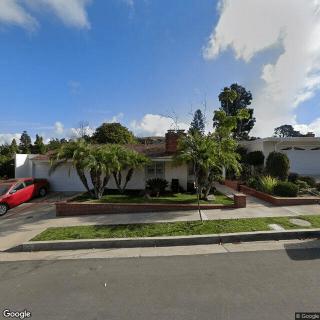
 Memory care-focused with private/semi-private rooms and respite options.
 Are Dementia and Alzheimer's Disease Lethal? A Comprehensive Exploration
 Exploring the Power of Reminiscence Therapy for Individuals With Dementia
 An In-Depth Look at Reminiscence Therapy in Dementia Care