
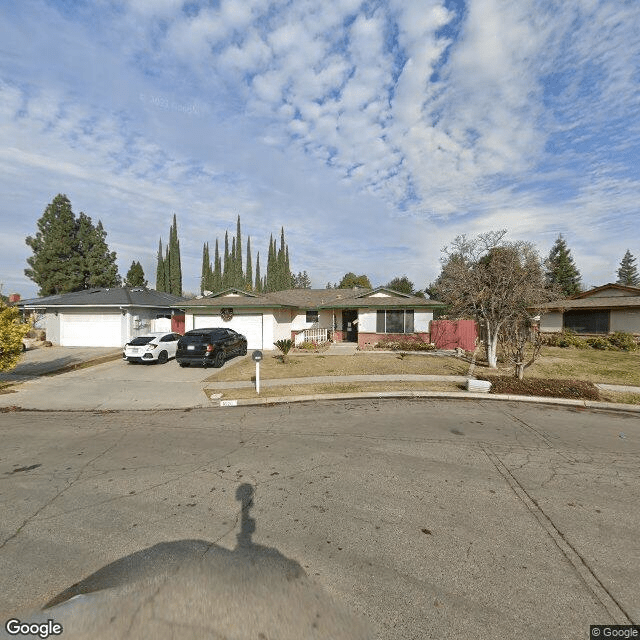
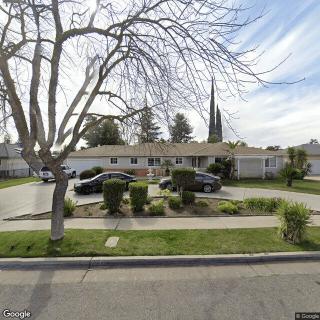
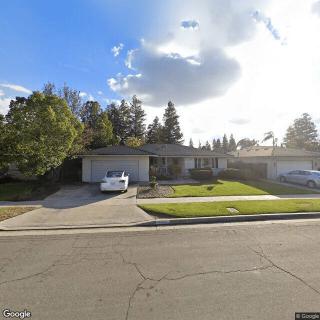
1626 West Millbrae, Fresno, CA 93711
For more information about senior living options: (866) 208-4318
Millbrae Care Home Costs & Pricing
Millbrae Care Home offers competitive pricing for its residential care services, particularly when compared to both Fresno County and the broader state of California. For a semi-private room, residents at Millbrae can expect to pay $2,500 per month, which is significantly lower than the $2,991 average in Fresno County and the $3,333 statewide average. Similarly, those opting for a private room will find Millbrae's rate of $3,500 to be more economical than the county's average of $3,589 and California's overall average of $3,939. These cost advantages make Millbrae Care Home an appealing option for families seeking quality care without breaking the bank.
| Floor plans | Millbrae Care Home | Fresno County | California |
|---|---|---|---|
| Semi-Private | $2,500 | $2,991 | $3,333 |
| Private | $3,500 | $3,589 | $3,939 |
Assisted Living communities with a similar price nearby
-
from +$100 / mo

Northwest Villa
$2,600 / month1.6 miles away -
from +$300 / mo

Evergreen Court
$2,800 / month1.8 miles away -
from +$300 / mo
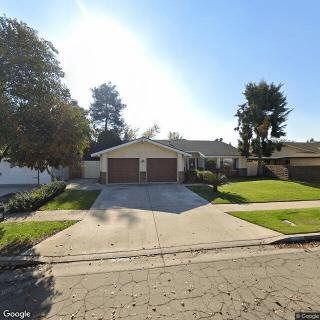
Sunny Garden
$2,800 to $3,500 / month4.8 miles away -
from +$92 / mo

The Terraces at San Joaquin Gardens a CCRC
$2,592 to $3,516 / month2.6 miles away -
from +$75 / mo

Fairwinds - Woodward Park
$2,575 to $3,950 / month3.7 miles away
Overall Review of Millbrae Care Home
Pros
 The staff are very helpful with care and daily physical therapy, enabling patients to walk again.
 - Monica Rani is an intelligent, humble, and deeply caring nurse who consistently goes above and beyond for her patients.
- Millbrae Care Home is fantastic, with a clean facility and attentive, helpful staff.
- Families report that their loved ones are accepted, loved, and cared for at a high level.
- The staff provide friendly, positive, and individualized attention, making it a good fit for families seeking quality care.
Cons
 This is one of the worst care facilities in the state, maybe in the world.
- This place was absolutely disgusting, the floors are sticky and smells like poop inside.
- If you really care about your loved one do not place them here... the nurses and the CNAs don’t care; patients are severely neglected.
- They don't have bars on the beds to keep the clients safe.
- It's pathetic and illegal, they need to be shut down immediately before someone loses their life.
- This is the worst place, the nurses are awful and don't care about the patients.
- Around this whole neighborhood of Millbrae & San Bruno... signs of neglect, over working workers without breaks, patients being unattended.
- 100% Careless, don’t put your family here under any circumstances.
Review
Millbrae Care Home in Fresno is best suited for families pursuing short-term rehabilitation where daily physical therapy and a handful of devoted staff can meaningfully aid mobility restoration. The strongest case here lies with residents who can benefit from hands-on rehab and personal attention from a few caregivers who go the extra mile, such as the nurse who consistently responds to requests and makes an effort to accommodate individual needs. For someone emerging from surgery or injury and needing a push to regain independence, the facility’s rehab orientation and certain compassionate staff can carve out a realistic path forward.
However, the facility demands careful consideration for anyone weighing long-term custodial care or those who require dependable, round-the-clock safety. Several reviews flag chronic understaffing, inconsistent care, and要 neglect concerns, creating a risk profile that becomes unacceptable for residents who cannot advocate daily for their own needs. Potential residents who cannot tolerate significant staffing gaps or who rely on predictable, always-available supervision should seriously explore other options. The reality is that the strongest rehab story here sits alongside persistent warnings about safety and attentiveness.
The most persuasive pros, targeted rehab support, occasional standout caregivers, and a few reports of clean facilities, do offset certain short-stay benefits when matched with the right roommate or care plan. A resident who has a defined rehab goal, a stable schedule of therapy, and a family that remains actively engaged may experience meaningful progress. Yet these advantages are tempered by the harsher threads running through many reviews: floors, odors, and general cleanliness concerns; frequent staff turnover; reports of dehydration, missed showers, and missed care tasks; and a perception that management has not consistently prioritized resident welfare. In practice, the rehab gains can be real, but they require vigilant oversight and a ready plan to switch care givers if needed.
Safety and quality of daily care emerge as the decisive fault line. The most troubling accounts describe under-staffing, insufficient break coverage for caregivers, and situations where residents do not receive basic necessities in a timely manner. When under pressure, the risk is not merely dissatisfaction; it is potential harm. Yet there are counterexamples in the record: residents who praise particular nurses for empathy and responsiveness, and families who report accepted, even loving, care during highly personal transitions. The contrast is stark enough to demand a clear, guardrail-driven approach: the facility can deliver good care in a rehabilitative window, but only with strong oversight, consistent staffing, and a dedicated care plan.
Those weighing alternatives should prioritize facilities with proven, steady staffing and transparent quality metrics. Families who value reliability over potential short-term rehab wins will want to compare state inspection results, staffing ratios, and recent incident histories before committing. For loved ones requiring consistent daily care, or for households without the bandwidth to monitor care closely, a facility with stronger everyday safety assurances will be the wiser choice. Millbrae Care Home can work for a narrowly defined rehabilitation journey, but it is not a safe default for anyone seeking long-term, worry-free custodial care.
Practical next steps for families evaluating Millbrae include a candid, on-site visit focused on staffing patterns during peak hours, the responsiveness of the nursing team, and the overall cleanliness of rooms and common areas. Ask to meet the assigned nurse and CNA teams, request a clear care plan with spa, mobility, and hydration goals, and inquire about how staffing shortages are managed day-to-day. Review recent state inspections and speak with current residents or families about their ongoing experiences. Consider a trial period with explicit milestones and a clear exit plan if care quality does not meet expectations. In the end, the best decision rests on whether rehab potential can be sustained by reliable, attentive daily care throughout the stay.
 6 resident community capacity
 Assisted Living
 Board and Care Home
 Cats allowed
 Dogs allowed
 Activities off-site
 Beautician on-site
 Cable or satellite TV
 Devotional services off-site
 Dining room
 Fully furnished
 Garden
 Housekeeping services
 Indoor common areas
 Move-in coordination
 Outdoor common areas
 Private
 Respite or short term stays offered
 Telephone
 Wheelchair accessible showers
 Wi-Fi/high-speed internet available
 Fresno Yosemite International (7 miles away)
 24-hour supervision
 Assistance with bathing
 Assistance with dressing
 Assistance with transfers
 Diabetes diet
 Diabetic care
 High acuity care
 Incontinence care
 Meal preparation and service
 Medication management
 Special dietary restrictions
 Transportation arrangement (medical)
 Transportation to doctors appointments

 Choosing the Right Senior Care: A Detailed Exploration of Assisted Living and Nursing Homes
 Understanding the True Cost of Assisted Living in 2025: A Comprehensive Guide
 Understanding Medicaid Coverage for Assisted Living: A Comprehensive Guide