

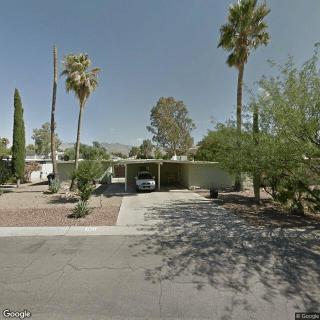
11109 East Tanque Verde Road, Tucson, AZ 85749
For more information about senior living options: (866) 208-4318
Searles Care Home Costs & Pricing
Searles Care Home offers competitive pricing for its services, with both studio and private rooms available at a monthly cost of $5,000. While this rate is significantly higher than the average costs in Pima County, which stand at $3,786 for studio and $3,332 for private accommodations, it reflects the specialized care and amenities that Searles provides. Compared to the overall state averages of $3,829 for studios and $3,345 for private rooms in Arizona, Searles Care Home positions itself as a premium option. This pricing may appeal to those seeking enhanced levels of care and personalized services in a more tailored environment.
| Floor plans | Searles Care Home | Pima County | Arizona |
|---|---|---|---|
| Studio | $5,000 | $3,786 | $3,829 |
| Private | $5,000 | $3,332 | $3,345 |
Memory care communities with a similar price nearby
-
About the same
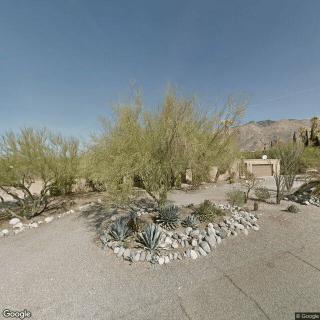
Angels Care Home
$5,000 to $5,500 / month8.4 miles away -
from -$500 / mo
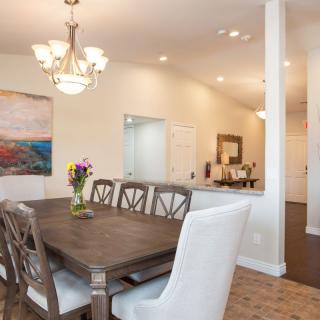
Desert Gardens Assisted Living and Memory Care
$4,500 / month5.9 miles away -
from -$705 / mo
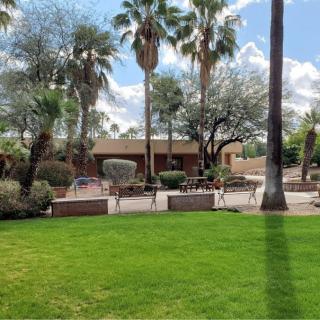
Woodland Palms Memory Care Community
$4,295 to $4,995 / month7.2 miles away -
from -$900 / mo
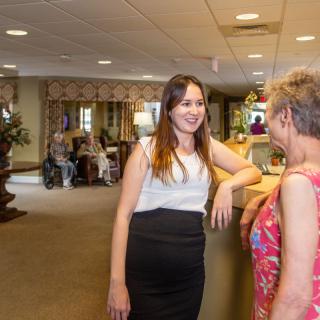
Copper Canyon Transitional Assisted Living and Memory Care
$4,100 to $6,100 / month15.6 miles away -
About the same
The Gardens at Blenman Elm
$5,000 / month10.6 miles away
Overall Review of Searles Care Home
Pros
 The care home provides excellent 24-hour care.
- It is run by a compassionate owner who is hands-on with every patient.
- The home has a small, attentive staff delivering personalized care.
- The rooms are immaculate and well maintained.
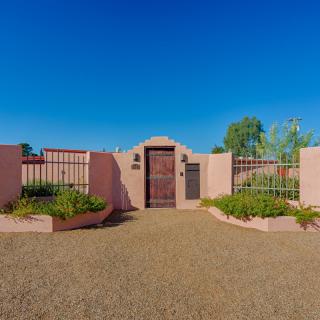
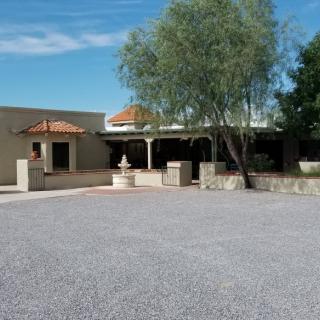
- The facility is exceptionally well-run, with hacienda-style design and beautiful landscaping.
- The caregivers are very compassionate and deliver high-quality care.
- The overall care service is above standard expectations.
Review
Searles Care Home in Tucson is best suited for families seeking an intimate, high-touch assisted living option where a loved one can receive constant supervision and personalized attention in a home-like setting. The community operates with about 10 residents and a tight team of six to seven caregivers delivering 24-hour care. It is run by a compassionate Filipino owner who stays hands-on with every resident, minimizing bureaucracy and ensuring consistent quality. Rooms are reported as immaculate, the hacienda-style ambiance feels homelike, and the landscaped grounds add to a calm, dignified atmosphere. This combination favors seniors who prize steady routines, steady caregiver relationships, and direct, attentive oversight over bigger campus amenities.
Those needing robust medical coordination, high-level rehabilitation services, or a broad activity calendar may want alternatives. The compact setup is deeply personal but naturally cannot match the scale of larger campuses. If memory-care specialization, frequent physician oversight, transport logistics for many outings, or formal programming schedules are priorities, families should explore options that offer dedicated memory units, on-site medical staff, therapy suites, or multiple neighborhoods under one umbrella. For residents who require intensive clinical management or a wide range of daily activities, another community may deliver the breadth of services and scheduling flexibility sought.
Two of the strongest advantages are the caregiver-to-resident ratio and the owner’s direct involvement. With roughly six to seven caregivers for ten residents, tasks, supervision, and social engagement happen with remarkable immediacy, reducing the risk of missed cues or delayed assistance. The owner’s hands-on leadership means care plans feel immediate and personal, not filtered through layers of hierarchy. This structure yields consistently clean rooms, orderly common spaces, and a calm daily rhythm that supports dignity and safety. In a landscape where consistency can be elusive, the direct oversight and low-bureaucracy model count as major offsets to the modest size.
Quality of care is reinforced by consistently positive feedback about warmth and attentiveness. Reviews repeatedly highlight a loving, compassionate staff and a facility that feels both beautiful and well-run, with care that often surpasses standard expectations. The hacienda-inspired setting and meticulous upkeep contribute to a sense of safety and well-being, underscored by an overall 4.5 rating across four reviews. Taken together, these signals point to a reliable, people-first operation where residents are likely to receive frequent check-ins, timely assistance, and sustained morale throughout each day.
However, any decision must weigh the potential downsides. The small scale can limit on-site programming, reduce the diversity of social activities, and constrain amenities compared with larger campuses. For families who prioritize a busy activity calendar or a wide array of ancillary services, this may feel limiting. There is also an implicit reliance on the owner-driven model: continuity and coverage can hinge on the owner’s availability and the staffing dynamic, which may prompt questions about long-term stability and how off-hours care is managed. Prospective families should verify care-planning processes, caregiver schedules, and the contingency plans in place to handle unexpected staffing gaps.
In sum, Searles Care Home is a strong match for seniors seeking an intimate, high-touch environment where direct access to compassionate caregivers and hands-on leadership shape daily life. It may be less aligned with those needing intensive medical coordination, memory-care specialization, or a bustling activity calendar. The prudent path is to visit with inquiries about daily routines, care-plan development, and caregiver consistency, and to observe firsthand how staff interact with residents. If the priorities center on personal attention, a calm, well-kept setting, and clear ownership, this Tucson community warrants serious consideration as a viable, high-quality option.
 9 resident community capacity
 Assisted Living
 Board and Care Home
 Memory Care
 Cable or satellite TV
 Dining room
 Fully furnished
 Garden
 Housekeeping services
 Move-in coordination
 Outdoor space
 Private
 Telephone
 Wi-Fi/high-speed internet available
 Tucson International (14 miles away)
 24-hour supervision
 Activities of daily living assistance
 Assistance with bathing
 Assistance with dressing
 Assistance with transfers
 Diabetes diet
 Meal preparation and service
 Medication management
 Special dietary restrictions
 Transportation arrangement (medical)
 Transportation to doctors appointments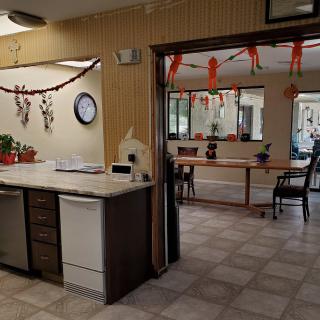


 Comprehensive Guide to VA Nursing Homes: A Crucial Long-Term Care Resource for Veterans
 Estimating the Expenses of At-Home Dementia Care: A Detailed Exploration
 Comprehensive Insights on the Late Stages of Dementia: What to Expect and How to Provide Care