
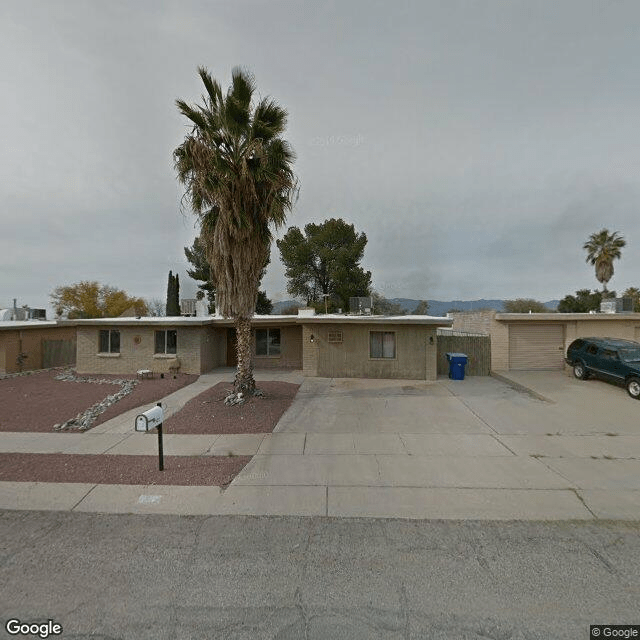
7431 E Lakeside Drive, Tucson, AZ 85730
To contact a resident: (520) 747-3695
For more information about senior living options: (866) 208-4318
Elder Care and More II Costs & Pricing
Elder Care and More II offers a competitive pricing structure for its residents, with monthly costs significantly lower than both Pima County and the broader Arizona state averages. For private accommodations, Elder Care and More II charges $2,000 per month, which is markedly less than the county average of $3,332 and the state average of $3,345. Similarly, the semi-private rooms are priced at $2,000 per month as well, compared to Pima County's average of $2,805 and Arizona's average of $2,820. This pricing strategy not only positions Elder Care and More II as an attractive option for families seeking affordable elder care solutions but also reflects a commitment to providing quality care without imposing excessive financial burdens.
| Floor plans | Elder Care and More II | Pima County | Arizona |
|---|---|---|---|
| Private | $2,000 | $3,332 | $3,345 |
| Semi-Private | $2,000 | $2,805 | $2,820 |
Assisted Living communities with a similar price nearby
-
from -$150 / mo

Connie's Manor Home
$1,850 to $2,300 / month15.3 miles away -
from +$200 / mo

Gentlemen's Inn I
$2,200 / month3.1 miles away -
from +$200 / mo
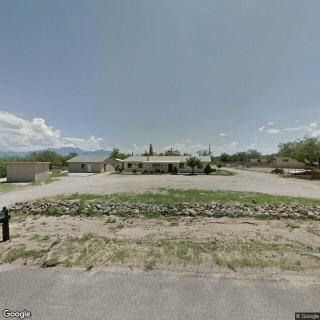
The Villa Rosa
$2,200 to $2,500 / month20.4 miles away -
from +$275 / mo

Broadway Proper Senior Living
$2,275 to $3,075 / month2.4 miles away -
from +$128 / mo

Sunrise at River Road
$2,128 to $3,530 / month10.9 miles away
Overall Review of Elder Care and More II
Pros
 John is a godsend, with compassion and expertise that alleviated stress during the VA Aid and Attendance process.
- He remains available and eager to answer questions years later.
- Debbie helped families find great memory care homes and then supported them through placements for loved ones.
- John assisted with a veteran's annuity using proceeds from selling the family home.
- Debbie has strong relationships with care home staff and deep knowledge of the care home community.
- Debbie set up tours and quickly identified suitable homes, leading to the perfect placement.
- Debbie and her team listened to needs and guided families through a difficult process.
- The home environment is very clean and residents seem happy; Arlene is a caring person.
Cons
 The residents were just sitting around pretty much doing nothing.
- They were not expecting me.
Review
Elder Care and More II is best suited for families that want decisive, hands-on placement support in Tucson, especially when there is a need to navigate veteran benefits and secure memory-care options quickly. The community shines for families facing VA Aid and Attendance applications and related funding questions, as well as for those contending with dementia or Lewy Body dementia who require a guided, informed match to an appropriate care setting. The most practical fit emerges for households that value a linked network, one that brings in an experienced placement team to chart options, handle tours, and translate care needs into tangible placements. For those who simply prefer to shop on their own or rely solely on one facility’s marketing, alternatives will likely be more straightforward, but less protected by informed advocacy.
The strongest leverage point here is the placement team's expertise and responsiveness. Reviewers repeatedly highlight Debbie and John as the core advantage: compassionate, knowledgeable, and relentlessly solution-focused in moving families from budget and care needs to actual placements. Their ongoing availability years after initial engagement, answering questions and offering guidance, adds a crucial layer of security. They bring deep relationships with local care homes, a clear sense of each facility’s operations, and the ability to compare options across Tucson and even Phoenix, so a family can see several viable paths rather than settling for the first offer. In practice, this translates into faster results, a clearer understanding of benefits, and a smoother navigation of complex paperwork and funding streams.
The placement team’s track record is not simply about speed; it is about matched outcomes. One family describes how Debbie pinpointed a memory-care home for a father, and then, after his passing, helped locate a suitable next placement for the mother. Another account emphasizes how Debbie and her colleagues laid out the pros and cons of each option, ensuring a deep, practical understanding of how each home operates. For families facing urgent decisions, such as immediate placement for dementia, the ability to assemble several credible options within days and to arrange tours becomes a decisive advantage. The long-term support, including help with veteran benefits and related annuities, often reduces the stress that accompanies aging-care transitions.
Yet no network of placements is uniformly perfect, and the reviews underscore that variability exists at the ground level. Some tours may reveal homes that feel underwhelming in activity or social engagement, with residents appearing relatively passive or housed in a setting where meaningful stimulation is inconsistent. A concern about gender balance also surfaces: a few homes are described as having more male residents, which may affect comfort for certain families seeking a more balanced or female-dominated environment. These caveats are not hidden risks; they are tangible realities that demand active diligence during tours, second opinions, and frank conversations with care staff about daily routines, caregiver-to-resident ratios, and the availability of purposeful programming.
That is precisely where the pros offset the cons. The agency’s strength is in its curated, data-driven approach to selecting options that align with budget and care needs, plus the promise of post-placement support. The ability to articulate the strengths and weaknesses of each option helps families avoid settling for a mismatch, even when time is limited. The existence of a trusted advocate who understands local licensing, staffing patterns, and the nuances of dementia care makes it more likely that the eventual placement will sustain satisfaction beyond the initial move. In short, the practical advantage lies in reducing guesswork while accelerating a difficult process, with a safety net of ongoing access to the placement team for questions or adjustments.
For families weighing next steps, concrete guidance is clear: articulate budget ceilings, core care requirements, and any non-negotiables (such as memory-care specialization or proximity to certain medical providers); insist on touring multiple options that align with those parameters; probe resident mix and daily activity levels; and confirm the availability of ongoing support after move-in. If veteran benefits and funding are a priority, lean on the team’s demonstrated success with VA-related paperwork and annuity details. Consider alternative routes only if a direct, facility-by-facility search is preferred, and be ready to accept longer timelines and less coordinated navigation as a trade-off.
Overall, the Elder Care and More II ecosystem, backed by a vigorous placement team, stands out for families seeking rapid, well-informed, benefits-savvy matching in Tucson. It is a practical, experienced choice for those who place a premium on vetted options, transparent pros-and-cons discussions, and sustained guidance through transitions. It is less ideal for households hoping to avoid professional involvement or for those seeking highly dynamic, activity-rich environments without close, external advocacy. When used thoughtfully, this network delivers concrete moves to suitable memory-care or assisted-living settings, with a trusted ally to steer the journey every step of the way.
 10 resident community capacity
 Assisted Living
 Board and Care Home
 Cable or satellite TV
 Dining room
 Fully furnished
 Garden
 Housekeeping services
 Move-in coordination
 Outdoor space
 Private
 Telephone
 Wi-Fi/high-speed internet available
 Tucson International (8 miles away)
 24-hour supervision
 Activities of daily living assistance
 Ambulatory care
 Assistance with bathing
 Assistance with dressing
 Assistance with transfers
 Diabetes diet
 Diabetic care
 High acuity care
 Incontinence care
 Meal preparation and service
 Medication management
 Special dietary restrictions
 Transportation arrangement (medical)
 Transportation to doctors appointments






 Comprehensive Insights into Activities of Daily Living (ADLs) and Their Assessment
 Guiding Elderly Parents Who Refuse Assisted Living: 6 Practical Steps
 Your Comprehensive Guide to Luxury Assisted Living: Elevated Facilities, Amenities, and Costs