Desert Villa offers competitive pricing for its accommodations, particularly when compared to averages in Pima County and across Arizona. For a semi-private room, Desert Villa's cost is $3,500 per month, which is notably higher than the county average of $2,805 and the state average of $2,820. However, this premium may reflect enhanced services or amenities that Desert Villa provides. In contrast, the studio option at Desert Villa is priced at $4,000 monthly, surpassing both Pima County's average of $3,786 and Arizona's average of $3,829. This suggests that while Desert Villa may come with higher costs, it likely offers features and quality that justify the investment for those seeking comfortable living arrangements.
Floor plans
Desert Villa
Pima County
Arizona
Semi-Private
$3,500
$2,805
$2,820
Studio
$4,000
$3,786
$3,829
Memory care communities with a similar price nearby
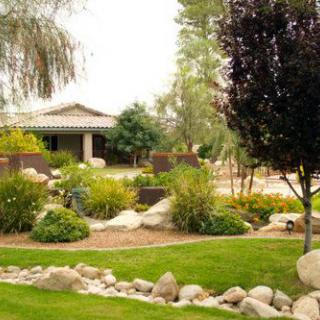
Residents and families frequently describe the community as exceptionally clean and home-like.
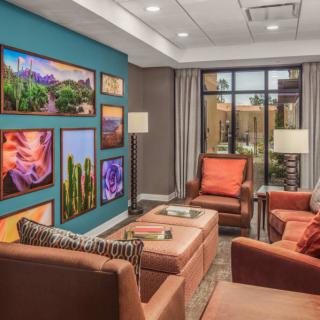
Multiple reviews emphasize cleanliness and a well-kept environment, often saying it feels more like home than an institution. A number of residents’ visitors also mention bright, welcoming spaces and comfortable community areas where families can spend time. A small set of negative feedback contrasts this by citing hygiene and odor concerns, including mentions of urine and poor hygiene practices.
common34 reviews mention this
Caring, attentive staffing
Staff attentiveness and compassion come up again and again in resident and family feedback.
The most consistent positive theme is the way residents are treated day to day, with reviews describing caring, patient caregivers and staff who are attentive to comfort, dignity, and safety. Several reviewers also mention knowing staff personally and feeling supported through clear communication with families. That said, there are a few contrary reviews that call out staff attitudes and describe negative experiences, which is the main caveat to the overall pattern.
differentiator14 reviews mention this
Activities and community engagement
Residents are described as staying engaged thanks to regular activities and community spaces.
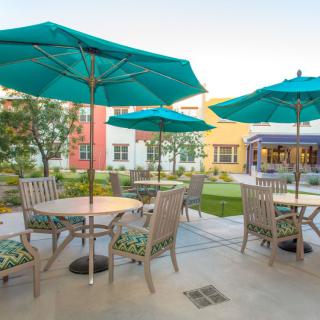
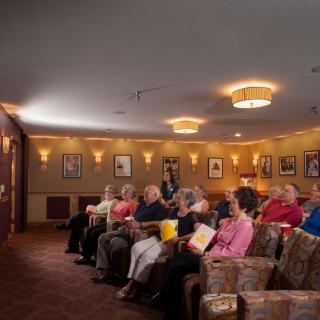
Many reviews highlight that residents participate in activities instead of spending long stretches in front of a TV, and they mention everything from exercise and crafts to live entertainment and day-to-day engagement. Visitors also describe enjoying time with residents in shared gathering areas, including outdoor patio or courtyard spaces. The structured offering list includes a broad schedule of on- and off-site activities such as art classes, happy hour, and devotional services, which aligns with what families report.
caveat10 reviews mention this
Dining quality varies in reviews
Dining is praised by some residents and families, but not everyone reports consistent food quality.
Positive reviews mention meals that smell and look good, along with healthy, home-cooked offerings and even customization for a specific resident. Some families also describe eating together and enjoying the overall dining experience within the community. On the other hand, multiple critical reviews complain that food is inadequate or appears processed, and one review directly questions food and hygiene together, making dining one of the more mixed areas.
caveat2 reviews mention this
Pricing runs above averages
Pricing appears higher than both the county and state benchmarks across unit types.
Pricing is positioned above county and state benchmarks in both of the unit types shown, so cost may be a consideration depending on what you’re comparing. Reviews don’t consistently focus on cost in the way they do on cleanliness, staff, and activities, so the clearest quantitative signal is the pricing comparison itself.
How we summarize
Counts show how many written reviews mention each theme; a review can touch several themes, and only frequently mentioned themes are displayed.
Features
Types of Care
Assisted Living
Memory Care
Pets
Cats allowed
Dogs allowed
Amenities
Activities off-site
Activities on-site
Air-conditioning
Beautician on-site
Cable or satellite TV
Devotional services off-site
Ground floor units
Handicap accessible
Indoor common areas
Outdoor common areas
Respite or short term stays offered
Swimming pool / hot tub
Wheelchair accessible showers
Wi-Fi/high-speed internet available
Transportation
Tucson International (11 miles away)
Care Services
Diabetic care
Incontinence care
Medication management
Dining
Gluten-free
Guest meals
International cuisine
Kosher
Low / no sodium
Meals provided
No Sugar
Vegetarian
Activities
Art classes
Day trips and outings
Devotional activities offsite
Forever fit
Gardening club
Happy hour
Live dance or theater performances
Live musical performances
Other religious services
Stretching classes
Visiting chaplain or priest
Yoga / chair yoga
Languages Spoken
English
Nearby Places of Interest
This part of Tucson, Arizona offers a variety of amenities that may be beneficial for seniors looking to live in the area. There are several pharmacies within close proximity, making it convenient to access necessary medications. Additionally, there are multiple dining options ranging from fast food to sit-down restaurants, providing a variety of choices for meals. The presence of cafes allows for socializing and enjoying a cup of coffee with friends or family. In terms of healthcare, there are several physicians' offices and hospitals nearby, ensuring access to medical care when needed. The area also boasts parks for outdoor recreation and places of worship for spiritual fulfillment. Overall, this part of Tucson appears to offer a well-rounded environment suitable for senior living.
Pharmacies
Fry's Pharmacy (0.7 miles)
Walgreens (0.7 miles)
Walgreens (1.1 miles)
Walgreens (1.3 miles)
CVS Pharmacy (1.7 miles)
Walgreens (1.9 miles)
CVS Pharmacy (2 miles)
Theaters
Galaxy Theatres Tucson (0.8 miles)
Century Park Place 20 And Xd (4.6 miles)
Restaurants
Los Betos Mexican Food (1.8 miles)
Taco Bell (1.8 miles)
McDonald's (1.8 miles)
Culver's (2.6 miles)
Hooters (3 miles)
El Molinito (3.1 miles)
In-N-Out Burger (3.1 miles)
Cafes
Le Buzz (2.9 miles)
Coffee X Change (4.2 miles)
Dutch Bros Coffee (4.2 miles)
Dutch Bros Coffee (4.2 miles)
The Human Bean (4.2 miles)
Starbucks (4.3 miles)
Panera Bread (4.4 miles)
Physicians
Med Clinics (3.2 miles)
Sheldon Dr - Marks Sheldon Marks MD (3.3 miles)
Tmj Disorders Orofacial Pain Center PC (3.3 miles)
Desert Villa offers competitive pricing for its accommodations, particularly when compared to averages in Pima County and across Arizona. For a semi-private room, Desert Villa's cost is $3,500 per month, which is notably higher than the county average of $2,805 and the state average of $2,820. However, this premium may reflect enhanced services or amenities that Desert Villa provides. In contrast, the studio option at Desert Villa is priced at $4,000 monthly, surpassing both Pima County's average of $3,786 and Arizona's average of $3,829. This suggests that while Desert Villa may come with higher costs, it likely offers features and quality that justify the investment for those seeking comfortable living arrangements.
Incontinence care at Desert Villa is designed to ensure the dignity and comfort of residents, minimizing anxiety associated with potential accidents and allowing them to feel secure in their environment. This support not only enhances their quality of life but also provides peace of mind for families knowing their loved ones are receiving compassionate assistance. Medication management is equally crucial, as it involves a structured approach to administering prescribed medications on time and in the correct dosages. This careful oversight helps prevent confusion or missed doses, which can be particularly detrimental for individuals with cognitive impairments. Together, these features create a supportive atmosphere that fosters well-being while addressing the unique challenges posed by dementia or Alzheimer's disease.
The article outlines effective communication strategies for interacting with loved ones with dementia, highlighting the need for empathy, patience, and understanding while emphasizing supportive approaches like using simple language, minimizing distractions, and focusing on feelings over facts to maintain dignity and foster connection. It also suggests seeking professional guidance when needed as communication challenges evolve.
VA nursing homes, or Community Living Centers (CLCs), offer tailored long-term care for veterans, featuring medical attention and rehabilitation in a supportive environment. The guide covers facility types, eligibility criteria, financial assistance options, quality of care standards, and alternatives to full-time nursing home placement.
At-home dementia care expenses vary widely based on care levels, location, and caregiver expertise, with monthly costs for home health aides exceeding $4,500 and specialized care potentially surpassing $100,000 annually. While families favor in-home care for its comfort and personalized attention, they must consider financial planning and the challenges of caregiver fatigue.
Get PricingAsk A QuestionSchedule A TourContact Senior Advisor
By clicking submit, you agree to our Partner's Terms of Use. You
also consent to receive calls and texts, which may be autodialed, from our Partner. Your consent is not a condition to
using our Partner's service. Please visit our Partner's Privacy Policy for information about their privacy practices.

 Assisted Living
 Memory Care
 Cats allowed
 Dogs allowed
 Activities off-site
 Air-conditioning
 Beautician on-site
 Cable or satellite TV
 Devotional services off-site
 Ground floor units
 Handicap accessible
 Indoor common areas
 Outdoor common areas
 Respite or short term stays offered
 Swimming pool / hot tub
 Wheelchair accessible showers
 Wi-Fi/high-speed internet available
 Tucson International (11 miles away)
 Diabetic care
 Incontinence care
 Medication management
 Gluten-free
 Art classes
 Day trips and outings
 Forever fit
 Gardening club
 Happy hour
 Live dance or theater performances
 Live musical performances
 Stretching classes
 Visiting chaplain or priest
 English
 Personalized care with 24-hour supervision, fully furnished rooms, and coordinated healthcare.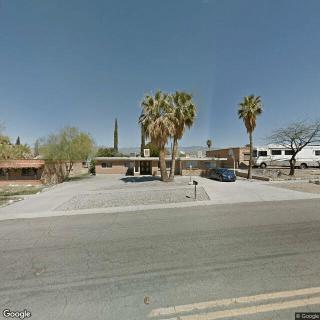

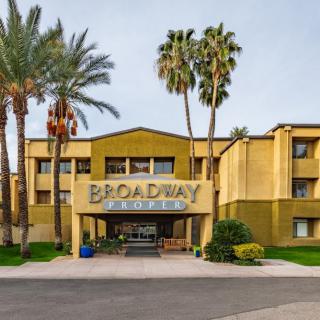
 How to Communicate with a Loved One Living with Dementia: 10 Supportive Strategies
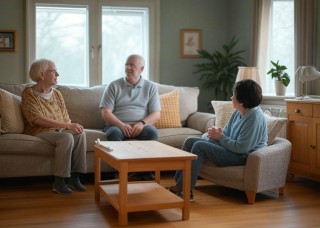 Comprehensive Guide to VA Nursing Homes: A Crucial Long-Term Care Resource for Veterans
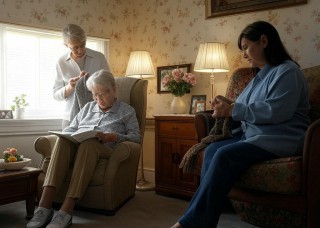 Estimating the Expenses of At-Home Dementia Care: A Detailed Exploration