
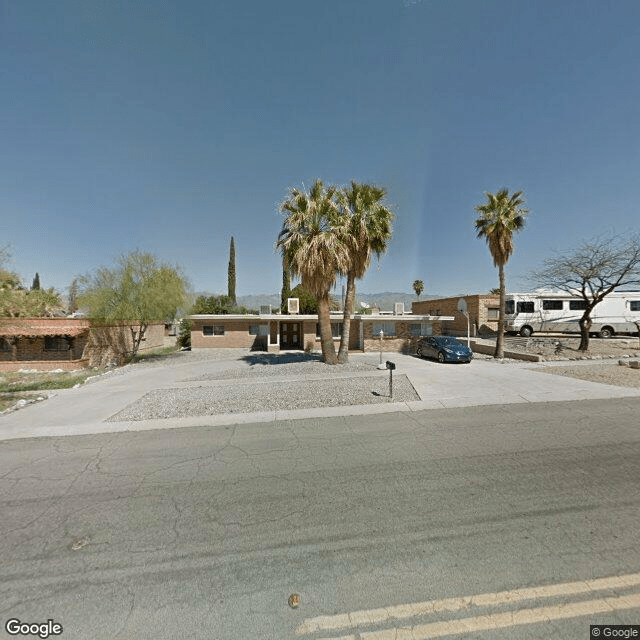
8925 E. 5th, Tucson, AZ 85710
To contact a resident: (520) 306-6931
For more information about senior living options: (866) 208-4318
Abella Manor Senior Care, LLC Costs & Pricing
Abella Manor Senior Care, LLC offers competitive pricing for its senior care services compared to both Pima County and the broader state of Arizona. For semi-private accommodations, Abella Manor charges $2,800 per month, which is slightly lower than the county average of $2,805 and the state average of $2,820. When it comes to private rooms, the monthly rate at Abella Manor is $3,200, again positioned favorably against the local and state averages of $3,332 and $3,345 respectively. These competitive rates underscore Abella Manor's commitment to providing quality care while maintaining affordability for residents and their families.
| Floor plans | Abella Manor Senior Care, LLC | Pima County | Arizona |
|---|---|---|---|
| Semi-Private | $2,800 | $2,805 | $2,820 |
| Private | $3,200 | $3,332 | $3,345 |
Senior living communities with a similar price nearby
-
from +$350 / mo

Casa De Buena Vida
$3,150 to $3,450 / month12.7 miles away -
from +$400 / mo
Academy Villas
$3,200 to $7,000 / month10.1 miles away -
from -$500 / mo
Northwest Assisted Living
$2,300 to $2,500 / month14.1 miles away -
from -$300 / mo
Grace Home I
$2,500 to $3,200 / month2.3 miles away -
from +$200 / mo
Lisa's Loft
$3,000 to $4,000 / month2.3 miles away
Overall Review of Abella Manor Senior Care, LLC
Pros
 The staff at Abella are kind, thoughtful, and professional.
- The care provided by Abella’s employees is thorough, and the home is one of the cleanest.
- Holly and Rich truly care about their residents.
- Desert Haven provides good food and the best of care in a true home environment.
- Rich is a wonderful cook and Holly’s baking adds a balanced touch to their care.
- The care at Desert Haven is top-notch and the homes are clean.
- Desert Haven has two clean, well-organized homes with a loving and caring atmosphere.
- The owners are hands-on, friendly, accessible, and seem to know all residents well.
- The in-home Nurse Practitioner provides excellent medical oversight.
Cons
 They expressed concern that the backyard had not yet been finished after moving in.
- They noted that the backyard remained unfinished and that the owners were attempting to complete it themselves.
Review
Abella Manor is best suited for families who want a deliberately intimate, hands-on assisted-living experience in Tucson. The model echoed in the closely watched Desert Haven properties, small homes with around five residents each, where owners are on site, deeply involved in daily care, and highly attentive to medical and nutritional needs, maps well onto what Abella Manor appears to offer. The emphasis is on a home-like atmosphere, not a large campus, with staff who know residents by name, kitchens that produce home-style meals, and a level of caregiving that feels personalized rather than perfunctory. For families prioritizing relationship-driven care, this is the strongest fit.
Those who may want to consider alternatives are clear too. If a broader campus with bigger pools of staff, more structured programming, or specialized memory-care pathways is essential, a larger senior-living environment may serve better. Families seeking aggressive clinical oversight, a wide array of on-site therapists, or a formal continuum of care beyond what a small home setting typically provides should compare options with more extensive medical support and scheduling flexibility. The same caveat applies to families requiring national networks, advanced assistive technologies, or robust transportation programs, those realities are less likely to emerge in a compact, owner-operated model.
On balance, the major strengths are precisely what the model promises: on-site ownership, tactile day-to-day involvement, and consistently high standards of cleanliness and food. Reviews repeatedly describe Holly and Rich as actively present and caring, with Rich delivering cooking warmth and Holly supplying reliable, attentive oversight. The homes are noted for being clean, well organized, and designed to foster genuine connections among residents. The combination of a hands-on management team, a nurse practitioner available in-home, and a culture that treats residents like treasured members of a family yields a care quality that feels both competent and compassionate.
Where the format tests patience, the concessions tend to be modest. The most explicit drawback cited is logistical rather than clinical: at least one location recently moved in and has not yet finished a backyard project, with the owners taking on some of the work themselves. While not a safety risk, it signals that this is a smaller operation in the midst of ongoing refinements, not a polished, turnkey campus. The limited size, great for intimacy and individualized attention, also means fewer built-in social programs or breadth of activities that a larger community might offer. Prospective families should anticipate a more streamlined activity calendar than in bigger facilities.
The strongest offset comes from the care model itself. Hands-on ownership means decisions are swift and resident needs are prioritized, not deferred. The in-home nursing presence and the direct availability of the owners often translate into proactive medical coordination, timely adjustments to care plans, and less friction during transitions, qualities families note as priceless during difficult periods, including hospice discussions and end-of-life coordination. When meals are described as a standout (with the chef’s skills and baking noted as a deliberate strength), daily life stays tied to comfort and routine, reducing anxiety for both residents and families.
Practical steps for evaluating Abella Manor against these insights are straightforward. Schedule multiple visits to observe the two-home setup, ask to meet the on-site owners or managers, and speak with current residents or their families about daily routines, care coordination, and responsiveness. Verify how medical oversight is organized, whether a nurse practitioner or other clinicians are readily accessible, how emergencies are handled, and how the home coordinates with outside physicians or hospice teams. Inspect common areas, kitchen cleanliness, and safety features; confirm the pace and rhythm of meals, showers, and wake routines; and, if possible, tour at different times of day to gauge consistency. A tour should reveal the same essence described in the reviews: warm, clean, and personally attended care.
In the end, Abella Manor stands out for families who want a warm, intimate setting with demonstrably engaged ownership, high-quality daily life, and a medical assist that feels hands-on rather than bureaucratic. The model’s beauty lies in its predictability: residents are known, meals feel nourishing, and care decisions come quickly because the people making them are present and accountable. For families where those attributes meet their priorities, Abella Manor offers a compelling, practical choice. If, however, a family must prioritize extensive programming, large-scale staffing, or specialized memory-care pathways, it makes sense to broaden the search and compare options that deliver those specific features. A decisive next step remains clear: take a targeted tour, ask pointed questions about medical coordination and daily life, and let the continuity of hands-on leadership guide the final decision.
 Board and Care Home
 Cats allowed
 Dogs allowed
 Activities off-site
 Bath tubs
 Devotional services off-site
 Indoor common areas
 Outdoor common areas
 Private
 Private bathrooms
 Respite or short term stays offered
 Wheelchair accessible showers
 Tucson International (11 miles away)
 Diabetic care
 High acuity care
 Incontinence care
 Medication management
 Kosher
 Christian services

 Nurturing Our Loved Ones: A Daughter's Journey in Caring for Her Mother
 Nurturing Our Elders: Linda's Journey of Supporting Her Mother
 A Comprehensive Exploration of Common Misunderstandings about Powers of Attorney