
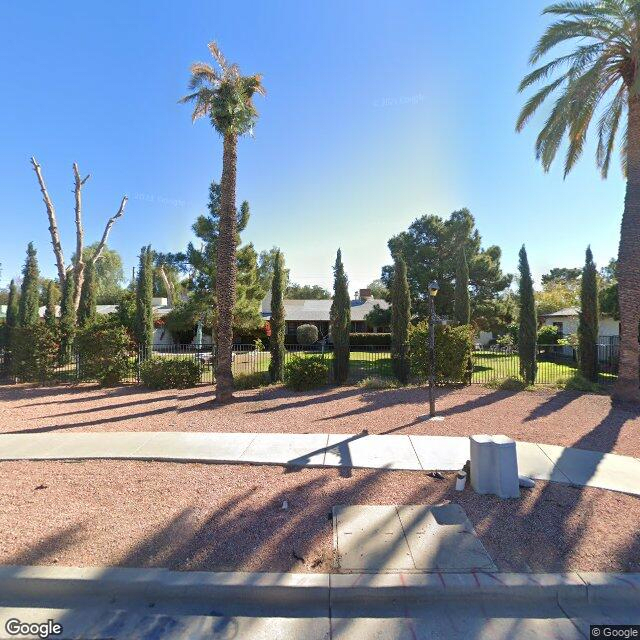
2815 N 48th St, Phoenix, AZ 85008
To contact a resident: (602) 840-5940
For more information about senior living options: (866) 208-4318
Country Manor Costs & Pricing
Country Manor offers competitive pricing for its residential accommodations, especially when compared to the broader market in Maricopa County and the state of Arizona. For a semi-private room, Country Manor's monthly cost is just $625, significantly lower than the county average of $2,801 and the state average of $2,820. Similarly, their one-bedroom options are priced at $1,200 - again, a substantial saving compared to Maricopa County's average of $3,473 and Arizona's statewide average of $3,532. This pricing strategy positions Country Manor as an attractive choice for individuals seeking quality care without the burden of high costs commonly associated with assisted living facilities in the region.
| Floor plans | Country Manor | Maricopa County | Arizona |
|---|---|---|---|
| Semi-Private | $625 | $2,801 | $2,820 |
| 1 Bedroom | $1,200 | $3,473 | $3,532 |
Assisted Living communities with a similar price nearby
-
from +$74 / mo

Immanuel Campus of Care
$699 to $3,069 / month18.5 miles away -
from -$75 / mo

South Mountain Assisted Living
$550 to $5,000 / month7.0 miles away
Overall Review of Country Manor
Pros
 The staff are very kind.
- The place has a family feel.
- The food is cooked from scratch.
- If you like healthy food, this is a place to go.
- It is a nice, quiet, friendly place.
- The cost is reasonable given the good care provided.
Cons
 The owner is accused of running a dirty scam, not paying for work, and preying on the elderly and the homeless.
- The Country Manor Assisted Living Center is described as unsafe and unstaffed, with locked gates and no one to unlock them.
- The center is labeled a total scam that cares only about money, not the residents.
- The facility is said to have poor conditions, including bed bugs, and is lock-in after 9 PM, making it hazardous.
- Staff are accused of neglecting residents’ medical needs, such as not providing prescribed medications.
- Management is portrayed as strictly removing residents for substance abuse or disruptive behavior, and as unresponsive to concerns about licensing.
Review
Country Manor in Phoenix is best suited for a resident who wants a quiet, family-feel setting with long-tenured staff, home-style meals, and clear, tight boundaries. The community appears to attract residents who value stability, routine, and a low-key environment over bustle or high levels of on-site programming. A sustained, cohesive staff presence and predictable meals from scratch can translate into genuine comfort for someone who does not require intensive medical oversight or constant activity. Yet this is a narrow fit: the atmosphere hinges on discipline and a contained routine, not on broad social engagement or complex care.
Those most likely to want alternatives are families prioritizing reliable, transparent operations and immediate access to staff. Several reviews raise red flags about governance, safety, and day-to-day responsiveness. A gate that remains locked and a leader who is frequently absent during the day undermine the assumption of around-the-clock supervision. When a caregiver or transport partner cannot reach anyone on site for nearly an hour, trust erodes quickly. For a loved one with medical fragility, cognitive impairment, or the need for timely assistance, Country Manor’s operational gaps become serious liabilities.
The strongest positives, the warm, stable staff, the close-knit feel, and the practice of cooking meals from scratch, do translate into tangible quality of life for residents who fit the profile. A long tenure among staff creates a sense of continuity and dedication that matters in daily care, while a quiet, orderly environment can reduce agitation for residents who thrive on predictability. The emphasis on healthy, home-style food and a community that largely screens out disruptive behavior can support dignified living for those who don’t require aggressive programming or frequent medical intervention. These benefits, however, are only meaningful if safety and access to care are consistently reliable.
But the cons strike at the core of what families should expect from assisted living. Reports of a non-responsive gate, inconsistent on-site staffing, and even allegations of deceptive practices create a foundational mistrust that cannot be ignored. Cleanliness concerns, bed bug incidents, and reports of substandard condition rub against the basic expectations for a residence of this type. The combination of restricted egress after 9 pm, a curfew policy, and a perception that licensing and supervision could be lax adds up to a setting that may feel more like a controlled shelter than a fully supportive living environment. For anyone with medical needs, pain management, or urgent medication administration, these gaps are not merely inconvenient, they’re potentially dangerous.
Practically, a family approaching a decision should press for concrete assurances before choosing Country Manor. Schedule visits at multiple times to observe staffing levels and response times, request to speak with current residents or their families, and verify state licensing and any formal complaints or corrective actions. Ask for a current menu and a sample week of meals to gauge the nutritional and culinary quality. Request a clear explanation of the curfew policy, contingency plans for emergencies after hours, and a written commitment to access during medical or transport needs. Inquire about how medications are handled, how often rooms and common areas are cleaned, and what steps are taken when bed bugs or other sanitation issues arise. Finally, obtain a copy of incident reports and a policy that outlines resident rights and grievance procedures.
In the end, Country Manor reads as a niche option: it can deliver stability, simplicity, and home-cooked nourishment to a specific subset of residents who prize quiet order and a small, familiar community. However, for seniors who require dependable 24/7 staffing, transparent leadership, robust medical oversight, or consistently clean, accessible facilities, alternatives should be pursued. The decision hinges on weighing the quietly reassuring day-to-day routine against the stark realities of access, safety, and governance. If safety of access, prompt staff engagement, and credible management are non-negotiable, a stronger option with demonstrable reliability is the prudent path.
 Assisted Living
 Activities on-site
 Devotional services off-site
 Indoor common areas
 Phoenix Sky Harbor International (4 miles away)
 Ambulatory care
 Diabetic care
 Meals provided







 Choosing the Right Senior Care: A Detailed Exploration of Assisted Living and Nursing Homes
 Understanding the True Cost of Assisted Living in 2025: A Comprehensive Guide
 Understanding Medicaid Coverage for Assisted Living: A Comprehensive Guide