
3103 West Via Montoya Drive, Phoenix, AZ 85027
For more information about senior living options: (866) 208-4318
Overall Review of Angel Hands Home Care
Pros
 Visiting Angels provides an amazing service for loved ones.
- Caregivers with Visiting Angels are compassionate and even take residents out of the home.
- Visiting Angels is a great place to work while delivering the best care possible.
- The company offers flexible schedules and strong support for its staff.
- People feel blessed to be part of Visiting Angels.
- The Visiting Angels nutritionist delivers informative classes and answers questions, helping groups learn something new.
- Caregivers are congenial, helpful, and assist with daily tasks, appointments, and independence.
Review
Angel Hands Home Care in Phoenix is best suited for families that want a high-touch, in-home care solution for a loved one who can live at home with assistance but does not require the around-the-clock intensity or campus-level amenities of an assisted living facility. The reviews illustrate a model where compassionate caregivers become trusted partners in daily life, capable of accompanying residents outside the home, supporting errands, and weaving wellness and social opportunities into ordinary routines. For seniors who prize autonomy, familiar surroundings, and ongoing human connection, this approach delivers meaningful quality of life without surrendering personal independence.
Those evaluating options should explicitly consider who may want alternatives. If a loved one requires constant, on-site supervision, rapid response for emergencies, or a facility with built-in medical and nursing services 24/7, a traditional assisted living setting or a skilled-nursing environment may be a better fit. Families needing highly structured programming, campus-style social life, or access to on-site therapies and memory-care environments will likely find limited appeal in a home-care model that hinges on individual caregivers visiting the home. In short, a fully equipped community with round-the-clock on-site staff can be preferable when medical complexity or supervision needs eclipse the benefits of in-home support.
The strongest positives in the reviewed experiences revolve around caregiver character and flexibility. Compassionate, person-centered caregivers consistently come through as the linchpin of satisfaction: they build trust, adapt to changing routines, and treat the senior with warmth and respect. The ability to extend support beyond the house, helping with transportation, social outings, and even coordinating with wellness activities, turns daily care into an ongoing, integrative experience rather than a string of isolated tasks. The presence of wellness education, such as nutrition-focused engagement with clients and their communities, signals a proactive stance toward aging well and sustaining independence. When a caregiver team is capable of creating continuity and meaningful connection, many common home-care anxieties, loneliness, isolation, and caregiver turnover, lose their sting.
Even in the absence of explicit downsides in the reviews, prudent scrutiny reveals potential trade-offs to balance against the evident strengths. In-home care hinges on the reliability and consistency of individual caregivers; shifts in scheduling, caregiver availability, or caregiver turnover can disrupt routines. The model also typically lacks the constant, on-site clinical oversight found in a campus setting, which matters if medical needs become more demanding or if quick escalation of care is required. Cost structure can be another consideration: premium in-home teams often represent a meaningful investment, and families should verify what is included in rates, how hours are counted, and what happens when extra support is needed. Finally, a home-care model relies on family engagement to coordinate care plans, communicate changes, and ensure that the evolving needs are met.
Those considerations, however, do not erase the substantial upside. The major pros, compassionate, adaptable caregivers who understand the senior’s routines and preferences; the ability to keep the senior integrated into familiar settings; and the option to add social and educational experiences, offer a powerful offset to the typical concerns of home care. When caregivers consistently align with a senior’s personality and rhythms, the risk of friction decreases, and care becomes a collaborative partnership rather than a series of transactions. The added social dimension, occasional outings, community engagement, and wellness conversations, delivers structure and purpose that are often missing in more impersonal in-home arrangements. For families seeking to preserve independence while maintaining safety and daily support, these attributes represent a compelling value proposition.
In making a practical decision, households should align expectations with specific, actionable criteria. Angel Hands Home Care should be evaluated on caregiver stability (average tenure, training standards, and match-building processes), the breadth of services offered (errands, transportation, meal prep, medication reminders, and basic health monitoring), and the availability of consistent scheduling (including backup coverage for paid holidays and vacations). Prospective clients should request profiles of lead caregivers, see a sample care plan, and arrange a trial period to observe how routines are established and adjusted. It is also prudent to compare costs against the level of independence preserved, and to probe how the provider handles escalating needs and transitions to higher levels of care if medical requirements change. In Phoenix, where families demand both personalized attention and tangible support, Angel Hands Home Care should be positioned as a strong option for those prioritizing at-home living with trusted, engaged caregivers, provided the decision is anchored in a clear understanding of care intensity, scheduling reliability, and long-term care planning.
The bottom-line recommendation centers on purpose and pace. Angel Hands Home Care is a practical, highly capable choice for seniors who value dignity, routine, and relational quality in the comfort of their own home, with caregivers who can broaden life through safe outings and wellness engagement. For families whose primary objective is to maintain independence with a reliable, emotionally intelligent care partner, the model described in the reviews demonstrates clear alignment. If, however, the senior’s needs lean toward constant on-site supervision, immediate access to skilled nursing, or a campus culture with comprehensive medical and social programming, alternatives should be pursued more aggressively. In either case, the decisive step is to map out the care trajectory: identify the level of medical support required now and likely in the near term, confirm consistent caregiver availability, and secure a solid, written care plan that evolves with the senior’s changing health and preferences. This approach turns a decision into a personal, practical pathway that prioritizes safety, connection, and ongoing independence.
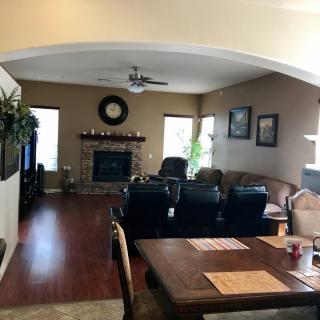
 5 resident community capacity
 Assisted Living
 Cable or satellite TV
 Dining room
 Fully furnished
 Garden
 Housekeeping services
 Move-in coordination
 Outdoor space
 Telephone
 Wi-Fi/high-speed internet available
 Phoenix Sky Harbor International (19 miles away)
 24-hour supervision
 Activities of daily living assistance
 Assistance with bathing
 Assistance with dressing
 Assistance with transfers
 Diabetes diet
 Meal preparation and service
 Medication management
 Special dietary restrictions
 Transportation arrangement (medical)
 Transportation to doctors appointments





 Medicare Coverage for Assisted Living: An In-Depth Exploration
 Choosing the Right Senior Care: A Detailed Exploration of Assisted Living and Nursing Homes
 Understanding the True Cost of Assisted Living in 2025: A Comprehensive Guide