

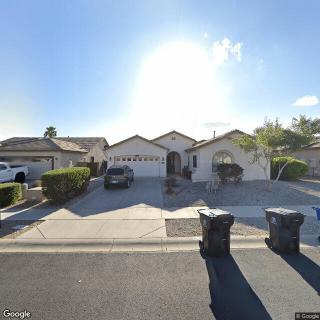
9334 W Brown Street, Peoria, AZ 85345
To contact a resident: (623) 374-3581
For more information about senior living options: (866) 208-4318
Care 4 U Group Homes Costs & Pricing
Care 4 U Group Homes offers competitive pricing for its residents, making it an appealing choice within the broader context of Maricopa County and the state of Arizona. For semi-private rooms, Care 4 U charges $2,300 per month, significantly lower than the average rates in Maricopa County at $2,801 and statewide at $2,820. This trend continues with private rooms as well, where Care 4 U's monthly fee of $2,600 stands in stark contrast to the county's average of $3,318 and the state's average of $3,345. These figures highlight Care 4 U's commitment to providing quality care while maintaining affordability for families seeking supportive living arrangements.
| Floor plans | Care 4 U Group Homes | Maricopa County | Arizona |
|---|---|---|---|
| Semi-Private | $2,300 | $2,801 | $2,820 |
| Private | $2,600 | $3,318 | $3,345 |
Senior living communities with a similar price nearby
-
from +$325 / mo

The Eldercare Home Of Tempe
$2,625 to $3,412 / month24.8 miles away -
from -$300 / mo

Garcia's Assisted Living Home LLC
$2,000 / month18.0 miles away -
from +$100 / mo

Jolley Family Assisted Living Home II
$2,400 to $3,875 / month17.7 miles away -
from +$200 / mo

Anc Assisted Living Homes I
$2,500 to $3,500 / month11.7 miles away -
from -$300 / mo
All Stars Assisted Living
$2,000 to $2,500 / month8.8 miles away
Overall Review of Care 4 U Group Homes
Pros
 The group home is clean and well cared for.
- The residents appear happy and engaged.
- The setting has a family home atmosphere.
- Everyone appears comfortable.
Review
Care 4 U Group Homes in Peoria, Arizona is best suited for seniors who prize a small, home-like environment where caregivers can form real, day-to-day relationships with residents. The reviews repeatedly highlight a clean setting, residents who appear happy and engaged, and a family-style atmosphere that feels comfortable rather than institutional. For families seeking daily reassurance that a loved one is clean, safe, and sociable, this option delivers a tangible sense of belonging and routine. In short, it is ideal for seniors who want companionship and simple, stable living arrangements in a domestic setting rather than a hotel-style atmosphere.
Those needing high-intensity medical supervision or specialized memory care should consider alternatives. The group-home model typically offers everyday help and social interaction rather than on-site, around-the-clock skilled nursing or wide-ranging clinical programs. If a resident requires frequent doctor visits, complex wound care, or detailed dementia-specific programming, larger assisted living communities or dedicated memory care facilities are more appropriate. Families should also consider whether the intimate setting can accommodate evolving needs over time, or if a move to a more comprehensive campus would be prudent down the line.
Key positives, cleanliness, visible happiness, and active engagement, provide a strong offset to potential downsides. A tidy environment and well-cared-for residents reduce worries about neglect, while the continuous, familiar faces in a small group create a sense of safety and trust. The family home vibe translates into easier social interaction, more natural mealtimes, and less bustle, which many seniors find comforting. This warmth often translates into better mood, patience from staff during routines, and more personalized attention than might be possible in a larger facility.
On the flip side, the close-knit, smaller setting can limit the breadth of services and the pace of programming. There may be fewer on-site specialists, less formal activity programming, and slower responses to rapidly changing medical needs if a crisis arises. Privacy can be differently managed in a compact group, and family members should confirm how privacy is handled and how accommodations are balanced with safety. However, the evident care and ongoing supervision in these homes usually mitigate most concerns, especially when family members are proactive in planning and communication with caregivers.
Yes, this option deserves serious consideration, but with due diligence. Prospective residents and their families should verify staffing ratios and qualifications, confirm what levels of daily living assistance are included, and review how medications are managed. Questions about meal planning, housekeeping, laundry, and transportation should be answered with specifics. It is also essential to observe a visit: do staff members know residents by name, do residents seem oriented and engaged, and is there a visible routine that aligns with the loved one’s preferences? Clarify what happens if medical needs escalate and whether there is access to on-call professionals.
Overall, Care 4 U Group Homes offers a compelling option for seniors who want a warm, clean, and connected home setting with attentive staff. The strength lies in its authentic, family-like culture and the everyday joy residents demonstrate. The clear caveat is that this format is less suited to those requiring intensive medical care or sophisticated dementia programming. For families who value companionship, routine, and a domestic atmosphere, this community warrants serious consideration, provided the readiness to oversee evolving needs and to plan transitions if care needs deepen.
 Board and Care Home
 Activities on-site
 Devotional services off-site
 Indoor common areas
 Outdoor common areas
 Private
 Phoenix Sky Harbor International (18 miles away)
 Ambulatory care
 Diabetic care
 High acuity care
 Incontinence care
 Medication management
 Meals provided







 Seniors and Modern Transportation: Exploring Uber, Lyft, and Other Ride-Hailing Options
 Comprehensive Guide to Qualifying for Home Health Care Services
 Powerful Realities of Elder Abuse and the Most Effective Ways to Report It