
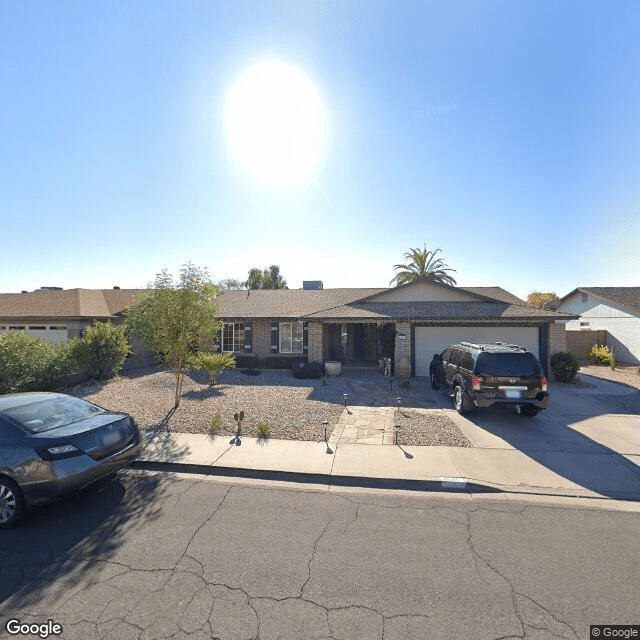
631 W. Medina Ave., Mesa, AZ 85210
To contact a resident: (480) 926-5924
For more information about senior living options: (866) 208-4318
Martha Bonilla Care Loving Home Costs & Pricing
Martha Bonilla Care Loving Home offers competitive pricing for its residents compared to the broader market in Maricopa County and the state of Arizona. For a semi-private room, the cost is $2,000 per month, which is significantly lower than the county average of $2,801 and the state average of $2,820. Similarly, for private accommodations, Martha Bonilla's rate of $2,200 is also more affordable than the county's $3,318 and the state's $3,345. This positioning not only underscores Martha Bonilla Care Loving Home's commitment to providing quality care at accessible prices but also highlights its value within the local landscape of senior living options.
| Floor plans | Martha Bonilla Care Loving Home | Maricopa County | Arizona |
|---|---|---|---|
| Semi-Private | $2,000 | $2,801 | $2,820 |
| Private | $2,200 | $3,318 | $3,345 |
Senior living communities with a similar price nearby
-
About the same

Home Instead - Fountain Hills, AZ
$1,945 to $3,525 / month17.7 miles away -
from -$139 / mo

Endeavor Senior In-Home - Mesa
$1,861 / month3.9 miles away -
About the same
Garcia's Assisted Living Home LLC
$2,000 / month10.4 miles away -
About the same
Santo Nino Villas 2
$2,000 to $2,300 / month5.8 miles away -
from -$100 / mo
Young Life Assisted Living I
$1,900 to $2,500 / month18.7 miles away
Overall Review of Martha Bonilla Care Loving Home
Pros
 They were very accommodating in providing help after surgery, delivering timely assistance and staying in close contact about schedules and needs.
- The owners, Mark and Cindy, are compassionate about the customers they serve and the care they provide.
- The aides sent to the house are vetted, bonded, and insured, ensuring safe, professional care.
- Heather and Diane were fabulous aides who clearly cared about the client’s wife.
- The network of 30+ caregivers gives families access to great care.
- Caregivers consistently appeared as scheduled, were friendly, and eager to help.
- The care team is professional, kind, communicative, and prompt, greatly improving quality of life.
- The headquarters staff backs the program and addresses issues in real time.
- Ruthie is patient and kind, bringing joy and comfort to the client’s mom.
- Customers wholeheartedly recommend and endorse ComForCare.
Review
This Mesa-based home care option is best suited for families who want their loved ones to remain at home while receiving highly personalized, hands-on support. The model thrives when a family prefers in-place assistance delivered by a close-knit team led by engaged owners who are genuinely compassionate. Clients benefit from a large network of caregivers (more than 30), vetted, bonded and insured, with a clear emphasis on reliability and good communication. The arrangement works particularly well for short-term post-surgery help, light housekeeping, and routines that include morning wake-up, dressing, bathing, and medication reminders. Real-world examples show caregivers who show up on time, stay attuned to schedules, and tailor tasks to each person’s needs, creating a track record of practical continuity.
Alternatives should be considered for families seeking the structure and on-site resources of a facility. Those who require round-the-clock nursing supervision, highly specialized memory-care programs with shared living spaces, or formal daily social programming in a campus setting may find a facility-based approach more appropriate. In such cases, independent living plus supportive services within a traditional assisted living or dedicated memory-care environment often offers on-site licensed nursing, more visible safety routines, and the breadth of facility-level activities that some families expect. The home-care model described here can be outstanding, but it does not replicate the full spectrum of on-site clinical care and social programming found in a facility.
The strongest offsets to potential drawbacks lie in leadership, caregiver quality, and organizational responsiveness. Owners Mark and Cindy bring a palpable commitment to service, reinforced by a cadre of aides who are vetted, bonded, and insured, reducing concern about personnel reliability. The network’s size, paired with a proactive HQ, facilitates prompt scheduling, continuity of care, and quick issue resolution, which in practice translates to fewer gaps and smoother transitions when needs evolve. The depth of caregiver engagement is evident in stories of personal connections, with staff who remember routines, preferences, and even meaningful conversations that support memory and mood. This combination, strong supervision, dependable scheduling, and a human-centered approach, helps offset the inherent variability that can accompany in-home care.
Where the home-based model might introduce friction, it is most often around consistency of caregiver matches and the social dimension of daily life. While a large caregiver pool minimizes the risk of coverage gaps, families may still encounter weeks of adjusting to new faces when long-term assignments end or when schedules shift. Social opportunities are more informal than in a campus setting, which can matter for individuals who thrive on group activities and built-in peer interactions. Nevertheless, the ongoing availability of 24/7 support, when arranged, and the capacity to weave memory-care strategies into daily routines can mitigate isolation and confusion for those with cognitive challenges, maintaining dignity and independence within the home.
In practical terms, the approach proved versatile for a range of needs. Post-surgery support and temporary in-home assistance for brief periods can be arranged quickly, with caregivers handling household tasks, light care, and daily rhythms to restore normalcy. For clients with Alzheimer’s or memory concerns, the ability to sustain familiar routines, couple caregiving with gentle cognitive activities, and provide consistent supervision can reduce anxiety and behavioral escalation at home. The experience with caregivers who bring empathy and purposeful activity, along with professional, transparent communication from the operation’s leadership, creates a reliable foundation for ongoing care planning, adjustments, and family involvement.
The bottom line is clear. Martha Bonilla Care Loving Home is a solid, practical choice for families prioritizing home-based care delivered by a compassionate leadership team, with a robust, vetted caregiver network and strong, real-time communication. It suits those who value staying in familiar surroundings, want flexible scheduling, and can manage budgets around in-home services. For families whose needs center on a campus atmosphere, intensive on-site nursing, or formal memory-care programming, alternatives in assisted living or memory-care facilities should be explored. Prospective clients should verify caregiver match processes, inquire about continuity guarantees, ask for a transparent care plan with cost details, and confirm 24/7 coverage options to ensure the arrangement aligns with evolving needs and safety expectations.
 Board and Care Home
 Private
 Phoenix Sky Harbor International (10 miles away)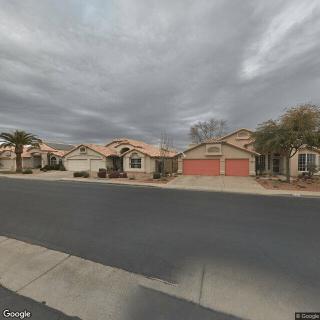



 Understanding the Nuances of Palliative Care and Hospice: A Comprehensive Exploration
 Is In-Home Healthcare Tax Deductible? Your Comprehensive Guide
 Nurturing Well-Being Through Gardening: A Detailed Guide for Senior Enthusiasts